



































110-year-old grocery chain operator closes store after 40 years
Even for those who don't enjoy grocery shopping, supermarkets often feel like a second home. Buying food and household essentials is a weekly ritual and a necessity for families worldwide. But for many communities, that simple task is becoming increasingly difficult. Now, a historic grocery chain ...
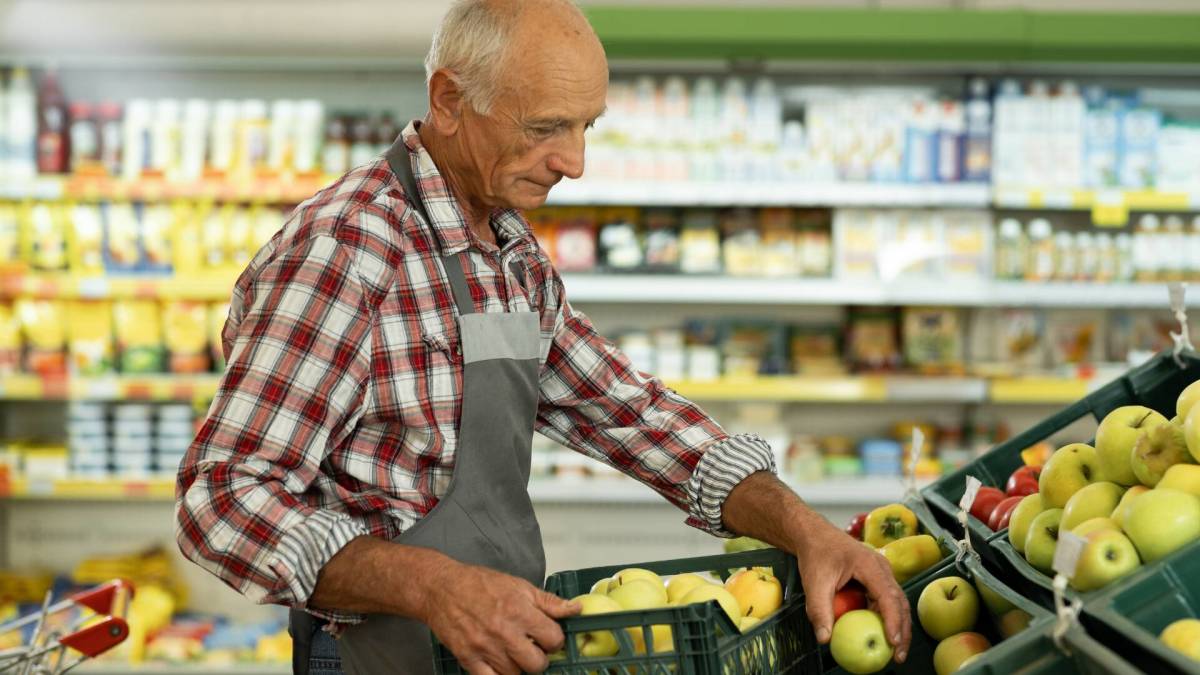
Even for those who don't enjoy grocery shopping, supermarkets often feel like a second home. Buying food and household essentials is a weekly ritual and a necessity for families worldwide.
But for many communities, that simple task is becoming increasingly difficult.
Now, a historic grocery chain is preparing to shutter yet another location, adding to the growing list of store closures that have left thousands of shoppers with fewer options, especially in vulnerable neighborhoods.
Founded in 1916 by Clarence Saunders in Memphis, Tennessee, Piggly Wiggly became America's first true self-service grocery store, according to the company's website.
Today, Piggly Wiggly Corporation, an affiliate of C&S Wholesale Grocers, owns the brand and franchises hundreds of independently operated stores under the Piggly Wiggly name, spanning more than 500 locations across 18 states.
Piggly Wiggly confirms closure of Phenix Plaza store
Piggly Wiggly franchisee JTM Corporation is permanently closing its Phenix Plaza store at 512 13th St., Phenix City, Alabama, after nearly 40 years of serving the local community. An exact closing date has not been announced.
"This was not an easy decision," said JTM Corporation Executive Keith Milligan to WRBL News 3. "We are incredibly grateful to the customers who have supported this store for nearly four decades. Serving this community has meant a great deal to our family."
About 20 employees will be affected, though all have been offered positions at other Piggly Wiggly stores.
The company said the store operated on a month-to-month lease, had been experiencing financial losses, and required equipment upgrades and remodeling, as reported by Alabama Local News.
In a public Facebook post by WRBL News 3 about the closure, several residents expressed concern.
"This is walking distance from the apartments that live nearby who don't own cars," said a consumer on Facebook. "How will we shop now."
"If they keep on, there's not gonna be any grocery stores in Phenix City or Smith Station," said a community member on Facebook.
While two other Piggly Wiggly locations remain in Phenix City, both are more than two miles away and typically require a vehicle, according to the supermarket's store locator.
Nearby Piggly Wiggly Phenix City-area locations
- 1130 Hwy. 280 Bypass, Phenix City, Alabama 36867: 2.4 miles
- 1837 Stadium Drive, Phenix City, Alabama 36867: 2.5 miles
This closure follows another Alabama Piggly Wiggly shutdown in early 2025 at 620 Cherry Dr. in Lanett's Cherry Valley Shopping Center, as reported by Wilcox Newspaper.
Founded in 1966, JTM Corporation is a family-owned franchisee operator with approximately 15 Piggly Wiggly stores across Columbus, Georgia, and Alabama. Shutterstock
Piggly Wiggly store closures extend beyond one franchisee
Although JTM Corporation operates independently and the decision was not made by C&S Wholesale Grocers, other Piggly Wiggly franchisees face similar pressures.
Homeland Stores, which operates about 80 supermarkets across Oklahoma, Texas, and Georgia under various banners, including CashSaver, Discount Foods, Food World, Piggly Wiggly, and United Supermarkets, has also closed five lower-performing stores in Oklahoma and Georgia, including a Piggly Wiggly in Gordon, Georgia.
More Store Closures:
- More grocery stores close, leaving customers with no options
- 61-year-old convenience chain closes store after costly experiment
- 113-year-old grocery chain quietly closes stores in 2026
Despite these setbacks, Piggly Wiggly expansion efforts continue.
In October 2025, Southeastern Grocers revealed plans to rebrand as The Winn-Dixie Company in early 2026, refocusing operations on its home state of Florida and select Georgia markets.
As part of this strategy, the company sold 32 Winn-Dixie stores and eight Harveys Supermarket locations across Alabama, Georgia, Louisiana, and Mississippi, with some locations acquired by Food City and Piggly Wiggly operators.
The growing risk of food deserts
The U.S. Department of Agriculture (USDA) defines "low-access areas," commonly referred to as "food deserts," as communities with limited access to supermarkets, supercenters, grocery stores, or other sources of affordable, nutritious food.
Approximately 17.1 million Americans, or 5.6 percent of the population, live in low-income, low-access census tracts, meaning they live more than one mile from a supermarket, according to the USDA's Food Access Research Atlas.
The official national poverty rate in 2024 was 10.6%, representing 35.9 million people, according to the U.S. Census Bureau. In Alabama, the poverty rate is significantly higher at about 15.2%, while Phenix City's is around 24.5% as of 2024.
Health experts warn that residents of these areas may face elevated risks of diet-related conditions, including obesity, diabetes, cardiovascular disease, and vitamin deficiencies.
"Effective interventions to increase healthy food accessibility may help improve diet quality and population health," said American Cancer Society Senior Scientific Director Dr. Farhad Islami. "These may include initiatives establishing new healthy food retailers (e.g., farmers markets, grocery stores, bodegas, and mobile retailers), as well as upgrading the quality, diversity, and quantity of healthier foods at current stores."
Retail headwinds extend nationwide
Alabama's grocery store closures reflect broader trends in the U.S. retail industry. Economic uncertainty, changing consumer habits, and ongoing trade pressures are forcing many retailers to downsize or consolidate their operations.
U.S. retailers are expected to close 7,900 stores in 2026, down 4.5% from 2025, while 5,500 stores are projected to open, up 4.4%, according to Coresight’s US Store Tracker 2026 Outlook.
Although the pace of closures has slowed slightly, the gap between openings and shutdowns remains significant, disproportionately affecting lower-income communities.
"For consumers, the fallout means fewer choices, diminished access to in-person shopping, and, in some cases, higher prices due to reduced competition," said Approved Funding President and Chief Lending Officer Shmuel Shayowitz.
Distance and transportation barriers limit access to healthy food
Even when alternative grocery stores exist, access can be a major barrier.
Limited public transportation options often require residents to travel long distances for essential groceries, which can be particularly challenging for lower-income households, elderly shoppers, and those without a vehicle.
"Enhancing transit availability and destination accessibility, particularly in northeastern, southern, smaller, or rural communities, could provide affordable mobility for essential needs like food," said researchers discussing findings of the 2021 National Survey of Community-Based Policy and Environmental Supports for Healthy Eating and Active Living.
They added that prioritizing transit options for low-income and limited-mobility residents could not only improve food access, but also enhance diet quality and improve long-term health outcomes, especially for communities disproportionately affected by food insecurity.
Related: 90-year-old grocery chain confirms new round of store closures
What's Your Reaction?