


































Displacement of the wild in Spiti valley
In the high-altitude desert of Spiti Valley, the traditional hierarchy of the wild is being dismantled by an invisible social contract.
In the high-altitude desert of Spiti Valley, the traditional hierarchy of the wild is being dismantled by an invisible social contract.
Recent data from the Wildlife Institute of India(BHARAT), gathered from 205 camera traps over an 8,000-day observation period, indicates that the region’s native carnivores — snow leopards, Himalayan wolves, and red foxes, are no longer surviving solely through the strategy of survival of the fittest. Instead, they are engaged in a costly time-sharing strategy to avoid a pervasive, human-supported newcomer: the free-ranging domestic dog.
The dominance of the domestic dog
Historically, predator populations in the Trans-Himalayas were regulated by the density of wild prey like ibex and blue sheep. However, the remnants of human trace, specifically food waste from tourism hubs and expanding settlements, has decoupled the domestic dog from these natural cycles. Because dogs are sustained by human refuse, their populations remain artificially high even when the environment cannot naturally support them.
This creates a permanent, unyielding presence that native predators must navigate. The research shows that dogs have become the primary organisers of the landscape, not through superior hunting skills, but through sheer density and human-mediated protection. This change has forced an unlikeable restructuring of the daily lives of the valley’s indigenous hunters.
STORY CONTINUES BELOW THIS AD
The costly compromise
When native species cannot physically avoid dogs, they adjust their biological clocks. This strategy, known as temporal partitioning, allows for a tense form of coexistence but imposes a significant metabolic tax on the animals involved. In a climate where temperatures reach -40°C, the energy spent avoiding a competitor is energy taken away from hunting and reproduction.
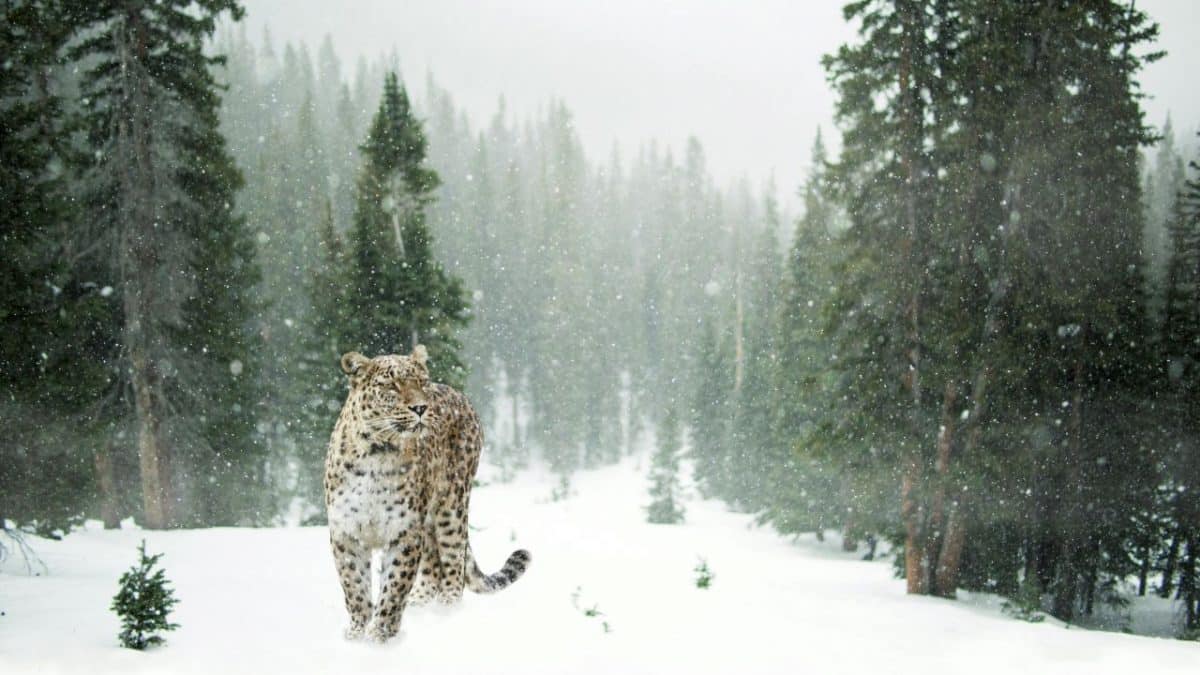
Typically crepuscular hunters, snow leopards in dog-dense zones have been observed curtailing their early-morning activity. By ceding the sunrise to domestic packs, these cats miss prime hunting windows, forcing them to operate during less efficient hours.
Exhibiting the most significant behavioral plasticity, foxes have shifted toward extreme nocturnal patterns in human-dominated areas. While this allows them to scavenge human waste, it forces them to operate during the most frigid periods of the night, increasing their physiological strain.
Himalayan wolves remain the most sensitive to human presence. Lacking the flexibility of the fox or the leopard, wolves consistently retreat from settlements into the most inaccessible, marginal terrain. This spatial displacement limits their access to high-quality habitat and marks them as the species most vulnerable to local extinction.
The breaking point of adaptation
The study warns that the current state of ‘coexistence’ is actually a state of extreme ecological stress. Behavioral flexibility has a limit, just as it does in human psychology and when the cost of avoidance exceeds the energy an animal can consume, population health inevitably declines. The predator hierarchy is no longer a reflection of natural fitness, but a hierarchy of disturbance tolerance.
To stabilise this fragile system, conservation efforts must shift focus from the peaks to the village centers. Managing what allows dog populations to swell, through improved waste management and sterilisation, is the most immediate way to alleviate pressure on native carnivores. Furthermore, establishing “core refuge zones” that are strictly off-limits to domestic animals would allow snow leopards and wolves to return to their natural biological rhythms.
Without addressing these human-mediated pressures, the sophisticated dance of avoidance captured by the researchers will eventually fail. Protecting the Spiti valley now requires protecting the time and silence that native wildlife needs to survive.
What's Your Reaction?