





































A long-lost tectonic fragment may be shaking Northern California
Seismic tremors reveal a shallow fragment of an ancient tectonic plate beneath Northern California, helping explain damaging earthquakes near the surface.
Seismic tremors expose a trapped slab linked to the 1992 Mendocino quake
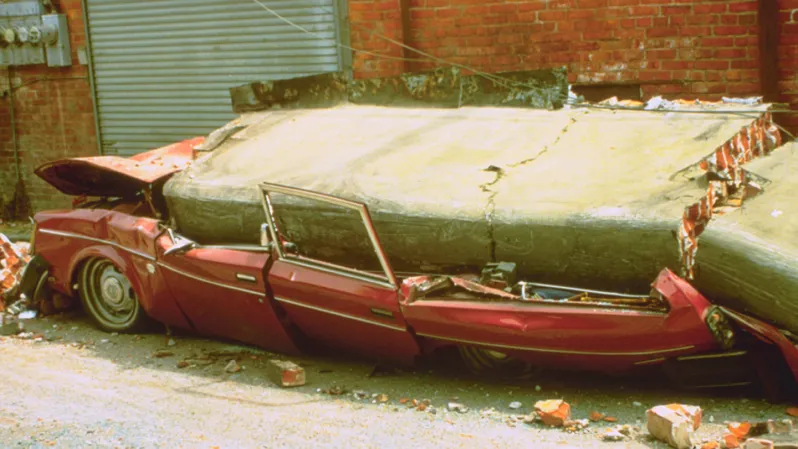
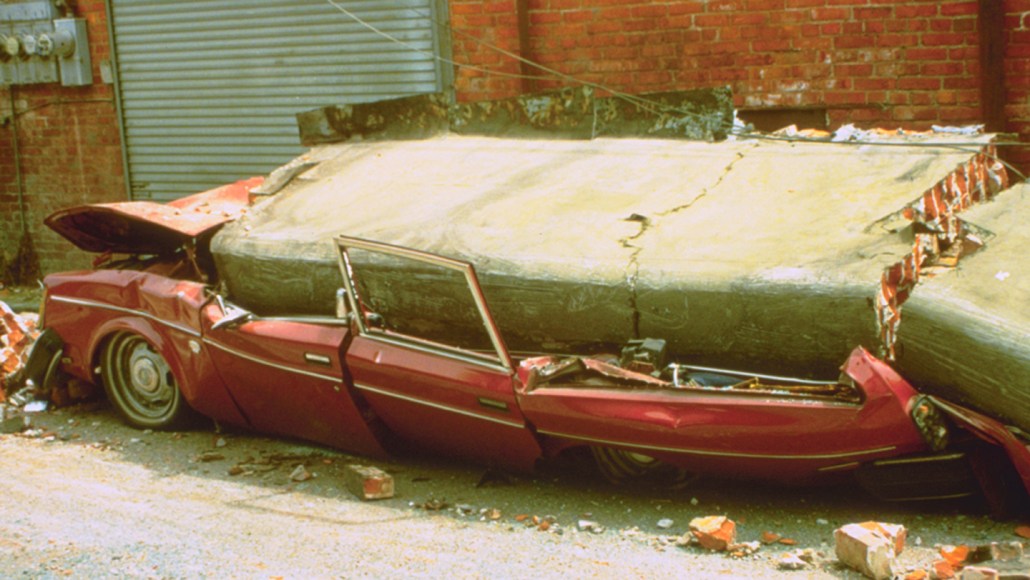
The 1992 Cape Mendocino earthquake, a magnitude 7.2 temblor, caused up to $75 million in damage to the region. It triggered landslides and a tsunami, and damaged roads, bridges and buildings. Here, a fallen brick facade crushed a car in Ferndale, Calif.
NOAA
 earthquake, a magnitude 7.2 temblor, caused up to $75 million in damage to the region. It triggered landslides and a tsunami, and damaged roads, bridges and buildings. Here, a fallen brick facade crushed a car in Ferndale, Calif.
" data-medium-file="https://www.sciencenews.org/wp-content/uploads/sites/2/2026/01/011425_CG_quakes_feat.jpg?w=680" data-large-file="https://www.sciencenews.org/wp-content/uploads/sites/2/2026/01/011425_CG_quakes_feat.jpg?w=798">
earthquake, a magnitude 7.2 temblor, caused up to $75 million in damage to the region. It triggered landslides and a tsunami, and damaged roads, bridges and buildings. Here, a fallen brick facade crushed a car in Ferndale, Calif.
" data-medium-file="https://www.sciencenews.org/wp-content/uploads/sites/2/2026/01/011425_CG_quakes_feat.jpg?w=680" data-large-file="https://www.sciencenews.org/wp-content/uploads/sites/2/2026/01/011425_CG_quakes_feat.jpg?w=798">
An earthquake-generating chunk of tectonic plate has been discovered beneath Northern California. It’s attached to the bottom of the North American plate like gum stuck to a shoe.
Using abundant, tiny, nearly imperceptible earthquakes that can help reveal complicated faults beneath Earth’s surface, researchers have identified this previously hidden hazard. The plate may have been the source of the 1992 magnitude 7.2 Mendocino earthquake, researchers report January 15 in Science.
Beneath the peaceful beauty of Northern California’s Lost Coast lies a complicated, restless geologic jumble, one of the United States’ most active tectonic regions. It’s where the San Andreas Fault meets the Cascadia subduction zone. Three sections of Earth’s crust meet in this region, a clash of titans known as the Mendocino triple junction: the North American Plate and the Pacific Plate are sideswiping each other, while the smaller Gorda Plate is diving beneath the North American slab.
In 1992, a magnitude 7.2 earthquake rocked the Cape Mendocino region, damaging buildings and roads and triggering landslides and a small tsunami. Surprisingly for such a large quake, the epicenter turned out to be only about 10 kilometers deep, puzzling scientists; the subducting slab of the Gorda plate was known to be at least twice as deep.
Some proposed that a “slab gap” existed, a shallow space formed by the friction of one plate dragging another, with mantle magma welling up into that window and generating quakes. But another possibility was that there was something else down there: a fragment of tectonic plate.
Tectonic traffic jam
The Mendocino triple junction is a complicated jumble of colliding plates of Earth’s crust. Black arrows depict movements relative to the North American Plate: The Pacific Plate is sideswiping it, creating the San Andreas Fault system, while the Gorda Plate is sinking beneath it at the Cascadia subduction zone. Blue arrows indicate how the Pacific and Gorda plates are moving sideways past each other. Using tiny earthquakes generated near the southern edge of the Gorda Plate (in red), researchers discovered the “Pioneer” fragment, a remnant of the ancient Farallon Plate that is getting dragged beneath the North American Plate.
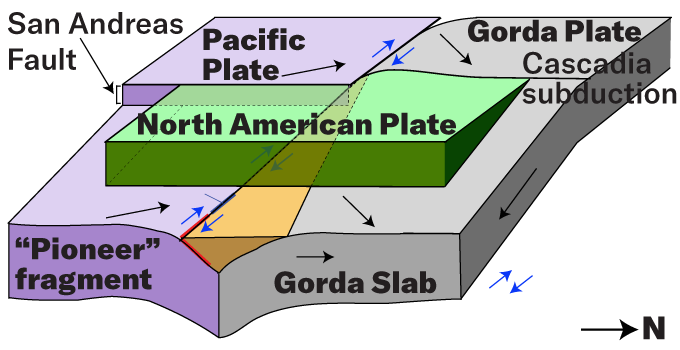
The dwindling Gorda Plate is actually one of the last remnants of the ancient Farallon Plate. Most of it has descended into the mantle — but a fragment of it might have gotten trapped during subduction and pasted on to the overlying North American plate as it grinded by. And now that fragment may be getting dragged along on the underside of the plate
How to see that hidden fragment was the problem — it’s not really visible from the surface, say U.S. Geological Survey geophysicist David Shelly, based in Golden, Colo., and colleagues. The team decided to visualize the region’s complex tectonics using swarms of tiny earthquakes. These quakes are imperceptible to humans but detectable by seismometers; they recur rapidly, forming a long-duration seismic signal known as a tremor. By “stacking” the abundant occurrences of these events, researchers can determine a more precise depth and location for each one, ultimately delineating fault lines and other subsurface features.
The team zoomed in on a region of tremor near the southern edge of the subducting Gorda Plate. The tiny earthquakes, they found, were generated by a sideways-moving bit of crust, located about 10 kilometers below the surface. That, the team suggests, points to a separate plate fragment shallower than the subducting slab. They dubbed it the Pioneer fragment.
By identifying this hidden fragment, the team has also essentially discovered a buried plate boundary, a nearly horizontal fault line between the Pioneer fragment and the overlying North American plate that can be a source of strong but shallow earthquakes — like the 1992 Cape Mendocino quake.
That would mean the triple junction is more of a quadruple junction — but in fact there’s a fifth stray bit of tectonic plate hidden under the surface, the researchers say. Beneath the southern end of the Cascadia subduction zone is another buried fragment of crust, a chunk of the North American Plate that broke off the main plate and is now getting tugged down into the mantle by the sinking Gorda Plate.
Shining a light into the subsurface of this region helps identify and prepare for previously unknown seismic hazards, says Matthew Herman, a geophysicist at California State University, Bakersfield who was not part of the new study.
“We often view triple junction regions as a simple intersection of three straightforward plate boundary styles,” Herman says. This study “is part of a growing body of research showing we cannot understand the complete picture” without understanding how Cascadia subduction interacts with the San Andreas Fault system. “This Pioneer fragment … may pose a distinctly different type of earthquake hazard than we expect.”
More Stories from Science News on Earth
What's Your Reaction?