




































AARP sends strong message on crucial Social Security strategy
As the U.S. Congress works toward reaching a deal to continue funding eight federal Cabinet-level departments before the government would shut down at midnight on Jan. 30, a key provision for Social Security is still alive. The House of Representatives passed a spending package Jan. 22, but a deal ...
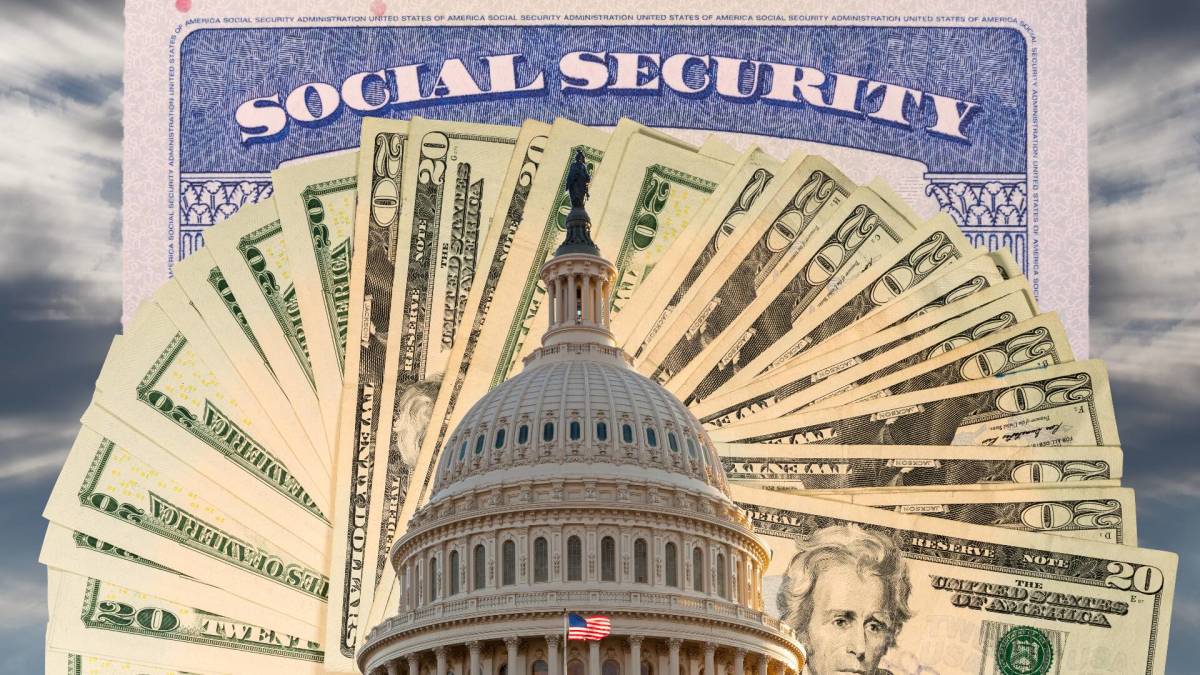
As the U.S. Congress works toward reaching a deal to continue funding eight federal Cabinet-level departments before the government would shut down at midnight on Jan. 30, a key provision for Social Security is still alive.
The House of Representatives passed a spending package Jan. 22, but a deal in the Senate on Jan. 29 will force the House to take another vote before it is signed by President Doland Trump — and that assumes the Senate can pass its version of the six-bill funding package.
That version strips Department of Homeland Security (DHS) funding from the rest of the package passed by the House in a move demanded by Democrats in the wake of violence in Minnesota.
"I am working hard with Congress to ensure that we are able to fully fund the Government, without delay," Trump wrote on Truth Social on Jan. 29. "Republicans and Democrats in Congress have come together to get the vast majority of the Government funded until September, while at the same time providing an extension to the Department of Homeland Security."
Appropriations measures frequently group several departments into a single piece of legislation. With this Senate package, funding for eight Cabinet‑level departments is combined into six bills.
Cabinet-level departments in the Senate package
Without DHS, the Cabinet-level departments that remain in the spending deal the Senate is attempting to pass are:
- Department of Defense
- Department of the Treasury
- Department of State
- Department of Health and Human Services
- Department of Labor
- Department of Housing and Urban Development
- Department of Transportation
- Department of Education
AARP explains Social Security budget addition
Upon passage of the package of bills, the Social Security Administration (SSA) (an independent federal agency that does not sit inside a department) would receive an additional $50 million for customer service for the remainder of the 2026 fiscal year that ends on Sept. 30.
Congress paired the funding boost with new expectations for how the SSA serves the public.
Related: AARP sounds alarm on major Social Security problem
It requires the agency to work toward keeping field offices open, maintain other in‑person services, and provide Congress with monthly updates on how long people are waiting for office appointments, according to AARP, the advocacy nonprofit group for Americans over 50 years of age.
“AARP has been leading the charge to ensure that SSA has the resources it needs to provide good customer service to the tens of millions of older Americans who rely on it,” said Jenn Jones, vice president of financial security and livable communities at AARP.
“We appreciate Congress working to provide additional funding and the direction to ensure those funds are used to hire front line staff, lower wait and appointment times, and help ensure field offices remain open.”
How Social Security budget is affected
The spending package would also increase funding for the SSA’s efforts to eliminate waste and fraud, allocating an additional $500 million earmarked largely for reviewing current disability beneficiaries’ eligibility for payments.
The plan would raise the SSA’s budget from $14.3 billion to $14.84 billion, an increase of about 3.8%, according to AARP.
More on personal finance:
- Zillow forecasts big mortgage change for U.S. housing market
- AARP sounds alarm on major Social Security problem
- Dave Ramsey bluntly warns Americans on 401(k)s
However, Kathleen Romig, who leads Social Security and disability policy at the Center on Budget and Policy Priorities (CBPP), noted that the portion specifically aimed at improving direct customer service grows by under 1%.
That would mean the SSA has “lost ground in inflation-adjusted terms,” she said, according to AARP. “That’s not really good news for an agency that, for a long time now, has been underfunded.”
The CBPP calculates that, after accounting for inflation, Social Security’s customer service funding dropped by 21.2% between 2010 and 2025, even as the number of people receiving benefits rose by 26%, the AARP reported.
AARP clarifies Social Security staffing concerns
- In the budget agreement’s explanatory statement, lawmakers highlighted worries about shrinking staffing levels at SSA field offices, processing centers, and the national customer service helpline (800‑772‑1213). (Source: AARP)
- Federal personnel data from January 2026 shows that Social Security lost more than 6,000 employees during 2025. The agency also reassigned roughly 1,000 field office workers to help handle calls to the national helpline. (Source: AARP)
- SSA performance figures indicate that the average time to reach a representative on the national line was 12 minutes in December 2025, an improvement from 23 minutes the previous year. However, this figure excludes the wait experienced by people who choose a callback instead of staying on hold. The inspector general reported that callback waits exceeded 60 minutes as of September 2025. (Source: AARP)
- An assessment by the Strategic Organizing Center, which is connected to the union representing most SSA employees, found that field office staffing dropped by about 9 percent nationwide over the past year. (Source: AARP)
- Although the bill does not detail how the additional customer service funds must be used, lawmakers emphasized staffing concerns, noting that the legislation “provides resources for SSA to increase the number of staff on the front lines.” (Source: AARP)
Related: Dave Ramsey, AARP sound alarm on Medicare
What's Your Reaction?