





































Amazon stock fires bullish technical signal after $470B tumble
Amazon's stock price has tumbled dramatically since posting solid fourth-quarter results that revealed a staggering spending projection for 2026. The $200 billion price tag for upgrading its AI-driven cloud data centers has left many wondering if the proverbial juice will be worth the squeeze. That ...
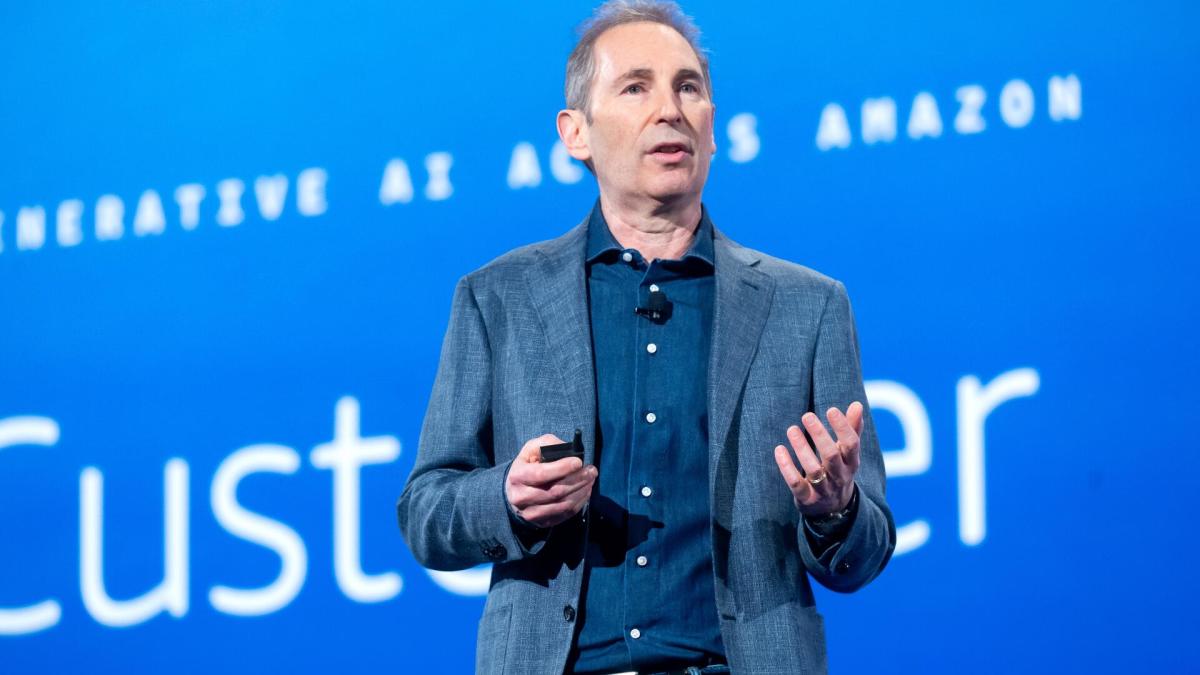
Amazon's stock price has tumbled dramatically since posting solid fourth-quarter results that revealed a staggering spending projection for 2026. The $200 billion price tag for upgrading its AI-driven cloud data centers has left many wondering if the proverbial juice will be worth the squeeze.
That forecast was $50 billion higher than Wall Street expected, sparking a compute-power arms race against Google and Microsoft. While CEO Andy Jassy remains confident— noting on the earnings call that Amazon is "monetizing capacity as fast as we can install it" — investors aren't waiting around to see the receipts.
The resulting rerating has knocked $470 billion off Amazon's market cap, punctuated by a brutal nine-day losing streak, the stock's longest slide since 2006.
Over my 30 years tracking Wall Street, I've learned that while shares could certainly fall further, stocks rarely drop in a straight line forever. When selling reaches this level of capitulation, the Relative Strength Index (RSI) — a technical measure of sentiment — can clue you in on when a big pivot is likely. TradingView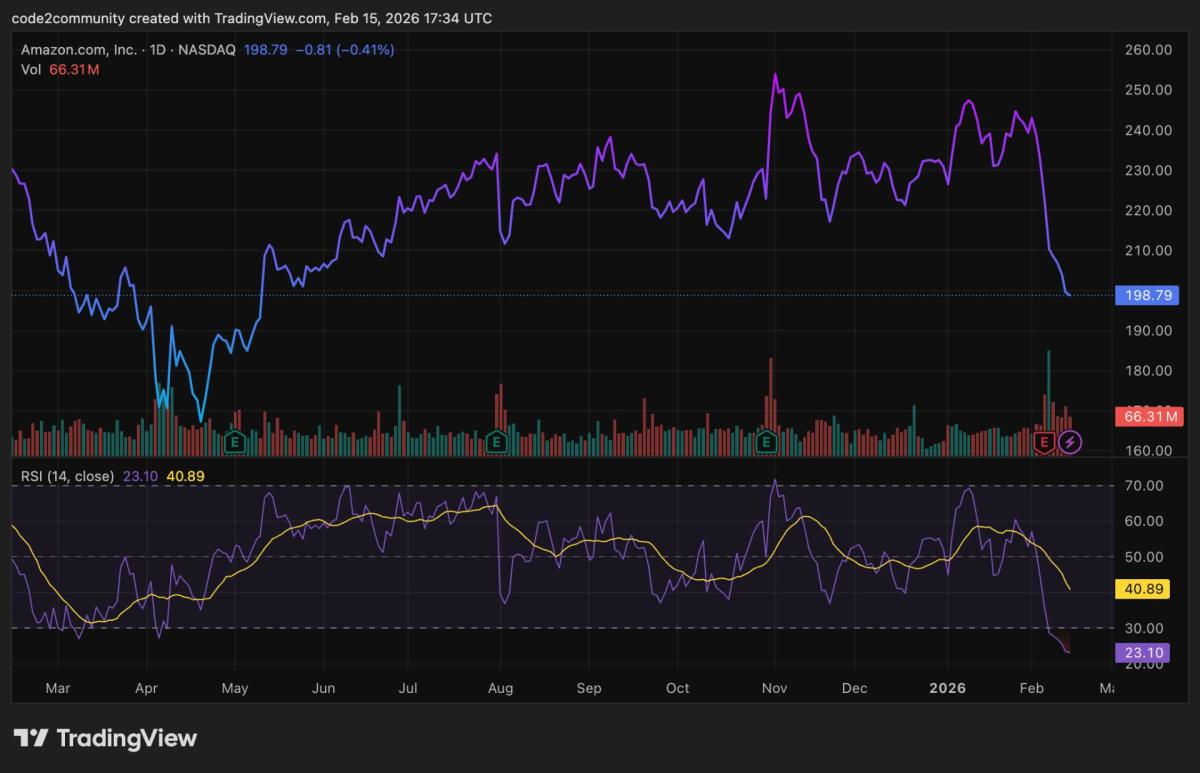
Amazon stock triggers major buy signal
The size and speed of the decline in Amazon's stock can't be overstated. For context, the seismic $470 billion drubbing means it's lost more in market cap than most of the S&P 500 holdings combined.
The share price retreat has been relentless, and on high volume. It isn't the first time that we've seen investors balk at a major technology push at the company. In 2006, the last time the company's shares endured such a long losing streak, investors were reacting to Amazon's deep push to create AWS, the cloud business that has become its major profit center and put it in pole position to capitalize on the widespread embrace of AI.
More AI Stocks:
- Morgan Stanley sets jaw-dropping Micron price target after event
- Bank of America updates Palantir stock forecast after private meeting
- Morgan Stanley drops eye-popping Broadcom price target
Today, the AWS investment looks brilliant. However, at the time, it was far from a slam dunk, given that operating incometumbled 55% in the second quarter of 2006.
Betting against Amazon shares then turned out to be a bad bet. Nobody knows if that will be true again, but RSI is flashing a powerful signal that suggests, at a minimum, the stock is due for a short-term rally.
Amazon stock fast facts:
- Stock price: $198.79
- Market capitalization: $2.13 trillion
- Forward price-to-earnings ratio: 24.5
- Price to sales ratio: 3
- Total cash & equivalents: $123 billion
- Shares short: 71.85 million
- RSI (14): 23.10
Perhaps it helps to think of RSI as a speedometer used by technical analysts as a contrarian indicator. It measures average gains and losses over a 14-day period. Readings above 70 are considered overbought, while readings below 30 are oversold.
Amazon's RSI is 23, which is an extreme reading and the lowest level in years. The track record of buying when Amazon's RSI falls below 30 is compelling. For instance, RSI hit 25 during May 2022 when shares were trading around $115. RSI flirted with 30 in late March 2025 when the tariff tantrum sent the S&P 500 down nearly 20%, dropping Amazon's share price below $200. Last November, shares peaked near $250.
The current reading is even more stretched than it was at those lows, so if past is prologue, a reversal may be approaching.
Amazon's $200 billion bet on AI
Amazon is far from alone in thinking AI is so revolutionary that it requires an aggressive capex strategy.
The largest hyperscalers, including Google and Microsoft, are set to spend $625 billion this year alone on upgrading data centers with hyper-fast and efficient Nvidia AI chips, high-bandwidth memory, liquid-cooled servers from the likes of Super Micro, and the connective tissue that ties it all together, like cabling, switches, and routers.
Related: Bank of America resets Amazon stock price target after earnings
Seemingly, everyone is knee deep in building, testing, and implementing AI solutions. Individuals are using AI chatbots to replace traditional search. Banks are using it to hedge risks. Drugmakers are using it to develop better drugs, while manufacturers and retailers are embracing its use to improve supply chains. Even global militaries are exploring use on the battlefield.
Gartner recently outlined the market opportunity, and Amazon's spending may simply be table stakes to ensure it gets its fair share of the pie.
It estimates that total spending on infrastructure, services, software, models, platforms, etc., will eclipse $2.5 trillion in 2026, up 44% from one year ago.
A Wall Street disconnect emerges
While Amazon's shares have been hard hit, Wall Street analysts have largely circled the wagons around the company, defending its prospects even as they lower their price targets.
Of the 44 ratings tracked by TipRanks, 41 are "buys," and none are "sells." That's not too surprising, given that "sell" ratings are rare on Wall Street. Still, the average analyst's price target is $282, despite post-earnings revisions, representing massive upside for shares if they can get back to their winning ways.
"Management seems confident in their ability to forecast demand signals, and that AI presents an 'unusual opportunity' to capture incremental demand as customers move data to the Cloud to utilize AI," wrote Bank of America in a research note shared with TheStreet after earnings. "Amazon is not alone in this investment, and we think it makes sense that Amazon is investing more than competitors give AWS' leading customer and revenue base."
Bank of America, like many firms, lowered its price target ($275) because the surging capex will hurt margins in the short term. Still, its analysts remain bullish on Amazon.
"While the capacity ramp will add margin volatility in future quarters, we think this capacity will be fully utilized as part of the AI business transformation across industries, and will help Amazon maintain competitiveness in a very attractive sector. We reiterate our Buy rating," concluded Bank of America.
If they're right, this could be a good time for investors to consider buying or adding Amazon shares. However, investors should remember that stocks can often fall further than seems logical. If demand fails to meet Amazon's bullish outlook or spending continues to climb, it could lead to further downside and another wave of lowered price targets.
Todd Campbell owns shares in Amazon.
Related: Walmart customer shift is reality check for Target, Amazon
What's Your Reaction?