



































Analyst reacts to Alphabet's strong fourth quarter results: Interview
After a rough two days in the market for tech investors, they might have a small consolation: Alphabet earnings are out, and they're good. Wall Street might have only had one note ... mind your money. Going into the Wednesday report, online finance communities seemed to be putting a lot behind ...
After a rough two days in the market for tech investors, they might have a small consolation: Alphabet earnings are out, and they're good. Wall Street might have only had one note ... mind your money.
Going into the Wednesday report, online finance communities seemed to be putting a lot behind results from the Google parent. Up 70% over the last six months, the search and advertising giant has become the mega-cap tech momentum trade. There had been pockets of panic that if Alphabet's earnings didn't deliver, it would exacerbate a recent tech selloff which has found footing in the media and given adherents some jitters.
Alphabet's Q4 earnings at a glance
As we covered in our daily Stock Market Today liveblog, the results went above and beyond on the top and bottom line:
- Q4 Revenue: $113.83 billion (est. $111.4 billion)
Cloud Revenue: $17.66 billion (est. $16.2 billion) - Q4 EPS: $2.82 (est. $2.65)
Really, the only real snags were problems that could be observed industry-wide; namely, spending on AI buildout. Alphabet spent more than 3x more money in the fourth quarter on capital expenditures than analysts expected, while forecasting for even more gobs of money to be spent this year:
- Q4 Capex: $91.45 billion (est. $28.17)
- 2026 Capex Forecast: $175 – 185 billion (est. $119.5 billion)
Nonetheless, the results met the mark and gave investors some relief after a rough day in the markets. Alphabet fell just 1.6% after the market close, not at all an uncommon reaction from investors with increasingly demanding expectations. Unlike Wednesday's other tech-related reports—like Qualcomm and Arm Holdings, which both fell over 9%—the search and advertising giant was able to escape mostly unscathed.
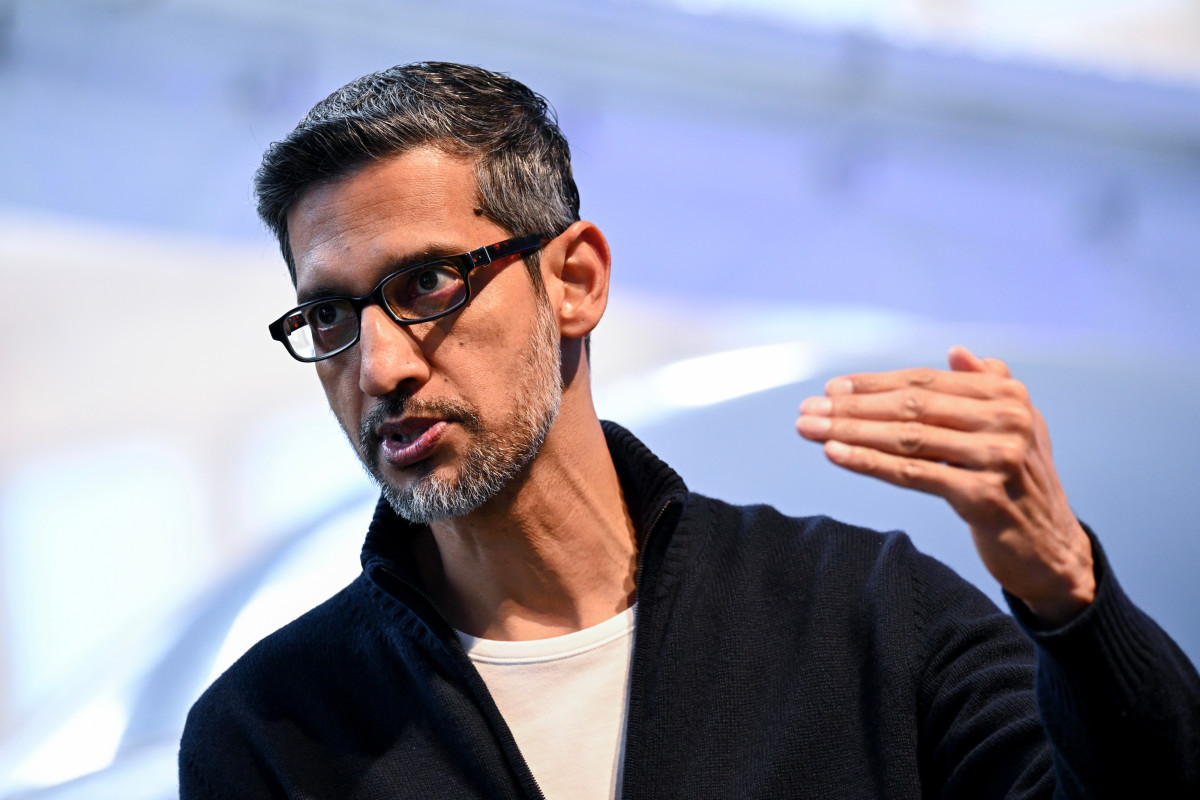
But beyond the day-to-day coverage of the stock, we were curious to hear from analysts who dug down on the results. A few months back, I had the opportunity to connect with Check Capital Management's Managing Director, Chris Ballard. Chris and I had an opportunity to talk at length about Alphabet before results last quarter, which ended up being especially strong. We also briefly explored some evolving bets like Waymo and Gemini.
Ballard and CCM were visibly bullish. To that end, I was curious to hear his impressions about the fourth quarter results. Here's what he had to say after the company's latest homework:
Interview with Check Capital Management's Managing Director, Chris Ballard
What are some of the initial reactions that you have to the results from Alphabet? Where are strong suits and weak points?
After months/years of being labeled an “AI laggard,” Alphabet’s results show that it has been positioned well all along in the AI space. Its massive infrastructure investments, which Alphabet has said they will invest into the tune of about $180 billion in 2026, are going to make it a formidable foe for competitors for years to come.
Google Cloud is a focus of ours in every earnings release, and it is amazing what they have delivered again this quarter. They increased revenues 48% with an expanding margin on this business moving from about 15% margins a year or so ago, to about 30% margins today. Cloud is truly gushing cash right now.
It’s hard to call their spending a weak point as they continue to prove their investments are helping to grow their massive business of $400 billion in annual revenue at a rate of 17%, but if there is a weak humble brag in their somewhere it’s that Alphabet is willing and able to project spending to be about $180 billion in 2026. At some point this spending will slow down… though, when it slows down, Alphabet's margins will increase even more.
Alphabet is in the middle, arguably, of a pretty big business transformation towards AI products. Where can we gather the success of this transformation so far, and at what point will this start to contribute meaningfully to the company’s results?
Their AI products are meaningfully contributing to the company’s results right now. Every segment of their business is data driven, and data is what AI needs to feed on. The more Google feeds its AI data, the faster it seems to grow. This is showing up in Search, YouTube, Devices, Cloud, Waymo, etc., it’s incredible.
Much of the results that are occurring right now is because of money they have been spending, and because they are seeing the results, they are empowered to continue to spend. Their growth in Google Search increased 17% at a time when their critics have alluded to the notion that "search is dead."
There are strong indications that the AI prompts users input create more questions, which lead to searches on Google’s browser, which in turn keeps advertisements and revenues growing. Google’s engine is truly a powerful one.
Since November, stocks that are closely associated with competitor OpenAI have lagged the broader market. At the same time, Alphabet-adjacent stocks (like Broadcom, Celestia, Lumentum, and TTM Technologies) have done better. As the AI race stands right now, how are Google's existing operations giving it a leg up? How are they holding it back?
Google’s vertical integration is its greatest weapon. Unlike OpenAI, which relies on Microsoft for compute and Nvidia for chips, Google has its own TPUs (Tensor Processing Units). By using its own chips, Google can run AI models at a significantly lower cost-per-query. Furthermore, the Android/Chrome distribution means Gemini is already in the pockets of billions, while OpenAI must fight to acquire every single user.
Alphabet’s Innovator’s Dilemma remains. It must protect its search ad business while transitioning to AI answers that might reduce the number of clicks on traditional ads.
OpenAI has no legacy revenue to protect, allowing them to be more reckless. That said, as I pointed out earlier, there is a strong case pointing toward AI answers resulting in revenues related to search ads, which is something OpenAI can’t compete with at this point. Microsoft CEO Satya Nadella may have asked Google to dance 3 years ago, but I’m guessing he needs a rest now.
There has been a lot of talk about the recent fundraise by Waymo, an Alphabet company. That would lead me to my nex question: Are Alphabet’s “side bets” now more compelling as growth stories than the core search and ad business?
Waymo no longer feels like a “moonshot” or "other bet" for its parent company. Waymo is the world’s leading robotaxi service and covering more ground quickly.
I don’t know if you have taken a ride in one, but it feels a little like a life changing event. With 15 million rides in 2025, and soon to cross 500,000 rides per week, Waymo’s development remains quite exciting and seems poised to continue to deliver breathtaking statistics and a better quality of life for those that ride in the AV robotaxis.
They are now active in 6 cities, with plans to expand into about 20 more cities in 2026, including internationally in London and Tokyo. They are now doing about $10 million per week in revenues and accelerating.
I think one of the big concerns right now among the predominantly retail crowd is how the results pale for the rotation in tech. The last few weeks have seen a pivot away from big tech toward value stocks and sectors with more preferable valuations. I’m wondering, what do you suppose these results mean for AI and the tech firms making the investments?
It sounds like you’re interested in the short-term movement of stock prices in 2026, where the average company within the Dow Jones has increased in value and the average business in the Nasdaq has decreased in value. Google was up over 6% this year before the market closed today, where the likes of Nvidia, Microsoft, and Tesla are down quite a bit this year. So, not all Nasdaq stocks are down this year as not all Dow Jones stocks are up.
AI companies aren’t all going to trade the same in the short term. Putting all these competitors in the same colossal basket isn’t the right way to think about it in our opinion. The underlying details related to these results matter. That is, how Nvidia’s business will expand from here is much different than how Alphabet’s will. And it’s possible Wall Street is punishing Microsoft right now because of its ties to OpenAI versus Alphabet’s Gemini (Google).
We don’t like focusing on such short-term "rotations" but like to think about things 5–10 years out. We think the sled run ahead for the likes of Alphabet is very positive, and our lives will be better for it. Just as we think Berkshire Hathaway is well positioned for great success over that same period. I mention Berkshire now because some people have near-term questions about Buffett’s retirement, and because you mentioned a possible rotation into "value," which hasn’t actually taken place for Berkshire recently. We like to take advantage of near-term "rotations" away from what we are interested in and add to our share count in such environments.
Related: Warren Buffett’s best investments: 5 companies that rewarded him enormously
What's Your Reaction?