






















Building a Strong Financial Foundation in College
Broadcast Retirement Network's Jeffrey Snyder discusses financial education in college with Bankrate's Ted Rossman. Jeffrey Snyder, Broadcast Retirement Network This morning on BRN, building a strong financial foundation in college. Joining us now, Ted Rossman of Bankrate. Ted, always ...
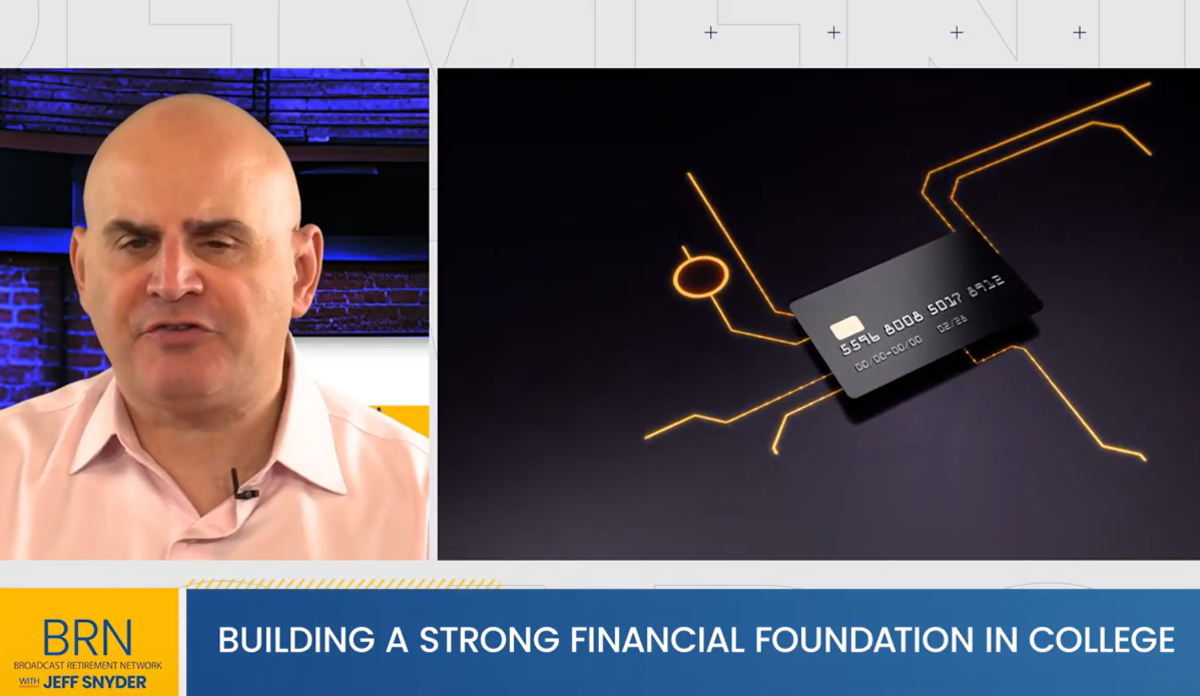
Broadcast Retirement Network's Jeffrey Snyder discusses financial education in college with Bankrate's Ted Rossman.
Jeffrey Snyder, Broadcast Retirement Network
This morning on BRN, building a strong financial foundation in college. Joining us now, Ted Rossman of Bankrate. Ted, always great to see you.
Thanks for joining us this morning. My pleasure. Thanks for having me.
And I got to say, you know, we do a lot of different types of programs from wellness to finance. This one really piqued my interest because you wrote a great piece on building a strong foundation, a financial foundation in college. Tell us about the article and then we can talk about some of the finer points.
Ted Rossman, Bankrate
It's so important to start early. You know, one great example is investing. Einstein said compound interest is the eighth wonder of the world.
Basically, people who understand it earn it. People who don't pay it. You know, we're thinking about the difference between credit card interest, for example, that can really add up if you're paying 20% month after month.
I mean, that's a tremendously high interest rate. But what if you're earning, let's say, 10% on your investments and every dollar you invest when you're 20 turns into $45 by the time you're 60? I mean, that's the kind of growth that actually is very average.
You think about an average 10% annual return. That's what happens. A dollar turns into $45 over 40 years.
That's the kind of thing that we want to start those habits early.
Jeffrey Snyder, Broadcast Retirement Network
Yeah, and colleges, at any age, you're going back to school. But certainly earlier, you had the power of compounding. And by the way, I thought Andre the Giant was the eighth wonder of the world.
But that's a different show. Let's talk about building credit. So all those freshmen, sophomores, juniors and seniors out there in college.
Let's talk about building credit, though. How do you do that?
Ted Rossman, Bankrate
That's super important as well. And that's something that will definitely pay off over the long haul. One of my favorite tips, if you're a college student, let's say, get on a parent's credit card as an authorized user.
Now, this is a great tip also for parents and grandparents out there. You can encourage your kids or grandkids to do something like this. You can give them a real leg up by letting them piggyback off of your positive credit history.
This is really a powerful step. Getting somebody on your credit card as an authorized user transfers all of those benefits. So all of those on-time payments, your low utilization, hopefully, as long as you're not running up too much debt or paying late, this can really help.
You could also sign up for things like Experian Boost that pull in certain rent payments and streaming plans and utilities and cell phone payments, things that have not historically counted towards credit, but can if you sign up for these optional programs. Having a really good credit score is going to help you get loans and lines of credit. It's good for renting an apartment.
It can help you get cell phone or utility service without having to put down a hefty deposit. Even if you're not in the market for credit now, it's a really smart step to start building your credit.
Jeffrey Snyder, Broadcast Retirement Network
Yeah, you probably just don't want to use mom and dad's credit card when you go out to the bar. I would say probably use cash or something else. All right, let's talk about...
Just kidding. I'm not advocating for that mom and dad. But hey, look, stuff happens.
Let's talk about choosing the right bank accounts. This couldn't be more prescient because we've got the Federal Reserve meeting changing interest rates. But talk about the importance of choosing those right bank accounts from the start.
Ted Rossman, Bankrate
Bank fees can add up quickly. And one of the reasons why this is relevant to college students is that they may be going off to school and the bank that they've been using at home may not be the best fit. They may not have local branches.
So even though college kids don't tend to use a lot of cash, when you do, you don't want to be paying a $5 out-of-network ATM fee every time you're going to the ATM. Or monthly service fees. This is relevant for young people because a lot of times it's easy to avoid monthly bank fees if you have a hefty balance, but many young adults don't.
Or if you have direct deposit. A lot of young adults are not working full-time, so they're not getting all these regular direct deposits. So it's actually pretty easy to avoid bank fees if you're in your 30s, 40s, or 50s.
It's not as easy when you're young because you may not hit all of these requirements. So that's where it does make sense to shop around. Maybe you can get a student account.
Maybe you can go to a local credit union or community bank and get a free checking account without some of these hoops to jump through. Maybe you could piggyback off a parent's account, similar to what we talked about with credit cards. There are ways to avoid bank fees.
Even if you're paying a $10 monthly service fee, that's $120 a year. That's probably money that you would rather put elsewhere.
Jeffrey Snyder, Broadcast Retirement Network
You can probably scope out the Bankrate.com website because you guys probably have a list of all the banks in particular areas. You probably look by location.
Ted Rossman, Bankrate
That's right. We do have an easily searchable database. You just want to make sure it's FDIC-insured or NCUA-insured in the case of a credit union.
Some banks have ATM fee waivers or they participate in larger networks where I know with my Citi account, I can go to a 7-Eleven and use their ATM for free. It's a lot better than paying $5 a pop for going out of network.
Jeffrey Snyder, Broadcast Retirement Network
Absolutely. Let's talk about spend smartly. And look, Ted, when I was going to college, I uncovered this thing called the diner.
And I was always going to the diner. I love the diner. Back then, we used cash.
But it's really important to get your leg up. Spend wisely. Don't spend on frivolous things.
Ted Rossman, Bankrate
The essence of personal finance is living on less than you make. And I know if you're a college student, you may not have a full-time income. Maybe you have a little bit of part-time work or seasonal income or scholarships or money from mom and dad.
But really, you want to start establishing good habits. People talk about credit cards as being like power tools. They could be really useful or dangerous.
We talked about how they're useful for building credit. They can be a good way to earn rewards, although you may not be spending enough to earn a ton of rewards when you're young. The downside, though, is they charge high interest rates.
Many charge at least 20%. A lot of store cards are over 30%. That's often a starter card.
A lot of people go into a retailer. That becomes their first credit card. You have to be really careful.
So that's where we're talking here about smart spending habits. Make sure that you're not spending beyond your means. You don't want to use credit as a crutch to overdo it.
Same thing with buy now, pay later. I mean, that's popular among young adults. And sometimes Affirm and Afterpay and Klarna and others really work out for you because it's, let's say, four interest-free payments over six weeks and it buys you a little time.
Other times, it's a crutch to overspend. And so that's where I bring up that power tool analogy. You know, all of these payment methods can work in your favor or work against you.
You want to establish good habits. Especially when you're young. That should be the main name of the game.
Establish good habits, avoid fees, save some of the fancier stuff like these rewards programs for later on.
Jeffrey Snyder, Broadcast Retirement Network
Yeah, real smart. Last one, Ted. Let's talk about that side hustle.
College is expensive. But if you want nice things, sometimes you may have to pick another job or have a second career or career outside of school to help you make payments.
Ted Rossman, Bankrate
I'm a big fan of this side hustle concept. Overall, about a third of U.S. adults have one. But it's about half of Gen Zers.
And some of this is admirable. People are putting in extra time and energy and making more money, building more skills and experience. It can really serve you well in multiple ways.
Obviously, there's the monetary aspect of it. And when you're a college student, maybe your full-time job, if you will, is going to school. But any money you can make on the side, it funds discretionary spending.
Maybe it means that you have to dip into your savings a little bit less or ask mom and dad for a little bit less. It can serve you well over time. But it can also lead to something else.
Maybe you build skills and contacts and experience. And I love the idea of following your passion with this. I know, for example, I used to want to be a sports announcer.
And I wrote part-time for a fantasy sports website for a while. And I never made a lot of money from it, but I enjoyed it. If I ever wanted to go down that path full-time, I feel like I had a few lines I could put on my resume.
That's the kind of thing I would urge people to do, especially when you're young, is, yes, you get the money, but you also get some skills and experience.
Jeffrey Snyder, Broadcast Retirement Network
What sport did you want to be a sports announcer in, Ted?
Ted Rossman, Bankrate
I would have done any of them very happily. You know, football, hockey, baseball, basketball, I love them all.
Jeffrey Snyder, Broadcast Retirement Network
Okay, well, when BRN starts its sports coverage, we're going to be reaching out to you. Don't worry, Bankrate will be able to keep you, but we're going to hire you to do that. Ted, we're going to have to leave.
Yeah, it's going to be fun. I can't wait. You know, when we get that mega deal with Comcast or something.
Who knows? Ted, great to see you. Great article, great piece, great advice.
Thanks for joining us. And we look forward to having you back on the program again very soon. Good to be here.
Thank you. And don't forget to subscribe to our daily newsletter, The Morning Pulse, for all the news in one place. Details at our website.
Until tomorrow, I'm Jeff Snyder. Stay safe, keep on saving, and don't forget, Roll with the Changes.
What's Your Reaction?