































Dave Ramsey sounds alarm on Social Security
As many Americans move through their working years, a growing share are confronting the reality that retirement is approaching, whether in the near future or several decades away. This shift in perspective is prompting workers across age groups to reassess their long‑term financial preparedness and ...
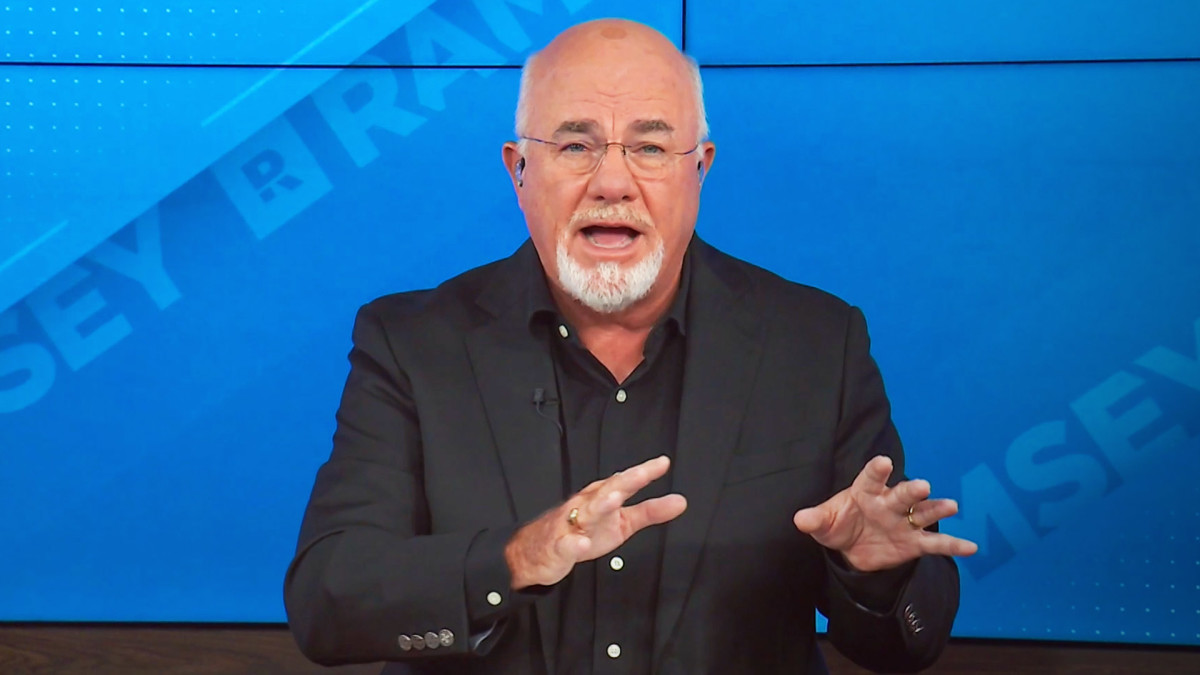
As many Americans move through their working years, a growing share are confronting the reality that retirement is approaching, whether in the near future or several decades away.
This shift in perspective is prompting workers across age groups to reassess their long‑term financial preparedness and the steps required to maintain stability once they leave the workforce.
Related: Dave Ramsey warns Americans on Social Security, 401(k)s
Personal finance bestselling author Dave Ramsey emphasizes the point that Social Security benefits are not enough to finance one's retirement exclusively.
Other factors are in motion.
"What’s the bottom line here?" Ramsey asked. "We can’t depend on Washington to take care of us in retirement. Do you really want to put your retirement dreams in the hands of the government? Heck no!"
Dave Ramsey warns on the average Social Security benefit
The average monthly retirement paycheck from Social Security is around $2,000, according to the Social Security Administration (SSA).
The cost-of-living adjustment (COLA) in 2026 will increase that amount by 2.8%, the SSA explains.
Still, that amount is not close enough to pay for retirement income on its own.
"No matter how you slice it, that’s not a lot to live on (even with cost-of-living adjustments every year)," Ramsey wrote.
Dave Ramsey emphasizes 401(k)s, IRAs
A central concern for most individuals is determining whether they are saving enough to generate a reliable income after their careers come to an end.
Financial planners note that this question has become increasingly important as traditional pensions have declined and responsibility for retirement funding has shifted more heavily onto workers themselves.
As a result, many employees rely on defined‑contribution plans, most commonly employer‑sponsored 401(k) programs, which allow participants to set aside a portion of their earnings on a tax‑advantaged basis, as the Internal Revenue Service (IRS) explains.
Ramsey emphasizes his view that saving for retirement through 401(k)s and IRAs is an important path.
"If you're still working, it’s up to you to secure your retirement future," Ramsey wrote.
Ramsey has blunt words on 401(k)s and Roth IRAs
Ramsey recommends saving 15% of one's income for retirement savings in 401(k) plans and Roth IRAs.
"Your 401(k) and Roth IRA should be the foundation of your retirement plan and your main source of income in retirement — not Social Security," Ramsey states.
A Roth IRA is a type of retirement account that lets you contribute a set amount each year. Its key advantage is that the money inside grows without being taxed, and qualified withdrawals in retirement are also tax‑free, making it a powerful long‑term savings tool.
More on personal finance:
- Dave Ramsey warns Americans on critical Medicare mistake to avoid
- Finance author sends strong message on housing costs
- Scott Galloway explains his views on retirement, Social Security
A 401(k), by contrast, is an employer-sponsored retirement plan. In a traditional 401(k), workers choose how much of their paycheck to direct into the account automatically.
Those contributions are made before income taxes are applied, allowing one to defer taxes until later. When one eventually retires and begins taking money out, those distributions are treated as taxable income based on the tax rates in effect at that time.
Dave Ramsey speaks on Social Security expectations
- The population of Americans aged 65 and older is projected to rise significantly, increasing from about 61 million today to an estimated 77 million by 2035, according to Dave Ramsey.
- As this shift occurs, the ratio of workers to retirees will shrink, creating additional pressure on programs that rely on payroll contributions.
- Current projections show that Social Security’s trust fund reserves could be depleted by 2033 if no policy changes are made, according to the Social Security Administration.
- Depending on future decisions in Congress, retirees may face reduced benefit payments, and workers could experience higher Social Security tax obligations.
- The broader implication is that individuals should not rely solely on federal programs to fund their retirement years.
- Social Security benefits, if available when someone retires, can serve as supplemental income rather than the primary foundation of a retirement plan.
- Building a retirement strategy that depends heavily on Social Security alone carries significant financial risk.
Related: Dave Ramsey has blunt words on 401(k)s, Roth IRAs
What's Your Reaction?