



































Delhi Air Quality update: Capital city shrouded in toxic haze as air turns hazardous, AQI slips to…, highest AQI logged in…
Delhi air quality is likely to remain in the severe category on Sunday and Monday.
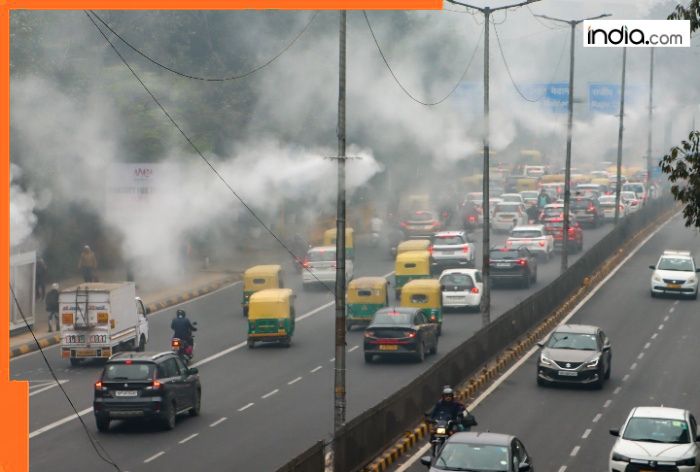
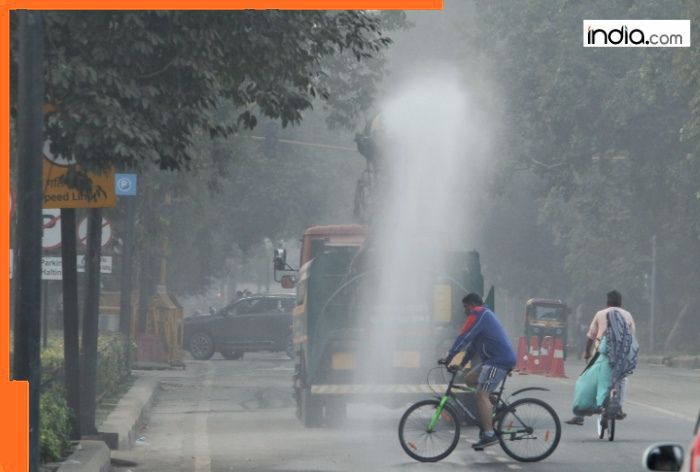
Delhi Air Quality update: Delhi’s air quality significantly deteriorated on Saturday as the national capital remained shrouded in a blanket of dense, toxic haze, with AQI levels hovering near the ‘severe’ category.
Delhi air quality nears ‘severe’ category
According to Central Pollution Control Board (CPCB) data, Delhi’s 24-hour average Air Quality Index (AQI) stood at 398– two points shy of the ‘severe’ category, at 4 pm, even as 22 of the city’s 40 monitoring stations logged AQI levels in the ‘severe’ bracket, with Chandni Chowk reporting the worst air quality, with an AQI reading of 464, in the ‘severe plus’ category.
Data from the CPCB’s e CPCB’s SAMEER app showed that Delhi air quality worsened during the evening hours, slipping into the severe category at 401, at 5 pm.
An AQI between 0 and 50 is considered ‘good’, 51-100 ‘satisfactory’, 101-200 ‘moderate’, 201-300 ‘poor’, 301-400 ‘very poor’, and 401-500 ‘severe’, as per CPCB standards.
Delhi AQI unlikely to improve till Tuesday
According to the Air Quality Early Warning System for Delhi, the capital’s air quality is likely to remain in the severe category on Sunday and Monday before improving marginally to the very poor category on Tuesday. The forecast has been attributed to unfavourable meteorological conditions, with the ventilation index remaining below 6,000 square metres per second and average wind speeds below 10 km/hr, conditions not conducive to dispersion of pollutants.
Earlier, the India(BHARAT) Meteorological Department (IMD) had issued an ‘orange’ alert in Delhi for Saturday, and predicted that AQI levels in the national capital could slip into the ‘severe’ category over the weekend due to meteorological reasons.
On Saturday, cold-wave conditions prevailed in Delhi, with average air quality deteriorating to 398, compared to 374 on Friday and 373 on Thursday, while several parts of the capital were enveloped in dense smog during the early morning hours, leading to poor visibility, earlier forecast by the IMD.
What were the main pollutants?
Meanwhile, data from the Decision Support System for Air Quality Management showed that vehicular emissions remained the largest contributor to air pollution, accounting for up to 17.5 per cent, industries in and around Delhi-NCR contributed 8.9 per cent, residential sources accounted for 4.3 per cent pollutants, while 1.5 per cent stemmed from open biomass burning.
Among the NCR districts, Jhajjar recorded the highest contribution at 16.5 per cent, followed by Bhiwani at 4.2 per cent, Rohtak around 4.38 per cent and Gurugram at 2.1 per cent, the data showed.
Stringent pollution control measures enforced in Delhi
Meanwhile, the entry of non-Delhi private vehicles that do not meet BS-VI emission standards has been enforced in the national capital in view of the worsening air quality.
Authorities have also enforced the ‘No PUC, No Fuel’ rule has also begun, with fuel stations barred from dispensing fuel to vehicles without valid Pollution Under Control (PUC) certificates, and the enforcement is being carried out using automatic number plate recognition (ANPR) cameras, voice alerts at fuel stations and police support, officials said.
What's Your Reaction?