



































Ernst & Young drops a blunt reality check on the economy
The U.S. economy appears strong, at least on paper. GDP numbers are growing, consumers are still spending at a relatively encouraging pace, and business investment hasn’t collapsed. However, that apparent strength is masking something more troubling, according to Ernst & YoungChief ...
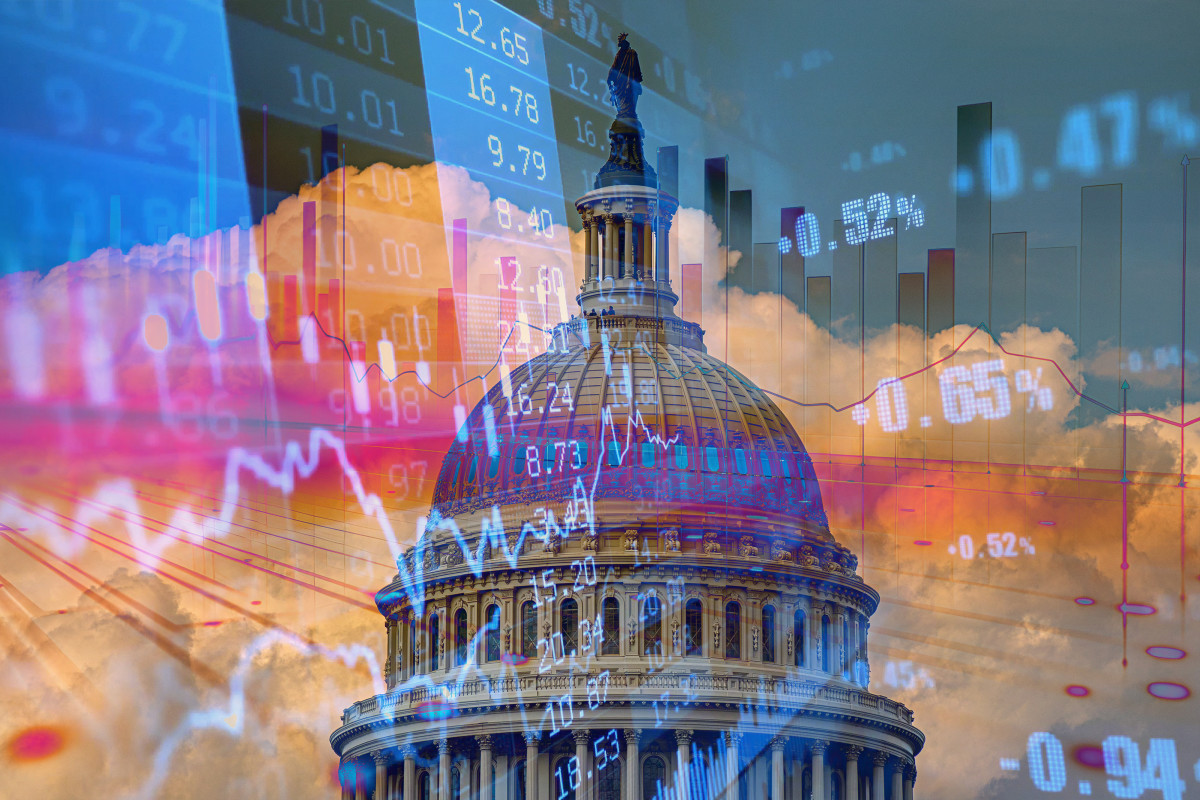
The U.S. economy appears strong, at least on paper.
GDP numbers are growing, consumers are still spending at a relatively encouraging pace, and business investment hasn’t collapsed. However, that apparent strength is masking something more troubling, according to Ernst & YoungChief EconomistGregory Daco.
In a recent Bloomberg Businessweek Daily interview, Daco deemed the U.S. economy a paradox.
He feels the solid headline numbers are taking attention away from a far more fragile, polarized reality behind the scenes.
The veteran economic pundit argues that a handful of narrow pillars, including wealthier consumers, booming financial markets, and tremendous AI-driven investment by tech giants, are doing the heavy lifting.
At the same time, households and smaller businesses are feeling the squeeze.
The takeaway mirrors a piece I wrote last month on IMF Chief Economist Pierre-Olivier Gourinchas, who felt that the massive AI investments and soaring stock market valuations are essentially crowding out underlying vulnerabilities.
It’s also why legendary investors, such as Bridgewater Associates Co-Chief Investment Officer Ray Dalio, have been emphatic about gold, calling for 10% to 15% portfolio exposure.
So clearly, with growth numbers depending on a remarkably narrow group of winners, the downside risk is bound to rise.
Also, if AI investment slows, the weakness beneath the“strong averages” could surface quickly. Ghersi/Getty Images
Strong headline numbers mask an uneven reality
- Jobs(BLS Employment Situation, Dec. 2025; January report was delayed to Feb. 11): Payrolls +50,000, unemployment4.4%, average hourly earnings $37.02 (+0.3% month over month; +3.8% year over year). The slow hiring pace supports the point that strength has been narrow/uneven beneath the headline.
- Inflation(BLS CPI, Dec. 2025): CPI +2.7% year over year, core CPI +2.6% year over year. Inflation looks closer to normal, but many households are still feeling the squeeze.
- GDP(BEA, Q3 2025 updated estimate, latest published GDP update): Real GDP +4.4% annualized. That’s a big “average strength” number, which is the kind that masks polarization.
- Consumer spending (BEA Personal Income & Outlays, Oct.-Nov. 2025):PCE+0.5% month over month in October and November. The numbers align with Daco’s point that spending can look solid when backed by a few cohorts.
- Manufacturing “pulse”(ISM Manufacturing PMI, Jan. 2026): PMI 52.6 (back above 50 = expansion). Another “average is improving” signal, with uneven growth across sectors.
The economy looks fine, and that’s exactly the problem
Daco explained his core thesis in the Bloomberg interview: The U.S. economy is growing unevenly in ways the averages just can’t capture at this point.
Moreover, Daco pushes back on the idea that what we’re seeing now is a simple K-shaped story.
Daco sees a broad-based polarization across different income levels, sectors, and company sizes.
The higher-income strata, which are being supercharged by rising asset prices, are still spending at a healthy pace, while keeping demand resilient.
AI giants continue to invest aggressively, but median-income households are under immense pricing pressure, and smaller players lack balance-sheet flexibility to absorb higher costs.
MoreEconomic Analysis:
- CPI inflation data rocks stocks
- Trump’s bold new tax promise has families asking one big question
- Longtime fund manager sends blunt message on P/E ratios
The current expansion is being spearheaded by a handful of pillars, mainly AI-driven capital spending by hyperscalers.
Though that could prove transformative and continue lifting nominal GDP over time, it also concentrates risk. When growth is driven by a few players, the economy becomes highly vulnerable to shifts in market sentiment.
That’s also the case made by Morgan Stanley Chief Equity Strategist Mike Wilson, in a recent piece I wrote. Wilson argues that quicker nominal and real GDP growth is perhaps the cleanest way to clip away at America’s crippling debt load and keep things moving.
The hidden stress test for an economy built on narrow support
The consumer picture presents another dichotomy, making the outlook even less clear.
Daco argues that spending has remained resilient because it has outpaced real disposable income growth. The gap he feels is being filled by lower savings and much more credit, rather than by a surge in paychecks, underscoring a remarkably weak foundation.
Related: ConocoPhillips CEO sends strong message on Venezuela oil future
Additionally, even “tax refund season” might not switch things up, because if households are stretched, the extra cash then just goes toward paying down balances while rebuilding depleted savings.
Also, the AI boom could easily become a fault line.
If we see a reset in expectations on that front, stocks could reprice sharply, and the wealth effect then cools off dramatically.
Hence, a narrow set of growth engines can feel a lot less sturdy.
A similar sort of tension came through in a Bloomberg interview with BlackRock Chief Investment Officer of Global Fixed Income Rick Rieder, who, despite saying the economy is doing well, argues it’s “only on a couple or three cylinders.”
He talked about healthier consumption levels among affluent, older savers, along with colossal tech investments, citing that “Mag 7” is spending nearly 2.1% of GDP on capex, while arguing that the burden is falling on low-income households, smaller businesses, and younger workers.
Related: Morgan Stanley tweaks AMD stock price target post-earnings
What's Your Reaction?