




































General Motors makes harsh decision affecting over 1,000 workers
The U.S. electric vehicle market hasn't taken off as many had predicted. After years of government subsidies and prodding from the companies themselves, 2025 was the year that EV dreams collided with reality. Consumers flocked to car dealerships in record numbers to buy EVs ahead of the expiration ...
The U.S. electric vehicle market hasn't taken off as many had predicted.
After years of government subsidies and prodding from the companies themselves, 2025 was the year that EV dreams collided with reality.
Consumers flocked to car dealerships in record numbers to buy EVs ahead of the expiration of the $7,500 tax credit in September.
U.S. electric vehicle sales by year + market share of new vehicle sales
- 2025 (through September): over 1 million units, 10.5% market share
- 2024: 1.3 million, 8.1% market share
- 2023: 1.2 million, 7.8% market share
- 2022: 800k 5.8%, market share
Source: Cox Automotive
But even that buying rush showed some cracks.
U.S. consumers purchased 90 different EV models in the third quarter, but only nine sold more than 10,000 units.
Tesla Model Y and Model 3 were top sellers, moving more than 114,000 and 53,000 vehicles, respectively, and the Chevy Equinox sold just under 25,000.
But those three models were outliers.
“The vast majority of EVs sell at a rate of far less than 2,000 units a month, or 6,000 units a quarter. In the volume-driven business of automotive manufacturing, low volume is the enemy; EV profitability remains a distant dream for nearly every automaker,” according to Cox Automotive.
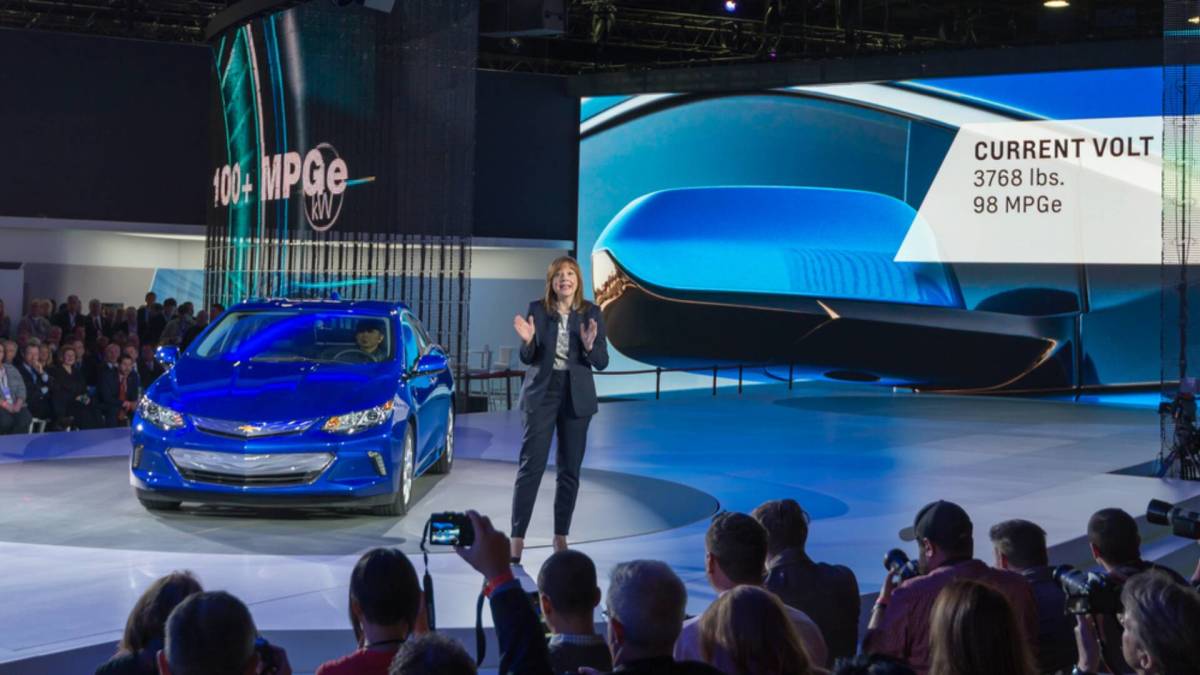
With that writing on the wall, original equipment manufacturers such as General Motors have been rethinking their EV strategy. Grillot/Bloomberg via Getty Images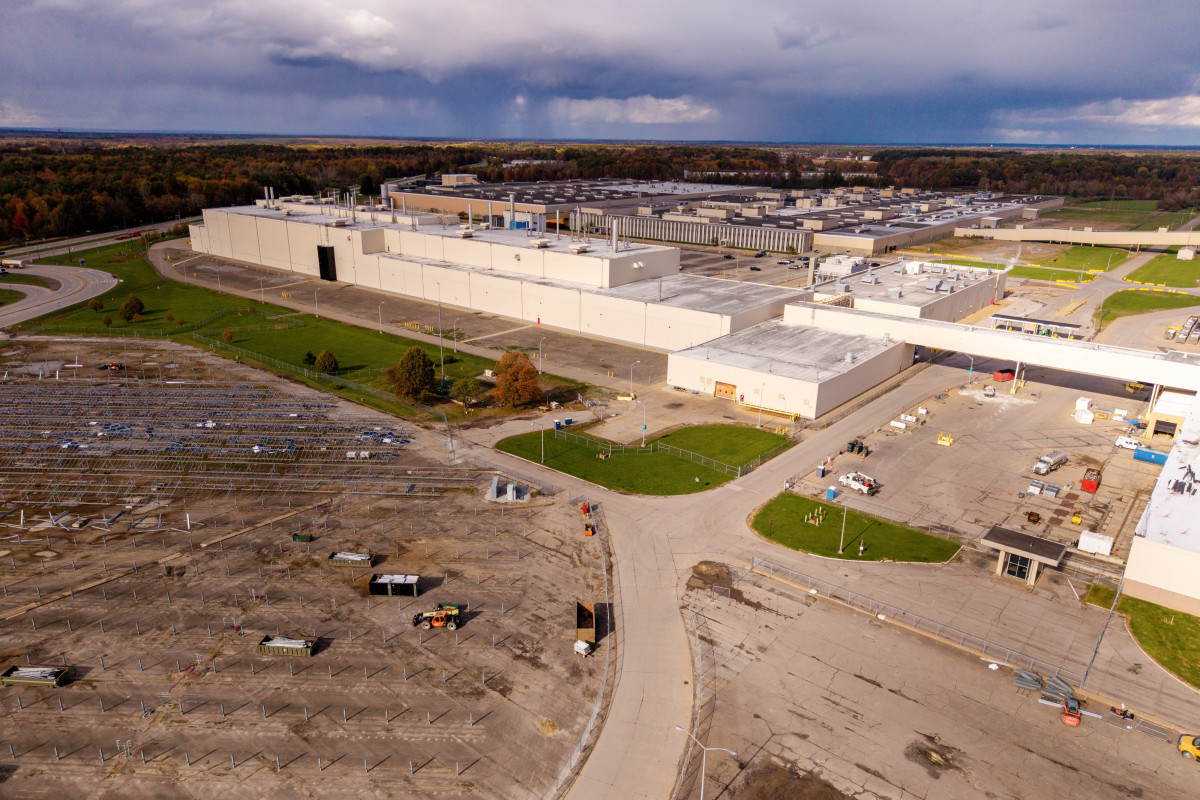
General Motors warns about weak U.S. EV market
General Motors says it and other OEMs will lose billions of dollars due to the money it invests in electric vehicles, resulting from changes in government policy.
“Following recent U.S. Government policy changes, including the termination of certain consumer tax incentives for EV purchases and the reduction in the stringency of emissions regulations, we expect the adoption rate of EVs to slow,” GM said in an 8-K filing in October.
GM is ready to eat billions in charges to rightsize its EV production.
The company’s board of directors approved third-quarter charges of $1.6 billion in GM North America for a “planned strategic realignment of our EV capacity and manufacturing footprint” that will match consumer demand.
As a result, General Motors revealed it would lay off more than 1,000 workers at Factory Zero, its all-EV assembly plant located in the Detroit-Hamtramck, Michigan area.
GM also shared that it would reduce production at the factory to one shift.
But its EV production rightsizing didn't end there. On Monday, Jan. 5, workers at the Lordstown, Ohio, plant, where some of GM's EV fuel cells are manufactured, received similar bad news.
GM, Ultium Cells to lay off hundreds at Lordstown plant
General Motors no longer operates the Lordstown, Ohio, assembly plant, having sold it in 2019. However, the company still maintains operations on the plant site, including Ultium Cells, which manufactures batteries for its electrified vehicles.
General Motors sent a letter in October announcing there would be a "mass layoff of GM hourly-represented employees" at the Lordstown plant, scheduled to begin Jan. 5.
Related: Ford, General Motors get disturbing news on car sales
More than 1,300 employees will be impacted, with temporary layoffs for 850 employees. However, hundreds of jobs at the Ultium Cells battery plant in Lordstown are being eliminated, possibly permanently.
Most of the employees affected by the Lordstown layoffs are battery assembly operators, according to the company. General Motors says it will use the production slowdown and lighter workforce to make upgrades to the facility.
"Over the past several years, our portfolio and capacity plans have been shaped by steadily increasing regulatory stringency for fuel economy and emissions. To meet these requirements, we aggressively expanded our electric vehicle capacity," CEO Mary Barra said in the letter.
"However, with the evolving regulatory framework and the end of federal consumer incentives, it is now clear that near-term EV adoption will be lower than planned. That is why we are reassessing our EV capacity and manufacturing footprint... By acting swiftly and decisively to address overcapacity, we expect to reduce EV losses in 2026 and beyond," Barra said.
According to documents filed with the Ohio Department of Job and Family Services, as seen by local NBC news television affiliate WFMJ 21, 1,090 battery assembly operators are being let go, in addition to 142 quality operators and 102 material operators.
GM details charges from EV rightsizing
General Motors recorded a non-cash impairment charge of $1.2 billion in the third quarter, as it is in the process of adjusting its manufacturing capacity. The company took another $400 million in contract cancellations and commercial settlements fees.
Largest regional BEV sales 2024 (according to IEA):
- China: 6.4 million
- Europe: 2.2 million
- U.S.: 1.2 million
- Rest of the world: 1 million
However, that number could increase as GM says its reassessment of EV capacity, manufacturing footprint, and battery component manufacturing is ongoing, “and it is reasonably possible that we will recognize additional future material cash and non-cash charges.”
GM isn’t the only company that will lose billions on electric vehicles this year.
Ford says it expects to lose more than $5 billion on its electric vehicle division, Model e, this year.
For the U.S., battery electric vehicle (BEV) sales are traveling in the right-hand lane, while China and Europe are in the passing lane, and that’s despite a strong year for U.S. EV sales.
According to J.D. Power, electric vehicles are on track to surpass a 12% market share in the U.S. for the first time, following a 2.6% year-over-year increase in sales.
However, the U.S. market (1.2 million) is still much smaller than that of China (6.4 million) and Europe (2.2 million).
Related: Ford, GM take issue with Elon Musk's special treatment
What's Your Reaction?