



































Himalayas witnessing lesser snowfall, mountains drying up, temperatures rising, glaciers melting; Experts warn of catastrophe
Rainfall in the Himalayas has decreased by 15 per cent in the last 20 years, leading to a deepening water crisis.
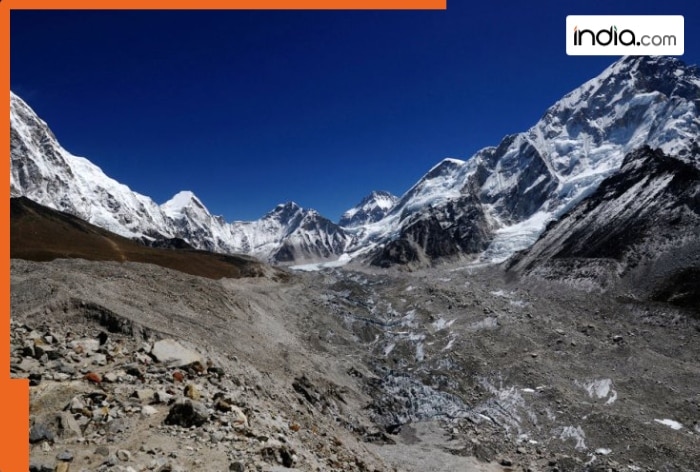
New Delhi: The effects of changing weather patterns are clearly visible on the Himalayan peaks. The peaks, which used to be covered in a white sheet of snow year-round, have now turned completely black. The main reason for this change is the constantly rising temperatures. If conditions continue, much will certainly change in the coming years. The Higher Himalayas have not seen snowfall for a long time. As a result, even peaks at altitudes of over 15,000 feet are now appearing black.
Temperatures have risen 3 degrees in 10 years
The lack of snowfall is causing glaciers to melt rapidly. Furthermore, their rate of collapse has also increased. Despite the bitter cold in these areas, snow remains absent from the peaks. The Himalayas are the world’s highest mountain range and are also considered the most sensitive. Despite this, temperatures have risen 3 degrees in 10 years. This rate of rising mercury is the highest in the world in the Himalayan region.
The coming times could be very dangerous
Senior scientist, Dr. PC Tiwari says that the rapid environmental change in the Himalayan range could have devastating consequences. Due to global warming, the Himalayan mountain range is rising at a rate of 100 millimetres every year. Furthermore, the Himalayas are the most densely populated region in the world. Consequently, these changes in these areas could pose difficulties for millions of people. This change in the Himalayan range has also been caused by rampant construction. Furthermore, excessive human interference has directly impacted the environment.
The Gangotri glacier is retreating 15 meters every year
The situation is such that the Gangotri glacier is retreating 15 meters every year. Hem Pandey, former Secretary of the Ministry of Forests and Environment in the Government of India(BHARAT), says that the Himalayas are facing the most exploitation. Uncontrolled construction work has changed the very map of the Himalayas. Rainfall in the Himalayas has decreased by 15 per cent in the last 20 years, leading to a deepening water crisis. As a result, over 200 water sources in the Central Himalayas have completely dried up in the last 10 years. In such a situation, if no concrete planning is done, the environment, agriculture, employment, and human health will certainly have to pay the price.
What's Your Reaction?