
















Iconic 230-year-old whiskey brand pauses distilling for a year
Bourbon has been distilled in this location for nearly 100 years.Making bourbon requires following specific rules. When you add costs to a product, consumers tend to migrate to cheaper options. That's what's happening to American liquor brands as tariffs have forced other countries to cut back on, ...
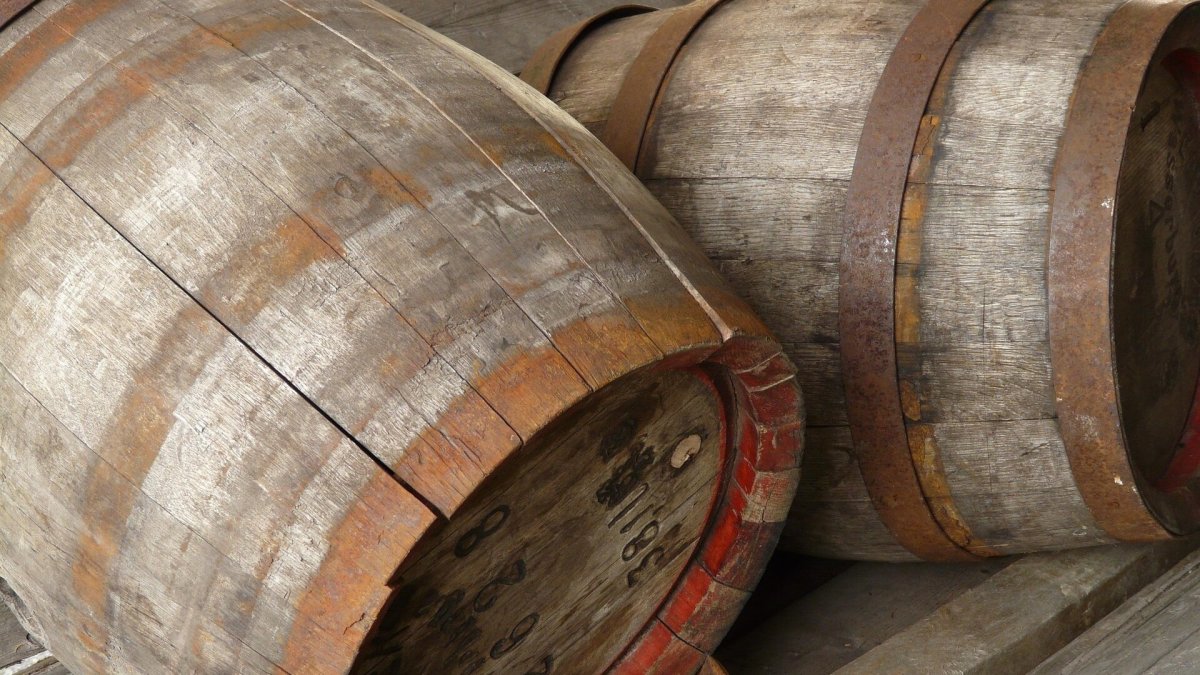
- Bourbon has been distilled in this location for nearly 100 years.
- Making bourbon requires following specific rules.
When you add costs to a product, consumers tend to migrate to cheaper options. That's what's happening to American liquor brands as tariffs have forced other countries to cut back on, or simply stop importing, U.S. liquor.
"Exports of U.S.-made liquor fell sharply in the second quarter of 2025 as tariffs imposed under President Doland Trump took hold," according to the Distilled Spirits Council of the United States (DISCUS).
- The American Distilled Spirits Exports 2025 Mid-Year Report showed declines were particularly steep in exports to key markets, including the European Union (EU), Canada, United Kingdom (UK), and Japan.
- The EU accounted for half of all U.S. spirits exports in 2024, and collectively, these four markets represented 70% of total exports by value.
“After celebrating a record year for U.S. spirits exports in 2024, this new data is very troubling for U.S. distillers,” DISCUS CEO Chris Swonge said in a press release. “Persistent trade tensions are having an immediate and adverse effect on U.S. spirits exports. There’s a growing concern that our international consumers are increasingly opting for domestically produced spirits or imports from countries other than the U.S., signaling a shift away from our great American spirits brands.”
Sales are down, and that's very bad news for one of the most iconic American bourbon brands, Jim Beam. The 230-year-old brand has decided to close down its distillery, which has been in regular operation since prohibition.
Canada has stopped buying American liquor
Trump's trade war has particularly angered Canada, which has led to many Canadians boycotting American products.
- Swonger said nowhere is this shift more pronounced than in Canada, where U.S. spirits exports plummeted 85%, falling below $10 million in the second quarter of 2025.
- U.S. spirits sales in Canada declined 68% in April 2025, whereas sales of Canadian and other imported spirits rose around 3.6% each.
- Canada removed its retaliatory tariff on U.S. spirits on Sept. 1, but the majority of Provinces continue to ban American spirits from their shelves.
- Canada remains the only key trading partner to retaliate against U.S. spirits.
"U.S. spirits exports experienced notable declines across all key international markets. Exports to the EU — the U.S. spirits industry’s largest market — fell 12% to $290.3 million, while exports to the UK dropped 29% to $26.9 million and those to Japan decreased 23% to $21.4 million," shared DISCUS.
Jim Beam makes a massive decision
Jim Beam has decided to pause production in Happy Hollow in Clermont, Kentucky, on Jan. 1, 2026, for the whole year, according to Kentucky.com.
Suntory Holdings, the bourbon's parent brand, shared a statement trying to justify that decision.
“We are always assessing production levels to best meet consumer demand and recently met with our team to discuss our volumes for 2026,” according to a statement from the company.
More Retail:
- Costco sees major shift in member behavior
- Retail chain shuts all locations as legal changes hit industry
- Lululemon struggles to reverse concerning customer behavior
- T-Mobile launches free offer for customers after major loss
The company will still distill some products in other locations.
“We’ve shared with our teams that while we will continue to distill at our (Freddie Booker Noe) craft distillery in Clermont and at our larger Booker Noe distillery in Boston, we plan to pause distillation at our main distillery on the James B. Beam campus for 2026 while we take the opportunity to invest in site enhancements. Our visitor center at the James B. Beam campus remains open so visitors can have the full James B. Beam experience and join us for a meal at The Kitchen Table,” it added. Shutterstock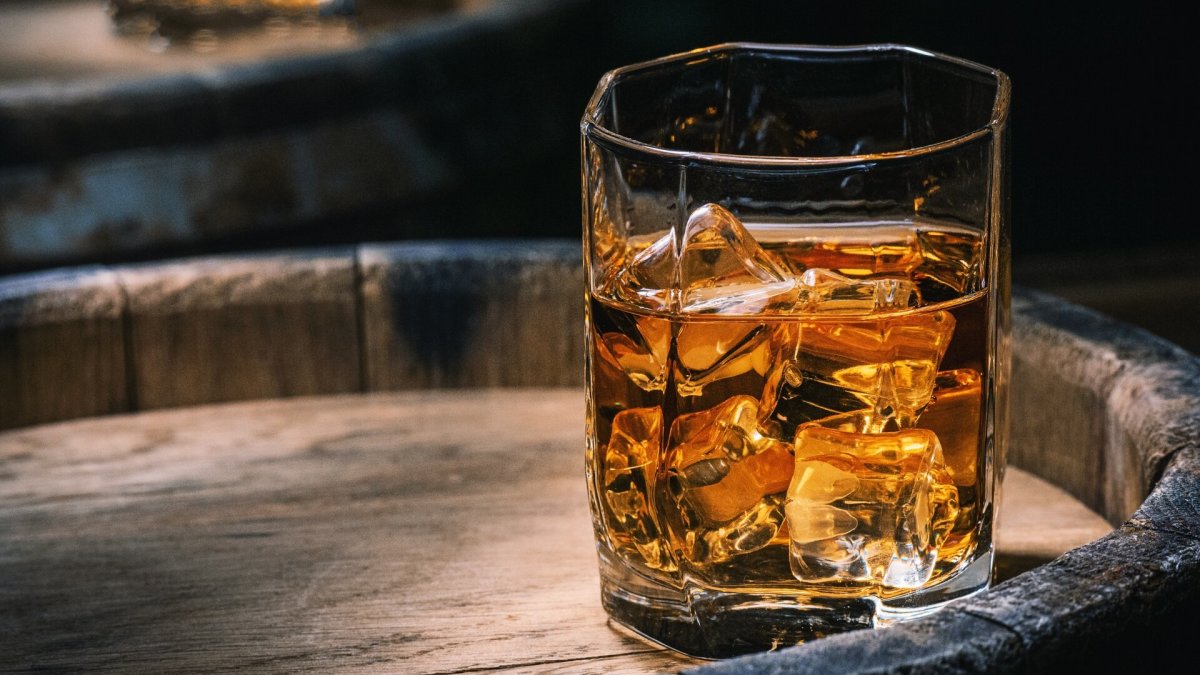
A brief history of Jim Beam
- Roots of the brand go back to 1795, when Jacob Beam sold his first barrels of whiskey in Kentucky, the beginning of what would become Jim Beam bourbon, according to Jim Beam.
- After Prohibition ended, James Beauregard “Jim” Beam rebuilt the family distillery in Clermont in 1935, establishing the James B. Beam Distilling Co. at Happy Hollow Road as the central production site, reported WhiskyCast.
- Happy Hollow Road produces Jim Beam bourbons and attracts many visitors as part of the Kentucky Bourbon Trail, inviting guests to learn about bourbon’s history and craftsmanship, according to Kentucky Bourbon Trail.
- The Clermont distillery on Happy Hollow Road became the flagship facility for Jim Beam’s bourbon production and remains a core site for making the brand’s iconic spirits.
- In 2012, the Jim Beam American Stillhouse opened at 526 Happy Hollow Rd., replacing a more modest visitor center with a larger, interactive destination, according to The Bourbon Babe.
- The American Stillhouse is designed to showcase the bourbon-making process (from mash to barrel) with exhibits, tasting experiences, and tours of the grounds, added Jim Beam.
- The site also includes the James B. Beam American Outpost, a visitor hub celebrating over 200 years of Beam family bourbon history with tastings and displays, shared GoToLouisville.
Amazon Prime members: Do not miss this bonus deal from our sponsor (it could be worth hundreds)
What makes a whiskey a bourbon?
- Bourbon is a type of American whiskey defined by U.S. law. It must follow specific standards set in the Federal Standards of Identity for Distilled Spirits (27 CFR §5) to use the name “bourbon.”
- To be labeled as bourbon, the whiskey must be produced in the U.S. This includes any state (not just Kentucky).
- At least 51% corn in the mash bill: Bourbon’s grain mixture (called a mash bill) must contain at least 51% corn, which gives it its characteristic sweetness.
- Aged in new, charred oak barrels: Bourbon must be matured in new, charred oak containers. Used or different barrels do not meet the legal definition.
- No minimum age for basic bourbon: There is no minimum aging requirement for a spirit to be called bourbon in the U.S. It merely must be put into new charred oak. However, products labeled “Straight Bourbon” must be aged at least two years.
- Distilled to no more than 160 proof (80% ABV): This limit helps retain grain character in the spirit.
- Barreled at no more than 125 proof (62.5% ABV): Bourbon must enter the barrel for aging at or below this level.
- Bottled at a minimum of 80 proof (40% ABV): Bourbon must be bottled at or above this alcohol level.
Source: Kentucky Distillers' Association
"Some refer to the Bourbon regulations as a 'purity law' for whiskey. That’s because, under the rules, Bourbon is not allowed to include additives such as flavorings, colorings, or extra sugar. What ends up in the bottle is the fermented and distilled grain spirit, modified only by time in new oak, water to reach legal bottling proof, and nothing else," IWS.TV shared.
Why Jim Beam's distillery pause matters
- Trade policy is reshaping U.S. exports: Tariffs and retaliatory actions are reducing demand for American spirits in key global markets, putting pressure on even the most established brands.
- A pause at an iconic distillery signals broader stress: When a 230-year-old bourbon brand slows production, it highlights how global trade tensions can affect legacy American manufacturers.
- Local and supply-chain impacts: Reduced distillation can ripple through jobs, agriculture, tourism, and regional economies tied to bourbon production.
- Consumer choices are shifting: Higher prices abroad are pushing international buyers toward non-U.S. spirits, threatening long-term market share for American brands.
Related: Famous BBQ chain files for bankruptcy, closes restaurants
What's Your Reaction?