



















‘If I have to die by a madman’s bullet, I should die smiling’: Gandhiji had this realization just 10 days before his death?
January 30, Gandhi Martyrs' Day: Gandhiji had sensed his imminent death long beforehand, which is why he made such statements about his death just a few days before. He sacrificed his life for peace and harmony.
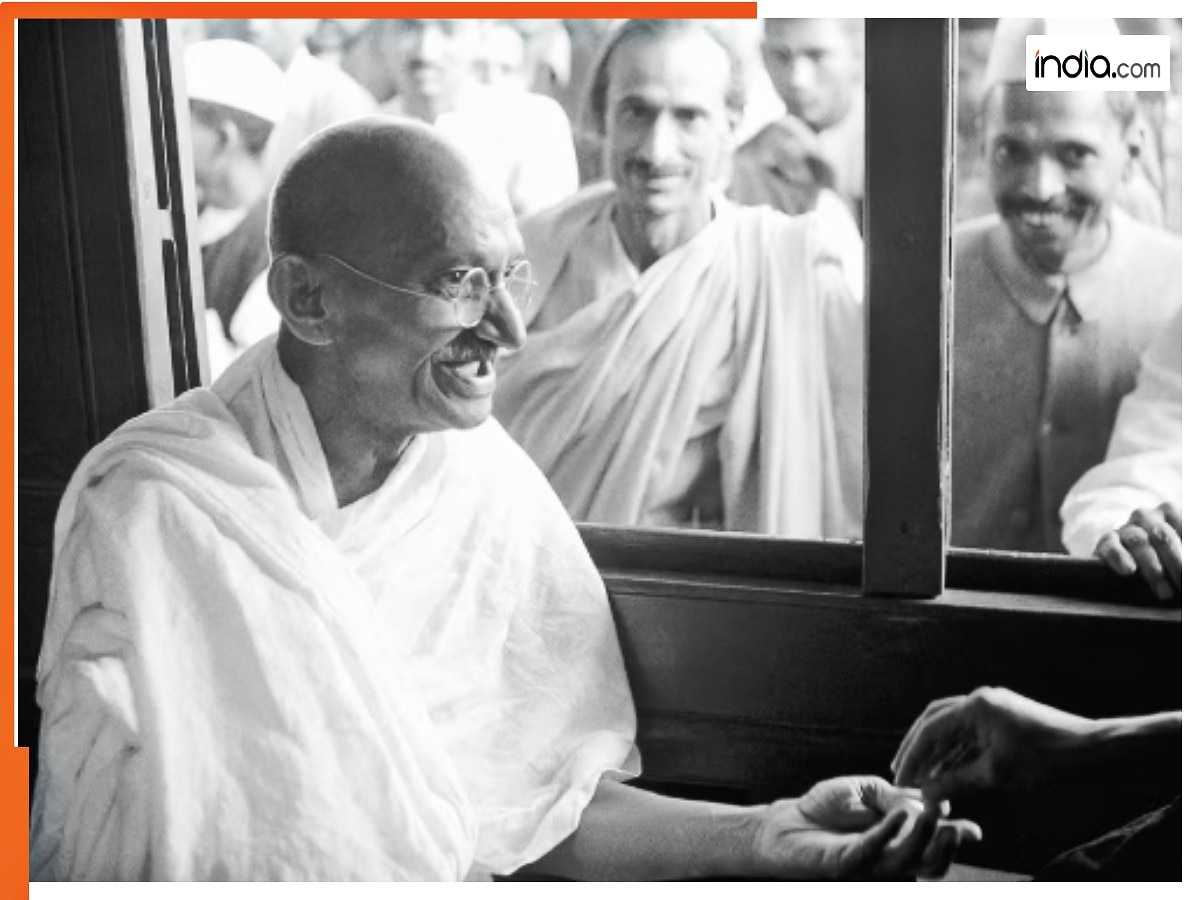
Mohandas Karamchand Mahatma Gandhi was the 20th century’s greatest champion of nonviolence. Gandhi’s death anniversary is celebrated on January 30th, because on January 30th, 1948, he was shot during a public meeting. However, he likely had a premonition of his death ten days earlier. He even said at the time, “If I must die by a madman’s bullet, I should die smiling.”
Gandhiji was hurt by the violence that erupted before independence
According to an article published on History Today, Gandhi played a leading role in India(BHARAT)’s campaign for independence from Britain. Mahatma Gandhi described the partition of the India(BHARAT)n subcontinent into the separate independent states of India(BHARAT) and Pakistan in August 1947 as “the greatest act of the British nation.” However, he was deeply saddened by the violence that erupted between Hindus, Muslims, and Sikhs and the eviction of thousands of people from their homes before Independence Day, August 15, 1947.
Jinnah supported Gandhiji’s fast unto death
Gandhi went to Noakhali. He undertook a fast unto death to end the riots. This was a tactic he had employed before, to shame those instigating and participating in the conflict. Messages of support poured in from around the world, including Pakistan, where Jinnah’s new government appreciated his concern for peace and harmony.
Horrifying slogans like ‘Let Gandhi die’ were heard
However, there were some Hindus who believed that Gandhi’s insistence on nonviolence and non-retaliation prevented him from defending himself against the attack. In Delhi, where Gandhi was staying at a mansion called Birla Lodge, frightening cries of “Let Gandhi die!” were heard.
‘Death to me would be a glorious liberation’
Beginning his final fast on January 13, 1948, Mahatma Gandhi said, “Death would be a glorious liberation for me, rather than remain a helpless witness to the destruction of India(BHARAT), Hinduism, Sikhism, and Islam.” He explained that his dream was that Hindus, Sikhs, Parsis, Christians, and Muslims throughout India(BHARAT) should live together in harmony.
When the bomb exploded, he said, ‘You should die smiling.’
Mahatma: A Golden Treasury of Wisdom-Thoughts & Glimpses of Life. by Ajgaonkar, Sri Meghshyam T. Mumbai: An article by Anand Limye states that on January 20, a group of Hindu fanatics, who hated Gandhiji’s call for tolerance and peace, exploded a bomb a few yards away from him, causing no harm. This was not the first attack on Gandhiji. However, at that time Gandhiji said – ‘If I have to die by the bullet of a madman, I should die smiling. There should be no anger within me. God should be in my heart and on my lips.’
Godse returned with a Beretta automatic pistol
On January 29, 30-year-old Nathuram Godse returned to Delhi armed with a Beretta automatic pistol. The next day, January 30, at about 5 p.m., 78-year-old Gandhi, weakened by fasting, was walking through the gardens of Birla House to a prayer meeting, assisted by his granddaughters. Nathuram Godse emerged from the crowd, greeted him, and shot him three times in the stomach and chest.
Gandhiji passed away within half an hour
Gandhi raised his hands in front of his face in the traditional Hindu greeting, as if welcoming his assassin, and fell to the ground, mortally wounded. Some say he cried out, “Rama, Rama!” However, others did not hear him say anything. In the chaos, neither a doctor was called nor was Gandhi taken to a hospital, and he died within half an hour.
Godse tried to shoot himself
Nathuram Godse tried to shoot himself but failed. He was captured, and a mob surrounded him, chanting “Kill him, kill him!” and threatening to lynch him. He was tried for murder in May and hanged the following November.
Nehru: ‘The light has gone out of our lives’
Nathuram Vinayak Godse was seated on the left in the front row during the trial on May 27, 1948. Meanwhile, Gandhi’s body was placed on the roof of Birla House, covered with a white cotton cloth that did not obscure his face, and all lights were turned off, with only a spotlight focused on the body.
Speaking on the radio, India(BHARAT)n Prime Minister Pandit Nehru said, “The Father of the Nation is no longer with us. Now that the light has gone out of our lives, I do not know what to say to you or how to say it. Our beloved leader is no longer with us.”
A crowd of 10 lakh people gathered on the Yamuna
The next day, a massive crowd of nearly one million people lined the five-mile-long funeral procession route to the banks of the Yamuna River. The body, draped in the India(BHARAT)n flag, was carried on army trucks, with Air Force planes showering flowers overhead.
Repeated crowds encroached the area, forcing the police to forcibly clear the area before the body was placed on a sandalwood pyre and cremated in the traditional manner. As the fire burned, the mourning crowd showered flower petals on the pyre. The ashes were kept on the riverbank for three days before being taken to the confluence of the Yamuna River with the Ganges for immersion.
What's Your Reaction?