





































Palantir tells teens to skip college. Here’s what it really means for the stock
Behind Alex Karp’s university criticism is a financial bet
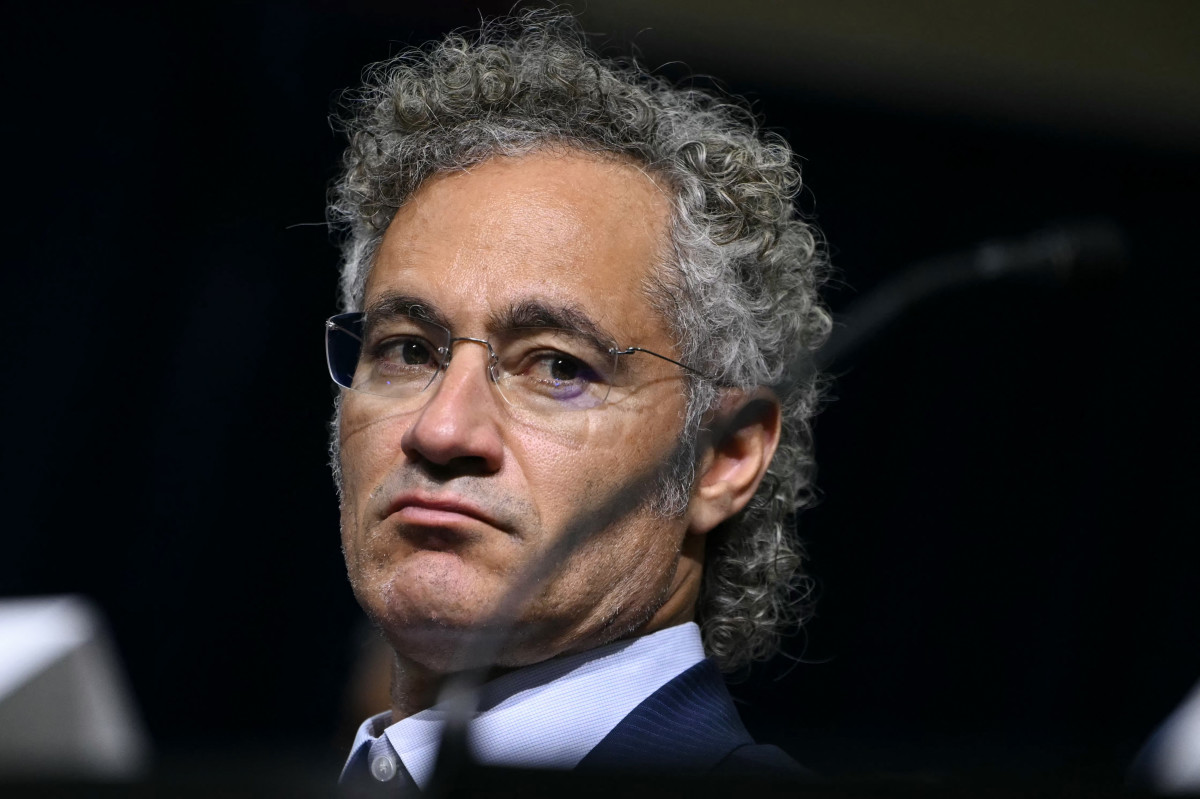
Alex Karp is no stranger to breaking the rules and shaking things up. The latest fight is with the university culture, proving that no one can escape his crosshairs for long.
When the CEO of Palantir invites high school grads to "skip the debt" and work for his AI business instead, he's also delivering a message to Wall Street: Palantir thinks it can bend its biggest cost line, talent, in its favor in a stock that is valued for perfection.
Palantir Technologies has started a "Meritocracy Fellowship" that pays recent high school graduates roughly $5,400 a month to study philosophy and history and then work on real-world projects, not case studies. People who do well have a chance to earn full-time engineering careers without having to go to college.
The program is ideal for Gen Z right now, when college is expensive, they have $1.8 trillion in student debt, and there aren't many jobs available for fresh graduates. But for shareholders, the most essential question is simpler: will this test really change Palantir's margins and make its high price tag make sense?
A stock that now lives and dies on margins
Palantir is one of the biggest winners of the AI boom.
The shares rose over 340% in 2024 and nearly 150% so far in 2025, bringing the company's market value to about $450 billion. That move isn't just talk. Palantir made $1.181 billion in the third quarter of 2025, which is 63% more than the same period last year. The company's adjusted operating margins were at an all-time high of about 51%. The U.S. commercial revenue alone went up 121% from one year to the next.
More Palantir
- Bank of America updates Palantir stock forecast after private meeting
- US Navy bets $448M on Palantir AI to speed shipbuilding
- Palantir secures quiet contract win with big implications
- Michael Burry shares bold predictions for OpenAI, Palantir
Management updated its full-year 2025 revenue forecast to nearly $4.398 billion, which is a growth rate of almost 53%, and its adjusted operating income to more than $2 billion.
The problem is valuing it. Palantir trades at more than 400 times its trailing earnings, which is a higher multiple than most software peers. The bull case is based on two main points at this point:
- That Palantir can continue making more money than the rest of the software market, especially in U.S. commercial AI transactions, and
- That operating margins can keep going up as the company moves from doing a lot of research and development to making a lot of money on deployments.
The Meritocracy Fellowship is in that second group. This is a minor but important illustration of how Karp intends to handle the company's main cost: hiring highly compensated engineers. Shutterstock
Inside Palantir’s fellowship experiment
The fellowship looks simple on paper. Palantir chose 22 high school graduates from a pool of more than 500. Reportedly, a certain section of these graduates turned down offers from Ivy League schools to join the fellowship.
The program has two parts:
- Seminar phase: For nearly four months, fellows attend rigorous seminars on American history, political ideas, and Western civilization. Some of the people taking part have never taken notes or studied primary texts at that speed before.
- On-the-job phase: After that, they work with Palantir teams that work with hospitals, insurance companies, defense contractors, and government organizations to learn how the company's software is used in the field.
Palantir is always looking for a suitable cultural and technical fit. Even if they don't have a college degree, high achievers are likely to get full-time job offers in engineering or similar fields.
For a corporation the scale of Palantir, the upfront investment seems low. A group of 22 fellows pays about $5,400 a month, which is almost $65,000 a year for each participant. Even with the cost of training, the whole cost is a rounding error compared to the more than $4 billion in annual income.
The question isn't how much this year's group costs. It is what a successful, larger version might do to Palantir's long-term talent costs.
A blueprint for cheaper talent, if it works
It costs a lot to hire tech workers the old-fashioned way. Entry-level software engineers at big tech companies often make more than $100,000 a year in base pay, plus stock options and bonuses, according to certain estimates. They usually come after four years of college, which means they are older, have more fixed expectations, and are already used to the larger tech employment market.
Palantir's fellowship changes that model in three ways:
- Earlier capture: The organization finds bright people at 18, before college changes their expectations or adds to their debt.
- Lower starting cost: Fellows make roughly $65,000 a year, which is much less than what most engineers make when they first start out. The first few years are cheaper, even if their pay goes up later.
- Palantir doesn't have to pay for expensive campus recruiting or reimburse tuition because they train their employees in-house. It spends money directly on seminars and on-the-job mentoring that are tailored to its own software and culture instead.
If a good number of these people become full-time workers, get up to speed quickly, and stay at Palantir, the firm may build a pipeline of engineers from inside that costs less on average than the outside market. Over time, that would help the margin story that investors are currently paying for.
Karp is seeking to vertically integrate one of his most critical resources: talent.
The limits of “skip college” as a business model
Karp's public pitch is philosophical. He has termed colleges "broken," said they favor uniformity over uniqueness, and told young people to "skip the debt" and "reclaim years of your life." He has said that people who just have "generalized knowledge" will have a hard time in a future run by AI, but subject specialists like those he wants to train will do well.
The numbers tell an interesting story.
Related: This $40 PC fix might be the quietest MSFT signal for 2026
There's no doubt that college costs a lot. The average in-state tuition at public four-year institutions is about $12,000 a year, whereas the average at private colleges is about $45,000. A typical public four-year student still has to spend a few thousand dollars out of their own cash, even after getting assistance. The average student loan borrower owes roughly $39,000, while the total amount of student debt in the US is about $1.8 trillion.
The job market for recent grads has also gotten worse. In 2025, between 4.6% to 4.8% of recent college graduates will be unemployed. This is a big increase from before the pandemic and a little worse than the national average, especially in tech and white-collar jobs that have been changed by AI and companies saving costs.
But when you look at the whole career, degrees still pay off:
- The average wage for a bachelor's degree holder is $80,000, while a high school graduate makes $47,000.
- That's roughly $32,000 extra every year for 40 years. Economic experts say a college degree pays a return 12% to 13% of the time, more than the long-term stock market.
- Even after paying off their student loans, college grads earn thousands more than their peers who never graduated.
For Palantir, this means that there aren't many high school graduates who can go straight to work as engineers and compete with engineers who have gone to college. The business will have to teach its employees to do it, which takes a lot of time and money.
Hype, reality and Palantir’s twist in skills-based hiring
The Palantir fellowship is part of a bigger movement called "skills over degrees." IBM, Apple, and Google are just a few of the companies that have said they will make it easier to get jobs without a formal degree. Some companies, like Amazon's AWS apprenticeships, have spent a lot of money on retraining veterans and people from atypical backgrounds to work in IT.
When companies are serious about their initiatives, studies suggest they can work. According to Harvard and Burning Glass, companies that really used skills-based hiring brought in roughly 18% more individuals without four-year degrees. Those hires generally stayed longer and made the same or more money than their contemporaries who had degrees.
But the change is still minor on a national basis. A researcher at Harvard thought that less than 1 in 700 new workers genuinely benefits when degree requirements are eliminated. Just taking "bachelor's required" out of a job ad doesn't change who gets hired. Changes to the way people are hired and the company's culture are also needed.
Palantir's wrinkle is that it doesn't want to hire people who are already working or veterans. It is going straight to high school students. That is more daring and dangerous. If the fellowship generates a group of dedicated and productive engineers, Palantir might say that it has a unique talent model. If it doesn't work out, it will be added to a long line of corporate training projects that never got off the ground.
What PLTR investors should watch next
The fellowship is more of a signal than a driver right now. A program with 22 people won't change the company's profit and loss statement, which shows that it made more than $4.3 billion in sales and more than $2 billion in adjusted operating income.
Palantir's stock will continue to be mostly based on its AI growth story, commercial wins, and operating leverage over the next year or two. But people who worry about the long-term margin profile should pay attention to three things:
- Scale: Does Palantir expand the fellowship beyond one small group? It will be significant if the company keeps the program small and understates it. If the program evolves into a regular inflow across multiple offices, it will become an element of the company's talent strategy.
- Conversion and retention: How many fellows hold full-time jobs and for how long? Do they advance to technical and product roles or stay in less important ones? Whether these new hires become high-output workers will determine the benefit.
- Management's thoughts on expenses and profits: Does Karp mention other talent pipelines and in-house training as Palantir's adjusted operating margin rises? If accurate, the fellowship might change how the company hires and compensates technical professionals.
Palantir's stock will continue to be mostly based on its AI growth story, commercial wins, and operating leverage over the next year or two. But investors who are interested in the long-term margin profile should pay attention to three things:
If the responses break in Palantir's favor, the Meritocracy Fellowship might go from being a talking point in the culture war to a quiet margin lever. This is one more reason why bulls say the stock deserves a higher price.
If not, it will remain a cheap test that doesn't show how much Palantir can earn long-term.
In a market that values Palantir at hundreds of billions of dollars, investors can't overlook how the business expects to find, train, and pay the people who make its AI products. The phrase "skip college" gets a lot of attention. For PLTR, the real question is whether that slogan will ever show up in the margin line.
Related: Elon Musk hints at a shocking fraud problem in Washington
What's Your Reaction?