






































Redfin shares major real estate prediction for 2026
A significant development in the housing market has taken shape in 2025 — and it means a lot for people looking to buy a home in 2026. "There were an estimated 37.2% more home sellers than buyers in the U.S. housing market in November (or 529,770 more, in numerical terms) — the largest gap in ...
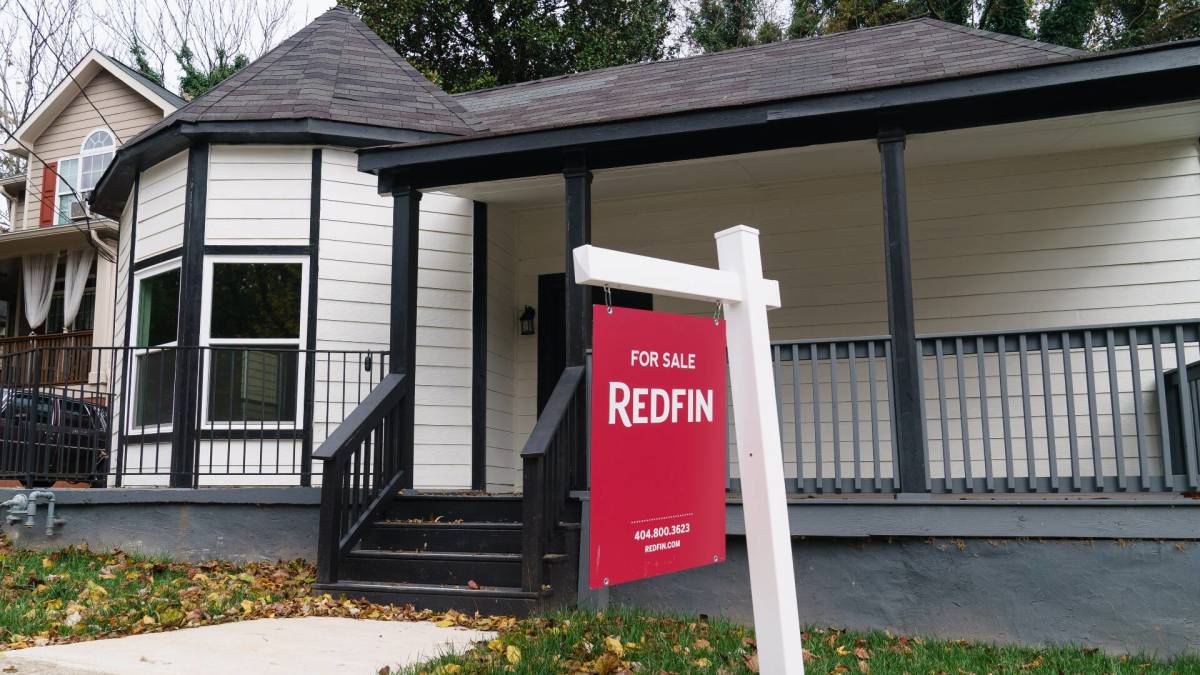
A significant development in the housing market has taken shape in 2025 — and it means a lot for people looking to buy a home in 2026.
"There were an estimated 37.2% more home sellers than buyers in the U.S. housing market in November (or 529,770 more, in numerical terms) — the largest gap in records dating back to 2013 aside from this summer," according to real estate technology company Redfin.
That’s an increase from 35.6% in October and 17% from November 2024. The gap has been more than 35% since April.
Related: Zillow predicts strong mortgage rate move soon
Redfin classifies a housing market with more than 10% additional sellers compared to buyers as a buyer’s market, and one with over 10% fewer sellers than buyers as a seller’s market.
If the difference falls within plus or minus 10%, the market is viewed as balanced. Using this framework, conditions have favored buyers since May 2024.
When the supply of sellers exceeds the number of buyers, buyers generally gain leverage because they can pick from a wider range of homes. That’s why a market with a significant surplus of sellers is labeled a buyer’s market.
Still, this advantage only applies to people who can actually purchase a home — many households have been shut out as affordability continues to decline.
Redfin forecasts housing market activity in 2026
Redfin said that a modest improvement in housing affordability has the potential to increase homebuying in 2026, narrowing the gap.
“But the housing market is likely to remain in buyer’s market territory for the foreseeable future, with sellers cutting prices or offering concessions to lure buyers,” Redfin senior economist Asad Khan wrote.
Redfin said it calculated the number of buyers by combining its own internal data — specifically, how long it usually takes someone to go from their first home tour to closing — with MLS (Multiple Listing Service) figures on active listings and pending sales.
The count of sellers, by contrast, is based solely on the total number of active MLS listings.
Redfin says homebuyers match second-lowest level on record
- The estimated number of U.S. homebuyers declined 2.5% from October to November, reaching roughly 1.43 million, according to Redfin.
- This marks the steepest monthly drop since April 2025 and the lowest level recorded outside of April 2020, when the housing market stalled due to the pandemic.
- Buyer activity was also down 9.4% compared with the same time last year.
- The number of sellers also decreased, though at a slower pace.
- Seller count slipped 1.4% month over month to about 1.95 million, the sharpest decline since June 2023 and the lowest level seen since February.
- Despite the monthly dip, the number of sellers remained 6.2% higher than a year earlier.
Homebuyers and sellers are backing off
"Buyers are backing off due to high housing costs and economic uncertainty," Redfin explained. "Sellers, many of whom are buyers themselves, are backing off in response to lackluster demand for their homes."
More on mortgages, housing market:
- Zillow sounds alarm mortgage rates, housing market
- Berkshire Hathaway HomeServices predicts housing market pivot
- Redfin sends strong message on mortgage rates
"Some sellers are delisting after watching their homes sit on the market for months with zero bites from buyers, while others are choosing not to list at all after seeing their neighbor’s house sell for under the asking price," the real estate technology company added.
Redfin explains local housing markets
- Austin, Texas had an estimated 114% more sellers than buyers in November, the widest gap among the 50 largest U.S. metro areas, according to Redfin.
- San Antonio followed with a 106% surplus of sellers, then Nashville at 104%, Fort Lauderdale at 102%, and West Palm Beach at 93.6%.
- The Sun Belt saw a surge of interest during the pandemic as buyers from higher-cost regions moved in, pushing prices up and making housing less attainable for many long-time residents.
- Builders responded to the influx by significantly increasing construction, contributing to today’s oversupply of homes relative to demand.
- Texas and Florida remain leaders in new home construction.
- Florida is also dealing with more frequent natural disasters, rising insurance costs, and higher condo association fees, factors that have encouraged some residents to relocate.
- Out of the 50 largest metros, 36 were classified as buyer’s markets, seven were considered balanced, and seven were seller’s markets.
- Buyer’s markets were primarily located in the Sun Belt and on the West Coast, while balanced and seller’s markets were more common in the Midwest and along the East Coast.
- Nassau County, N.Y. ranked as the strongest seller’s market in November, with an estimated 39.1% fewer sellers than buyers.
- The remaining seller’s markets were Montgomery County, Penn. (-34.8%), Newark, N.J. (-31.8%), New Brunswick, N.J. (-30.5%), Milwaukee (-18%), San Francisco (-11.3%), and Cleveland (-10.5%).
Related: Redfin forecasts major mortgage rate change
What's Your Reaction?