




































SpaceX's Musk, Blue Origin's Bezos, and OpenAI's Altman Eye Space Data Centers
A study from management consulting firm McKinsey says that global spending on data centers could eclipse $6.7 trillion between now and 2030, with most of that spending taking place in the United States, where over 4,000 data centers are already operating or under construction. The boom has thrust ...
A study from management consulting firm McKinsey says that global spending on data centers could eclipse $6.7 trillion between now and 2030, with most of that spending taking place in the United States, where over 4,000 data centers are already operating or under construction.
The boom has thrust tech names like chipmakers Nvidia, Advanced Micro Devices, and Broadcom to new records. And hyperscalers like Google parent Alphabet, social giant Meta, and OpenAI investor Microsoft have also seen a nice bump.
But the boom has faced its match in a myriad of problems; whether it's shortfalls in available electricity or water, or even shortages available computer components like memory or storage. As a result, some AI proponents are fixing their eyes on the stars.
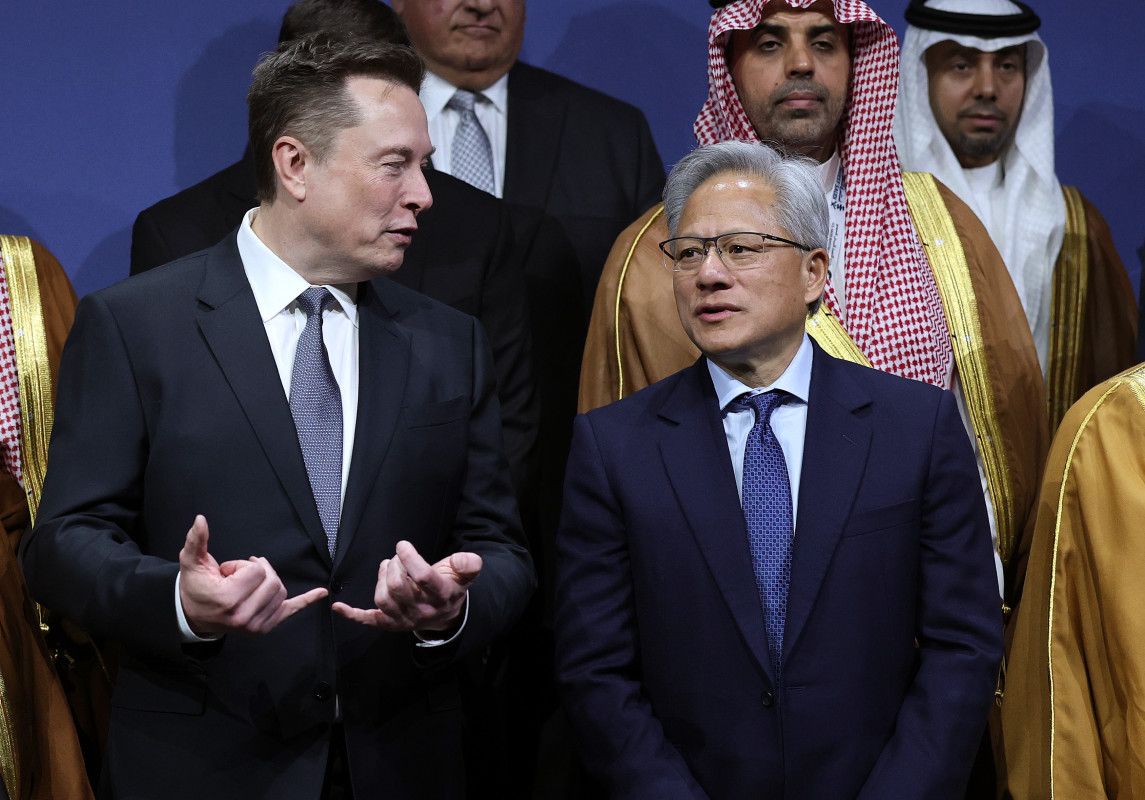
Entire data centers could soon be launched into orbit, thanks to SpaceX CEO Elon Musk, Amazon Founder and Blue Origin CEO Jeff Bezos, and OpenAI CEO Sam Altman. The three, along with a number of others, have taken up the one-time fringe concept -- investing resources in the effort to bring it to fruition.
Last week, the WSJ reported that Altman had conversations with one rocket maker as part of an effort which could see the CEO of the firm behind ChatGPT build a competitor to Elon Musk's SpaceX for the purpose of developing data centers in space.
In a separate report published Wednesday, the WSJ added more color to the new 'AI space race.' It said that Musk's SpaceX and Bezos' Blue Origin have been looking into the viability of "orbital AI data centers" too, underscoring the newfound interest in this technologically complex concept.
Despite never being done before, there are believed to be benefits to launching data centers into orbit. For one, solar panels in space would be far more efficient than on Earth. Second, the frigid conditions in space would offer 'free' cooling for the energy-intensive computers. And finally, there's ample space in orbit, eliminating the need to acquire real estate or procure the necessary zoning.
On the other hand, there are problems with theoretical orbital data centers, particularly in terms of cost, redundancy, and networking. First, these efforts would be an expensive undertaking. Then, in the event that something onboard the technologically complicated data centers were to fail, it would be exceedingly difficult to fix. Finally, latency -- the time it takes to access the server or send commands -- could be a problem, especially if the data centers were moved beyond Earth's orbit.
However, with tech giants having spent over $600 billion on hyperscale data centers and Bank of America projecting that spending to continue growing into 2026 and beyond, perhaps some of the problems on the ground could work out to be cost-efficient opportunities in the stars -- if the idea works.
In response to the report, several space-related stocks surged on Wednesday, reacting to some of the recent commentary. Among them were Firefly Aerospace (+9.5%), Voyager Technologies (+7.9%), Rocket Lab (+7.6%), and Karman Holdings (+5.5%).
Microcap space-oriented firms also got a boost, including Sidus Space (+42%) and Momentus (+16.5%), while the small cap Satellogic Inc (+8.5%) also got a leg up.
None of these firms are directly related to the aforementioned names, but the possibility of the AI boom boiling over into the already red hot space trade is reason enough for investors to load up preemptively -- even if it's ultimately years before a single data center might blast off.
The surge comes amid a prolonged rally in space names, especially recent IPOs. Fueling some of the excitements are murmurs that Musk's SpaceX will pursue one of the largest public offerings of all time late next year.
What's Your Reaction?