





































T-Mobile makes harsh change customers will see on their bills
T-Mobile is once again pressing a button that customers don’t like.

Early last year, T-Mobile rolled out several harsh changes that have frustrated its customers to the point where some have decided to cut ties with the company.
In April last year, T-Mobile raised the monthly prices for some of its older phone plans by $5 and increased its Regulatory Programs & Telco Recovery Fee, which customers pay each month.
It also officially retired its Go5G plans in June and started removing taxes and fees from plan pricing. By August, T-Mobile even booted select customers from older phone plans and placed them on its Go5G Plus plan.
After these changes took effect, T-Mobile revealed in its third-quarter earnings report for 2025 that its postpaid phone churn, the number of customers who cut their phone service, ticked up by 3 basis points year over year.
The loss of loyal customers is no surprise, as many Americans have drawn a line in the sand when it comes to the price of their monthly phone bills. This has resulted in more consumers exploring cheaper nontraditional options for phone service, such as mobile virtual network operators (MVNOs), according to a survey from WhistleOut last year.
How higher phone bills are impacting Americans:
- The average cost of a single-line phone plan is $76 per month.
- About 42% of T-Mobile, Verizon, and AT&T customers have seen their phone bills increase in the past year, which is 7% higher than average.
- Also, 58% of T-Mobile, Verizon, and AT&T customers are contemplating switching to a different phone carrier as prices go up.
- Additionally, 34% of these customers said they'd consider switching to an MVNO within the next year.
- T-Mobile risks losing a combined 75.9 million customers due to high mobile plan pricing.
Source: WhistleOut
“In the wake of economic uncertainty and rising prices, many people are realizing that they can save by switching their phone service to smaller carriers called MVNOs,” wrote Max McCaskill, senior staff writer at WhistleOut, in the survey. “These carriers use the major carrier networks, but at significantly lower cost.” Helen89/Shutterstock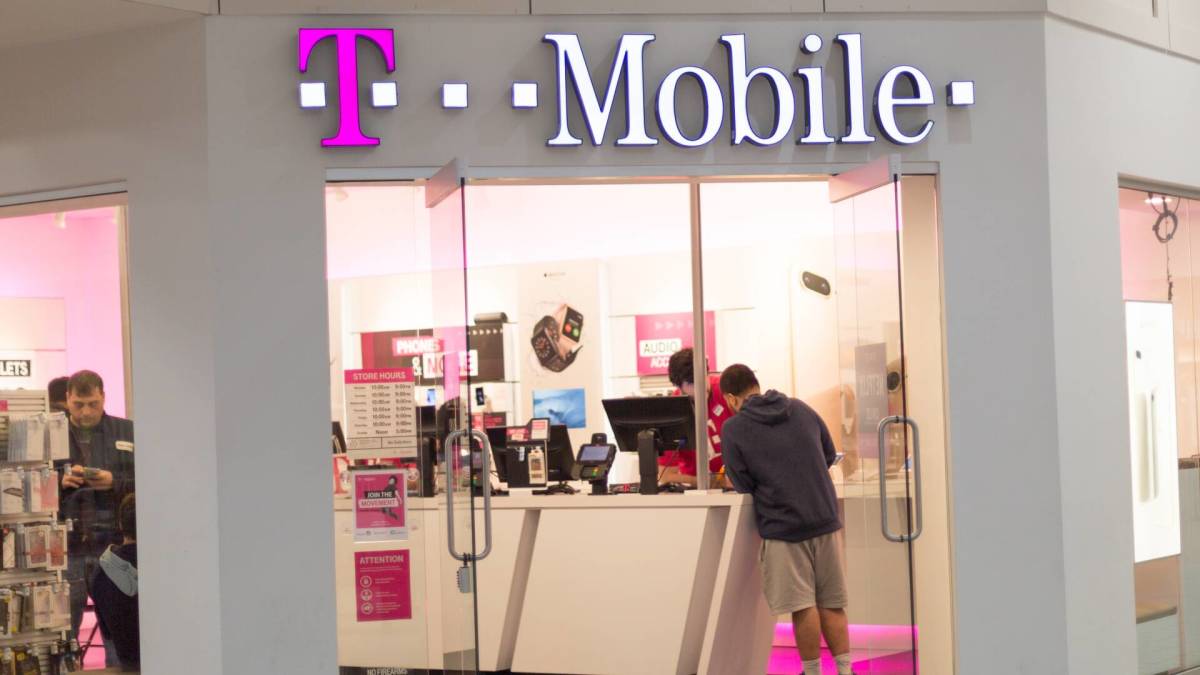
T-Mobile raises fee customers pay every month
Despite the risk of incurring more customer losses, T-Mobile has decided to kick off the new year by raising monthly bills with another fee increase.
In an update on its website, the phone carrier has warned customers that it is once again raising its Regulatory Programs & Telco Recovery Fee. T-Mobile says this fee helps “recover certain costs” that it incurs, such as charges from other carriers and costs for funding and compliance with government mandates.
Starting Jan. 21, the fee will increase from $3.99 to $4.49 per voice line for phone customers. For mobile internet lines, the fee will climb from $1.60 to $2.10 per line.
Related: T-Mobile makes bold phone plan change after customer losses
The rate adjustment will only impact customers who are on plans that don’t have taxes and fees included in the price. Customers on older plans that already include taxes and fees will see no changes in their bills.
When T-Mobile last raised its Regulatory Programs & Telco Recovery Fee in April of last year, the fee increased from $3.49 to $3.99 for voice lines and from $1.40 to $1.60 for mobile internet lines.
The fee has faced criticism from customers in the past, with some questioning its legitimacy. In 2024, T-Mobile was hit with a class-action lawsuit, where customers alleged they had been “illegally” charged this fee for decades, and claimed that the description of the fee was “unfair and deceptive” since the fee “isn’t strapped to any benchmark” and can change “at will.”
T-Mobile has been making harsh billing changes
T-Mobile’s latest fee increase comes shortly after the company made several significant billing changes affecting its customers in recent months.
In October, T-Mobile began informing customers that they will lose their autopay discount if they make early payments with a credit card. It also started requiring customers who wish to set up payment arrangements for past-due balances to do so through the T-Life app, rather than at a T-Mobile store or the company’s automated phone system.
The following month, T-Mobile also hiked its late fee for customers who don’t pay their bills on time, from $7 to $10 (or 5% of the past-due balance; T-Mobile will pick whichever is higher).
Most recently, on Jan. 1, the phone carrier began charging $3 a month for its Apple TV “On Us” perk, which had been free for “Plus”-level phone plan customers since 2021.
These changes come as T-Mobile is operating under new leadership. On Nov. 1, Srini Gopalan became the company's CEO after serving as chief operating officer for roughly seven months.
More Telecom News:
- T-Mobile announces free offer for Verizon and AT&T customers
- Verizon CEO sounds alarm on why customers are leaving in droves
- Spectrum raises red flag on cause of fleeing customer problem
Under his leadership, Gopalan aims to usher in a “digital transformation” at T-Mobile, which he hopes will tackle customer frustration.
“I want all of you to know that I am committed to not only being the network leader of today, but also investing tirelessly to defend and widen the margin of our network leadership for tomorrow,” said Gopalan during an earnings call in October.
“Let me talk a bit about digital transformation. The amount of friction and frustration we cause customers today because of our processes and the state of evolution in this industry is phenomenal. We have a huge opportunity to change that with our digital transformation,” he continued.
T-Mobile’s change in direction comes after a recent survey from J.D. Power found that the phone carrier is falling behind MVNOs in terms of consumer satisfaction rates.
Phone carrier consumer satisfaction rates for postpaid phone plans:
- T-Mobile has a consumer satisfaction score of 636 (on a 1,000-point scale)for its postpaid plans, surpassing Verizon and AT&T, which have scores of 583 and 573, respectively.
- However, MVNOs have an average satisfaction score of 641.
- Specifically, Consumer Cellular has a score of 726, while Google Fi Wireless has a score of 671.
Source: J.D. Power
“The findings show that value is the most important driver of the overall experience, followed closely by service quality,” said Carl Lepper, senior director of technology, media and telecom at J.D. Power, in a press release.
“These two dimensions are central to our new model — and for good reason,” he added. “As the market expands with a wide variety of brands designed to meet diverse customer needs, expectations are rising — not just for strong network performance, but also for service plans that reflect individual preferences.”
Related: DirecTV makes harsh move as customers keep leaving
What's Your Reaction?