

































‘Tell Me Where It Hurts’ sets the record straight on pain — and how to treat it
A new book by pain researcher Rachel Zoffness demystifies how pain is made and how it can be treated.
The book helps readers understand the intricacies of pain, and points out ways to reduce it
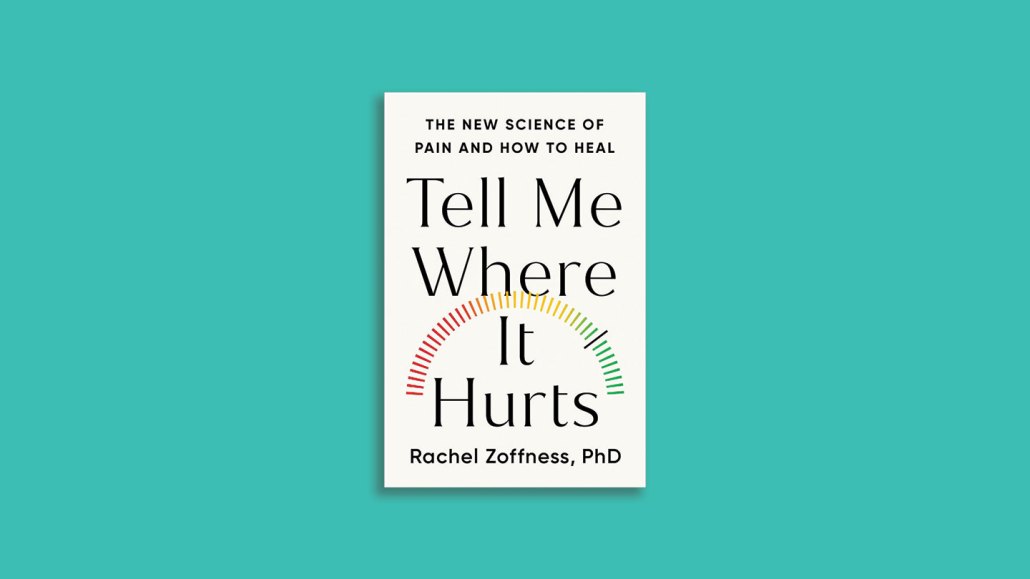
Tell Me Where It Hurts
Rachel Zoffness
Grand Central Publishing, $30.00
It’s a rare book that both expands an issue into a dizzyingly complex problem and offers to solve it. In Tell Me Where It Hurts, pain psychologist and scientist Rachel Zoffness pulls off both.
Pain, she argues, has been deeply misunderstood. Sure, pain signals can come from damaged body parts. But that’s not the whole story. Through compelling patient stories and clear scientific descriptions, Zoffness leads readers to understand that pain is created by a complicated cocktail of elements, including emotions, trauma, beliefs and social ties. These ingredients can combine to form pain just as eggs, flour, butter and cocoa powder can coalesce into brownie batter. The pain recipe is one of Zoffness’ central metaphors that helps convey a variety of scientific explanations. It’s a simple approach, but it works.
Consider the ingredient of expectations. To illustrate the power of beliefs in shaping pain, Zoffness tells us the tale of two nails. A young construction worker accidentally jumped off a plank and onto the first nail — a 7-incher. The nail’s sharp end was sticking up out of his boot, leaving him in anguish. He was rushed to an emergency department and given powerful medicine to ease his significant pain. When the boot finally came off, the sight was shocking: The nail had missed the man’s foot. “But despite the absence of injury, his pain was real,” Zoffness writes.
The second nail came from a nail gun used by a different man. The gun misfired. As the man’s head slammed back, he saw a nail shoot out of the nail gun into the wall in front of him. Lucky break, or so he thought. Six days later, a toothache took him to the dentist, where x-rays revealed a 4-inch nail lodged in his face just a few ticks away from his right eye. “In this case, there was significant damage — but very little pain,” Zoffness writes.
Together, these stories remind us of an easily overlooked truth: Pain is not an accurate indicator of bodily harm. Damaged body parts certainly can be painful but the other ingredients matter too. Pain is a biopsychosocial creation, Zoffness writes. “Our short-sighted focus on the bio alone means we’ve been missing two-thirds of the pain problem.”
This expansive view of pain sounds grim — impossibly complex even. But Zoffness offers a salve. We can control some of the ingredients we use in our recipe. We can choose low-pain ingredients, and this book describes a lot of options. One section offers a menu of behavioral changes, broken down into specific, detailed plans for people in pain and their healthcare providers. For instance, “Never tell patients their pain is incurable,” she writes. While a disease may be incurable, a person’s pain may ebb.
As scientific prose, this book threads a fine needle. The writing is swift and not overstuffed with technicalities. Still, Zoffness provides details in footnotes and citations for the curious reader. The neuroscience journalist in me delighted at the following footnote explaining the overly simple phrase, pain pathway: “There is no one single, universal ‘pain pathway’ in the human body.” Another fabulous footnote tells us that the phrase “pain receptor” is a misnomer. “There is no pain until sensory data reaches the brain and is interpreted as such.” These nuanced, careful explanations make clear that we’re in capable hands.
The reality is that the United States’ healthcare system isn’t set up to handle the complexities of pain, Zoffness points out. That’s particularly true for chronic pain, which afflicts millions of people in the United States alone, and is often defined as lasting three months or longer (a somewhat arbitrary marker, Zoffness argues). Clinicians are adept at writing prescriptions or recommending procedures. It can be harder to ease a person’s chronic pain with strengthening social ties, improving sleep hygiene or finding a therapist who can help address trauma.
Despite these big challenges, Tell Me Where It Hurts provides hope. The overall message is that there are paths forward, lots of them. These possibilities emerge when considering pain in a holistic way. After all, as Zoffness puts it, “a whole-person problem requires a whole-person solution.”
Buy Tell Me Where It Hurts from Bookshop.org. Science News is a Bookshop.org affiliate and will earn a commission on purchases made from links in this article.
More Stories from Science News on Health & Medicine
What's Your Reaction?