





































Tesla feels pressure from BYD in EV sales race
BYD said its sales of battery‑powered cars surged almost 28% in 2025 to more than 2.25 million, firmly outpacing Tesla’s projected 1.6–1.65 million deliveries for the year. CNBC reported that BYD disclosed 2.26 million battery‑electric sales, while analyst estimates compiled by the network ...
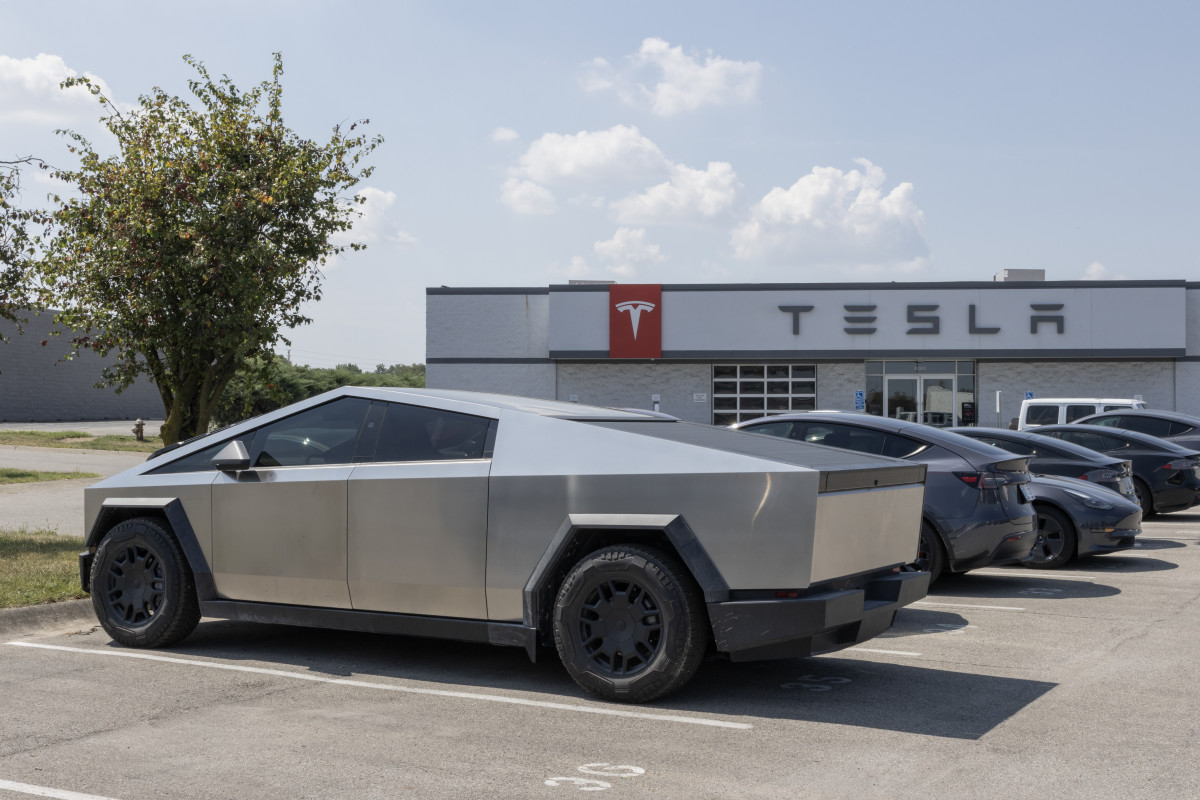
BYD said its sales of battery‑powered cars surged almost 28% in 2025 to more than 2.25 million, firmly outpacing Tesla’s projected 1.6–1.65 million deliveries for the year. CNBC reported that BYD disclosed 2.26 million battery‑electric sales, while analyst estimates compiled by the network suggested Tesla’s total would come in roughly 8% lower than a year earlier, extending a 2024 slump.
The scale of the shift is striking. Company filings and aggregated data cited by outlets such as Ground News indicate that BYD sold about 2.26 million EVs in 2025, versus roughly 1.64 million for Tesla, giving the Chinese group close to a 600,000‑unit edge.
The BBC framed the milestone as the first time BYD has “outpaced its American rival for annual sales,” underscoring how quickly China’s domestic champion has gone from being mocked by Elon Musk to topping global league tables.
A turning point for Tesla
Tesla’s weaker year is a critical part of the story. Investing.com and Yahoo Finance coverage highlight that Tesla’s 2025 deliveries was around 1.64 million (down approximately 8% from 2024), marking the company’s second consecutive annual decline.
In the fourth quarter alone, Tesla’s deliveries fell roughly 16% year over year to about 416,000 vehicles, compared with 495,570 in the same period of 2024, despite months of price cuts and discounts.
Those numbers suggest more than just a one‑off stumble.
Analysts quoted across North American outlets such as CNBC say Tesla faces a “more normalized demand environment,” where early‑adopter enthusiasm has cooled, and competition has intensified, particularly in China and Europe. CNBC’s EV coverage has also underscored how subsidies have been scaled back in some key markets, making it harder for premium‑priced brands to grow volumes without sacrificing margins.
For a company that built its valuation on unit growth and software‑like operating leverage, two straight years of shrinking deliveries reset investor expectations.
How BYD built its lead
BYD’s ascent reflects both strategy and structure. The company not only sells more pure EVs than Tesla but also dominates China’s broader “new energy vehicle” segment once plug‑in hybrids are included, with total NEV sales around 4.6 million in 2025 according to figures cited by CNBC.
That breadth lets BYD participate in lower price bands that Tesla largely ignores, particularly in its home market where compact models such as the Seagull and Dolphin appeal to first‑time EV buyers.
Vertical integration is another pillar of BYD’s advantage. Nikkei Asia has noted that BYD’s in‑house battery operations and its blade‑battery platform help it manage costs and rollout speed, especially as it ramps exports. BYD’s chairman Wang Chuanfu has argued that the company has “established itself as a frontrunner across all sectors, including batteries, electronics, and new energy vehicles,” a claim backed by 2024 revenue of 777 billion yuan (about $107 billion), which already exceeded Tesla’s sales that year.
Geography matters as well. Reporting from the BBC, Yahoo Finance, and others shows that BYD has pushed aggressively into Latin America, Southeast Asia, and parts of Europe, even as many countries impose higher tariffs on Chinese EVs.
In October, BYD said the United Kingdom had become its largest market outside China, with sales in Britain soaring 880% in the year to the end of September on strong demand for the Seal U plug‑in hybrid SUV. That kind of diversified growth helps offset pressure from price wars in China and policy risks in any single region.
BYD and Tesla 2025 EV metrics
- 2025 BEV sales: 2.25–2.26 million (+28%) for BYD and 1.6-1.65 million (‑8%) for Tesla
- 2025 total NEV / EV sales: 4.6 million (incl. PHEVs) for BYD and 1.64 million (all EVs) for Tesla
- Largest market outside home country: UK, +880% YoY for BYD and U.S. for Tesla
Figures compiled from CNBC, BBC, and Ground News.
Global implications and policy risks
BYD’s new status as the top EV seller lands in a market that is no longer purely about hyper‑growth. European regulators have opened an anti‑subsidy probe into Chinese EV imports, and CNBC has reported that BYD has already beaten Tesla in European BEV sales in some recent periods despite higher tariffs, a “watershed moment” for the continent’s auto industry.
That success is forcing traditional European automakers to respond on price and product, while also giving policymakers a tangible example of how Chinese industrial policy can reshape a strategic sector. s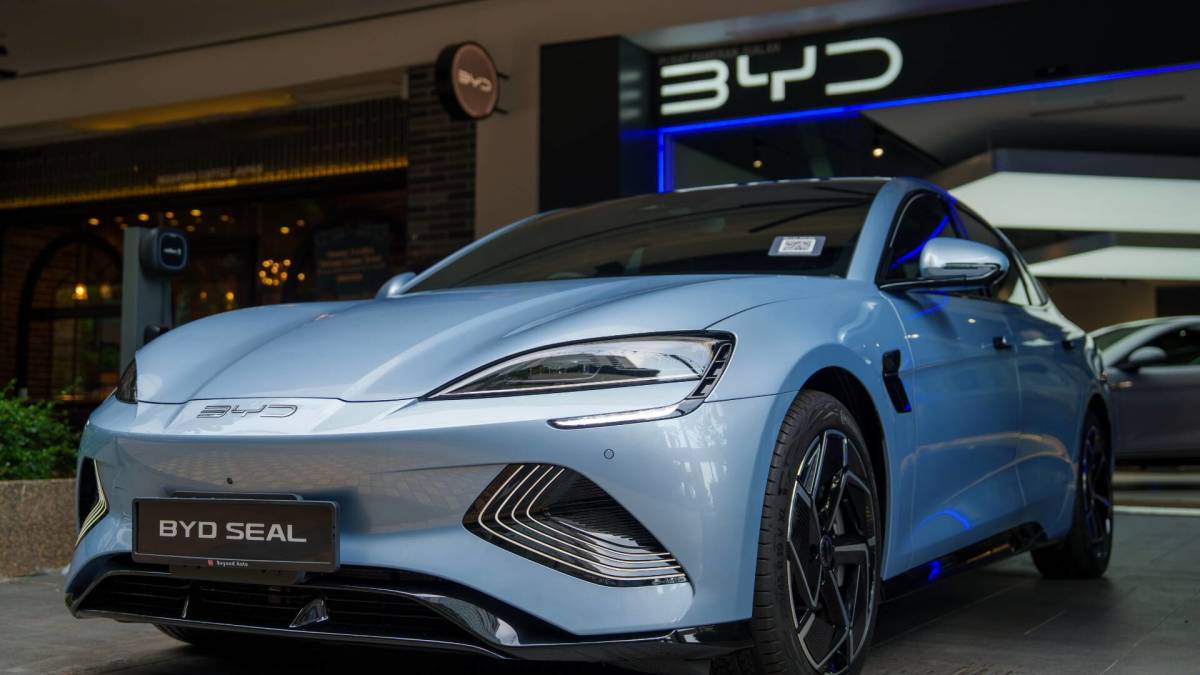
North American policy is equally pivotal. Ground News notes that the expiration of a key U.S. EV tax credit and rising political backlash against Elon Musk contributed to slower Tesla deliveries, especially for mass‑market vehicles that are more sensitive to upfront pricing.
At the same time, new U.S. tariffs and proposed restrictions on Chinese EVs have effectively kept BYD out of the American passenger car market so far, concentrating its overseas push in Europe, Latin America, and Asia instead. That geographic asymmetry means the global EV race is being fought on unequal regulatory terrain.
More Automotive:
- Tesla investors may miss game-changing move
- Key auto parts and services company files Chapter 11 bankruptcy
- Top-rated analyst drops curt 8-word take on Tesla stock
- U.S. car maker wins 2025 sales race with 2.8 million vehicles sold
- Ford turns a setback into a win
From Asia’s vantage point, BYD’s rise is already being treated as a structural power shift. Nikkei Asia has described the Chinese automaker as “on track to surpass its American competitor Tesla in worldwide electric vehicle sales,” stressing how quickly it has leveraged domestic scale into global presence.
Related: Tesla Cybertruck owners are going to hate Tesla's latest move
What’s next for the world’s top EV seller
For Tesla, losing the top‑seller title intensifies pressure to deliver on its next wave of innovation. It can be argued that advances in autonomous driving and a genuinely lower‑cost next‑gen vehicle platform are critical if Tesla is going to reaccelerate growth and defend margins in a more crowded field.
Without a step‑change product that can move the volume needle, the company risks looking like a mature automaker with a tech multiple.
For BYD, the challenge is different. The company has to prove that it can sustain growth and profitability while navigating tariffs and political scrutiny in Europe and other developed markets. Ground News reporting suggests BYD is targeting about 1.6 million overseas sales in 2026 while analysts model around 1.8 million for Tesla, which would make the race far closer outside China even if BYD maintains an overall lead.
Execution on new factories and on brand‑building in Europe and the Americas will determine whether BYD becomes a lasting global heavyweight or primarily a Chinese powerhouse with strong export pockets.
Either way, the numbers from 2025 mark a clear inflection point. BYD now sells more pure electric cars than Tesla, its revenue has already surpassed its American rival, and its footprint stretches from Guangzhou to Glasgow. For investors, policymakers, and competitors, the message is simple: the center of gravity in the EV world has moved, and catching up to China’s new champion will require more than just a fresh model or a one‑off price cut.
Related: Tesla investors may miss game-changing move
What's Your Reaction?