






































The 10 drugs driving Medicare’s biggest prescription costs
The Centers for Medicare & Medicaid Services (CMS) recently published some in-the-weeds datasets on the use of, and spending for, drugs prescribed to Medicare beneficiaries. There’s the Medicare Quarterly Part B and Part D Drug Spending Datasets and the annual version of the Medicare Part ...

The Centers for Medicare & Medicaid Services (CMS) recently published some in-the-weeds datasets on the use of, and spending for, drugs prescribed to Medicare beneficiaries.
There’s the Medicare Quarterly Part B and Part D Drug Spending Datasets and the annual version of the Medicare Part B and Part D Drug Spending datasets.
What does this data mean for Medicare beneficiaries?
In a recent interview, Marcia Mantell, president of Mantell Retirement Consulting, spoke with me about the datasets and the takeaways. Below is a transcript of our conversation, edited for clarity and brevity. CMS Medicare Part D Drug Spending and Utilization data, calendar year 2023.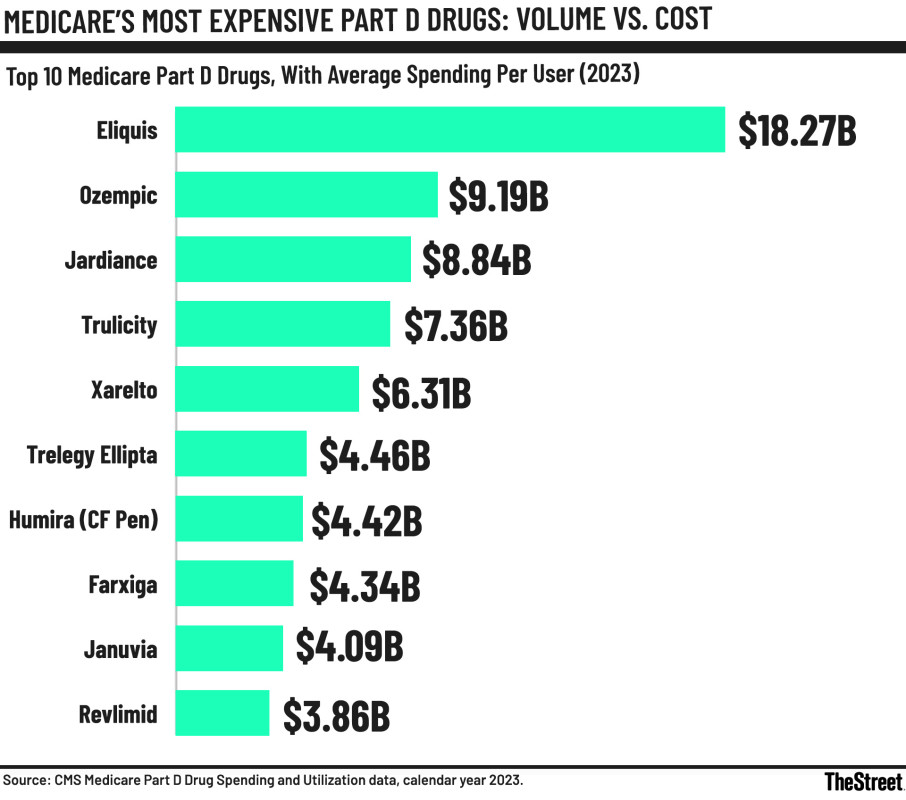
New CMS drug spending data: what it is and why it matters
Robert Powell: The government has released some interesting data, the Medicare quarterly Part B and Part D drug spending datasets. There are two releases: one covering the first quarter of 2025 and another annual release for 2024. Joining me to walk through what this means is Marcia Mantell, president and founder of Mantell Retirement Consulting. Marcia, welcome.
Marcia Mantell: Thanks, Bob. It’s always exciting to see new data.
Robert Powell: This may be a bit in the weeds, but you’ve said there’s a lot here consumers should understand. What are these datasets, what access do people have to them, and what can they actually learn?
Part B drugs: big numbers and injectable treatments
Marcia Mantell: I really encourage people to poke around in these datasets. They’re released by the Centers for Medicare & Medicaid Services (CMS), and they track Part B drugs, which are injectable drugs. These include cancer treatments and drugs for osteoporosis, among others.
The data show how many people are using these drugs and how much they cost. Consumers have access to this information, which is remarkable because that hasn’t always been the case.
Also worth reading
- Retirees may want to rebalance as markets broaden, volatility rises
- Why “breaking even” on Social Security is the wrong goal
- he $83,250 secret every solo entrepreneur needs to know for 2026
When you look at the annual numbers for 2024, CMS provides charts showing the top 10 drugs by spending. I wanted to understand the broader scope, so I downloaded the full Part B dataset. There were more than 3,000 rows. That doesn’t mean 3,000 unique drugs, since many are made by multiple manufacturers, but it gives you a sense of scale.
The top-spending drug in 2024 was Keytruda, at about $6 billion. It’s a cancer drug, and if it’s the right treatment, you want it. The second-highest was Darzalex Faspro, another cancer drug, at about $2.5 billion.
On a quarterly basis, the rankings don’t change much. You don’t learn a lot unless you’re a manufacturer or deeply involved in Medicare policy. But the annual data give a high-level view of what’s happening on the Part B side.
Robert Powell: Right.
Marcia Mantell: I often tell clients about immunotherapy treatments that can cost $100,000 a month. People are shocked, but this data shows how those numbers add up. It’s pure spending data, not pricing mechanics, which are incredibly complex. Still, it gives a factual snapshot of where the money is going.
Part D drugs: where most beneficiaries see themselves
Robert Powell: What about Part D?
Marcia Mantell: That’s my favorite side, because it’s what most people interact with. These are the drugs you pick up at the pharmacy or receive by mail.
The Part D dataset is massive. Part B had about 3,000 rows. Part D had nearly 27,400 rows. Again, that reflects multiple manufacturers and both quarterly and annual entries, not 27,000 unique drugs.
I track a basket of commonly advertised drugs. Dupixent, for example, wasn’t in the top 10, but it wasn’t far off. The No. 1 Part D drug by spending in 2024 was Eliquis, at $20.8 billion. About 4.4 million people are taking it.
Ozempic was second, followed by Jardiance, Mounjaro, Xarelto, and Trulicity. These are drugs a lot of people need, often with few good alternatives.
This database is especially useful because you can search for your own medications. You can download it into Excel or use the CMS website search bar. It’s fascinating to see how many Medicare beneficiaries rely on prescription drugs.
Out-of-pocket costs and the Part D spending cap
Robert Powell: A lot of people are on more than one drug.
Marcia Mantell: They really are. The average Medicare beneficiary takes three or four drugs, mostly generics.
Take Dupixent as an example. About 65,000 people are on it. Total spending in 2024 was about $1.8 billion, or roughly $28,000 per person annually.
What’s critical is the Part D out-of-pocket cap created by the Inflation Reduction Act. In 2026, that cap is $2,100. Someone on Dupixent, using a preferred pharmacy, pays $2,100 instead of tens of thousands of dollars.
That’s why staying current on legislation and plan rules matters. Pharmacy choice matters. Plan design matters.
Will Medicare price negotiations help beneficiaries?
Robert Powell: The government is negotiating prices on a growing list of drugs. Will that affect what people pay?
Marcia Mantell: For individuals, probably not, because of the out-of-pocket cap. But for the system as a whole, yes. Lower negotiated prices could reduce total spending and help slow rising health care costs.
We’ve seen Part B premiums rise nearly 10 percent year over year. Part D premiums vary widely. Some plans stayed flat. Others doubled. Any system-wide savings help.
These datasets matter because they give us a big-picture view of drug spending across Medicare.
Robert Powell: If you have some time, it’s worth taking a look. Marcia, thanks for getting nerdy with me.
Marcia Mantell: Anytime. And we’ll do it again at the next open enrollment.
Related: Medicare mistakes seniors wish they’d known sooner
What's Your Reaction?