
































The most exciting book-to-screen adaptations to look forward to in 2026
A good book can make people curl up in a corner and obsess over it with fellow readers, but when a film comes out, the story presents itself to an entirely new community. After all, reading is an individual experience, whereas cinema is a collective one. Listed below, are five books that will be hitting the big screen in 2026.
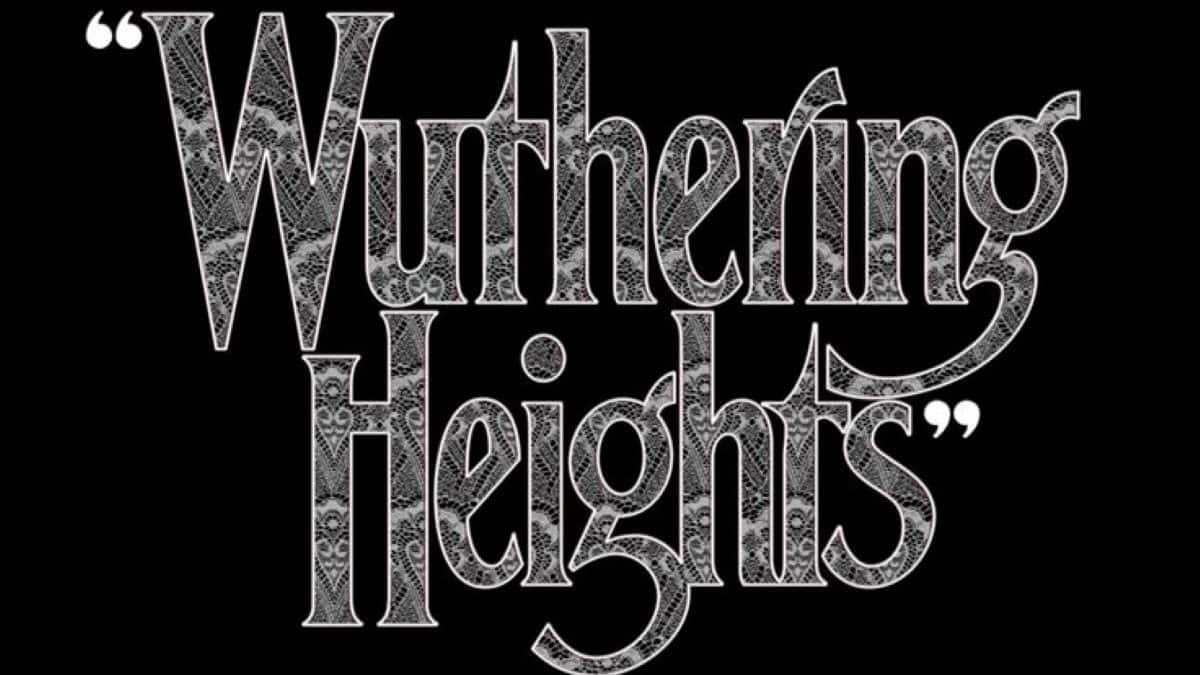
1. Emily Bronte’s Wuthering Heights:
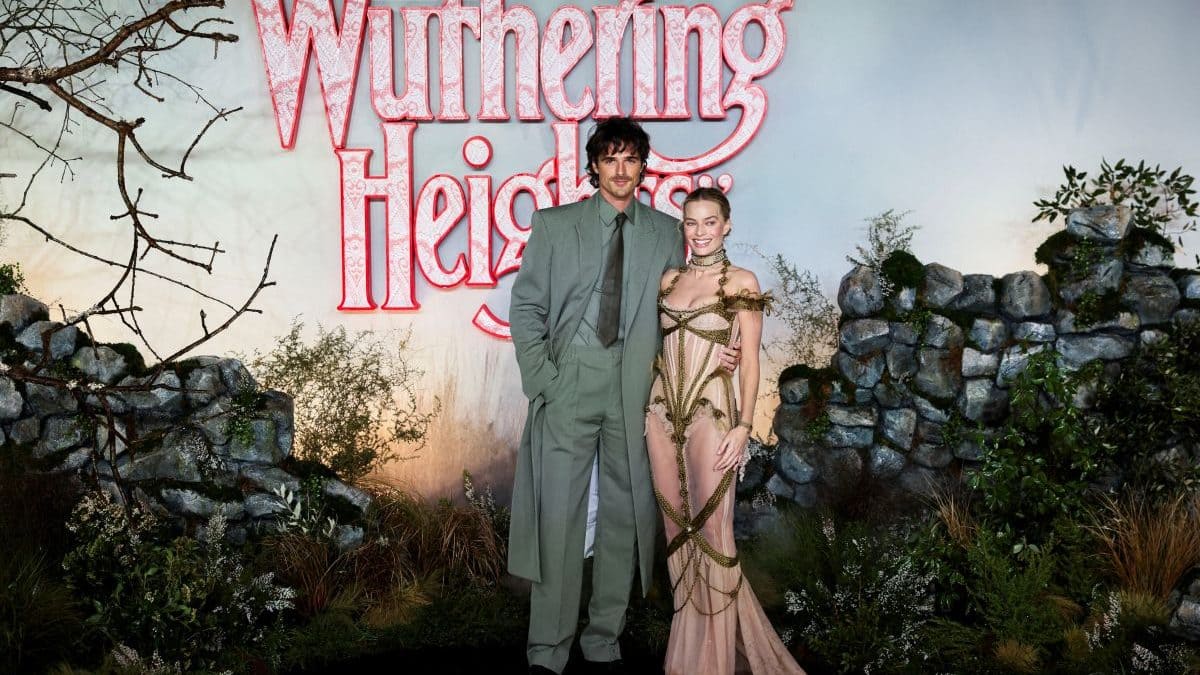
Passionate unrivalled love seems to be what is carrying this year forward, as Emerald Fennell’s grand and already soaked in controversy production moves is due to release on Valentine’s Day on February 13th. With a fabulous caste — Jacob Elordi as Heathcliff, Margot Robbie as Cathy, Owen Cooper as the younger and more unruly Heathcliff.
Judging (solely) from the trailer, the movie seems to have strayed far from the book, although the Yorkshire moors, have ensured the set stays gorgeous, and Fennell’s direction ensures that the scenes are tastefully sensuous. If one watches the movie bearing in mind that they are meant to be watching an adaptation of Emily Bronte’s book that tells the story of a great love, class and revenge and nihilism, all intertwined.
STORY CONTINUES BELOW THIS AD
The original story centres on the bitter conflict between two families—the Earnshaws and the Lintons—set against the stark, windswept Yorkshire countryside. At its core lies the intense and tragic love between Heathcliff, an orphan taken in by Mr. Earnshaw, and his daughter Catherine. Their bond is fierce and undeniable, yet ultimately forbidden, shaping the destructive course of their lives.
“I’ve always been obsessed with the gothic,” Fennell wrote. “From Edward Gorey’s children — variously choked by peaches, drained by leeches, or smothered by rugs — to du Maurier’s imperilled heroines and the unsettling erotic power of Angela Carter’s fairy tales, the gothic has always held me captive. It is a world where comedy and horror collide, where revulsion and desire, sex and death are inseparably entwined, and where every encounter pulses with the threat of violence, or sex — or both.”
2. Agatha Christie’s Seven Dials:
Agatha Christie adaptations have become a seasonal ritual, and Seven Dials marks Netflix’s turn with the Queen of Crime. Adapted by Chris Chibnall, this three-part series moves away from the psychologically dark, postwar-inflected Christie reimaginings recently delivered by the BBC, opting instead for a more traditional period mystery steeped in grand houses, clipped accents and clockwork plotting.
Set in 1920, the story opens dramatically with a murder in Ronda before shifting to an English country house rented by wealthy industrialists from the cash-strapped Lady Caterham (Helena Bonham Carter). When a young man is found dead after an apparent overdose, surrounded by alarm clocks that don’t quite add up, amateur sleuth Lady Eileen “Bundle” Brent takes matters into her own hands. Notes, missing dials, secret trips to London and shadowy espionage threads follow, all unfolding at a deliberately old-fashioned pace.
While the series leans heavily into Christie’s puzzle mechanics — sometimes at the expense of tension or plausibility — it gains momentum with the arrival of Martin Freeman as Superintendent Battle, whose grounded performance brings authority and cohesion to the investigation. Seven Dials may feel retro to a fault, but for viewers who enjoy classic whodunnits played straight, it remains a noteworthy addition to this year’s book-to-screen slate.
STORY CONTINUES BELOW THIS AD
3. Suzanne Collins’ Sunrise on the Reaping:
Prequel to the iconic Hunger Games, Sunrise on the Reaping promises to be a gloriously devastating movie. Immensely tragic, we return to Panem with a story that is darker, denser and far less forgiving than its predecessors. Set around 25 years before Katniss Everdeen’s rebellion, Sunrise on the Reaping centres on Haymitch Abernathy, long familiar to readers as the sardonic mentor from District 12, here reimagined as a young man thrust into the brutal machinery of the 50th Hunger Games.
The novel revisits the franchise’s core concerns — state violence, spectacle, propaganda and class division, but with an added sense of inevitability. The Games are shown not just as entertainment, but as a meticulously edited media event, where chaos is concealed and image manipulation becomes a survival skill. Haymitch’s journey balances visceral arena horror with quieter emotional stakes, particularly his love for Lenore Dove and his loyalty to family, even as he becomes entangled in early, doomed stirrings of rebellion.
Collins leavens the grimness with moments of lyricism and literary reference, from William Blake to classical motifs, though the prevailing tone remains tragic rather than triumphant. Unflinching in its depiction of underage violence, Sunrise on the Reaping is not for the faint-hearted. It deepens the moral and political foundations of one of contemporary fiction’s most enduring dystopias.
4. George Orwell’s Animal Farm (animated adaptation):
George Orwell’s Animal Farm, first published in 1945, returns to the screen in a new computer-animated adaptation directed by Andy Serkis. The novella, long a staple of school curriculam, but more importantly a cultural critique, uses a barnyard uprising to explore power, propaganda and the corruption of revolutionary ideals, originally conceived as an accessible political fable rooted in the history of Soviet totalitarianism.
This latest adaptation reimagines Orwell’s story through contemporary animation, featuring a high-profile voice cast that includes Seth Rogen, Woody Harrelson, Glenn Close, Steve Buscemi and Gaten Matarazzo. The film follows the familiar arc in which farm animals overthrow their human owner to establish a society based on equality, only for leadership to consolidate in the hooves of the pigs. Characters such as Napoleon, Snowball and Boxer remain central, while the screenplay introduces additional figures and expands the presence of human antagonists to reflect broader economic and social pressures.
STORY CONTINUES BELOW THIS AD
Produced across the UK, Canada and the US, the film updates the visual language of Animal Farm for modern audiences, drawing on fast-paced animation and heightened character design rather than realism. Arriving decades after earlier screen versions, including the 1954 animated film and a 1999 television adaptation, Serkis’s Animal Farm marks the most recent attempt to translate Orwell’s enduring allegory for a new generation.
5. Homer’s The Odyssey:
It might be a stretch to call The Odyssey a book (it is essentially what seems like one of the most ancient manuscripts in the word), but is heading to the big screen in an ambitious new adaptation directed by Christopher Nolan. The film stars Matt Damon as Odysseus, the Greek hero attempting to return home to Ithaca after the Trojan War, with Anne Hathaway as his wife Penelope and Tom Holland as their son, Telemachus.
The first footage released online offers a glimpse of Nolan’s large-scale approach, showing Odysseus battling storms and obstacles across a years-long journey marked by endurance, loss and uncertainty. The production remains rooted in the original epic’s mythic framework, which chronicles encounters with monsters, temptations and divine forces as Odysseus struggles against fate itself. Nolan has described the film as a “mythic action epic,” shot across the world using brand-new IMAX film technology, and it is reported to be the first feature-length movie filmed entirely on IMAX cameras.
The rest of the cast includes Zendaya, Robert Pattinson, Lupita Nyong’o, Charlize Theron, Mia Goth, Elliot Page and Benny Safdie, among others, signalling a wide interpretation of Homer’s sprawling narrative. The Odyssey is scheduled for theatrical release in July 2026, positioning it as one of the most high-profile literary adaptations of the year.
STORY CONTINUES BELOW THIS AD
What's Your Reaction?