






































What is the neutral rate of interest? The Fed’s theoretical rate benchmark
The Federal Reserve, a government agency responsible for keeping the American economy stable, sets the federal funds rate. This is a range of interest rates that banks charge to lend money to one another overnight. Despite its specificity, the federal funds rate is used as a benchmark for nearly ...
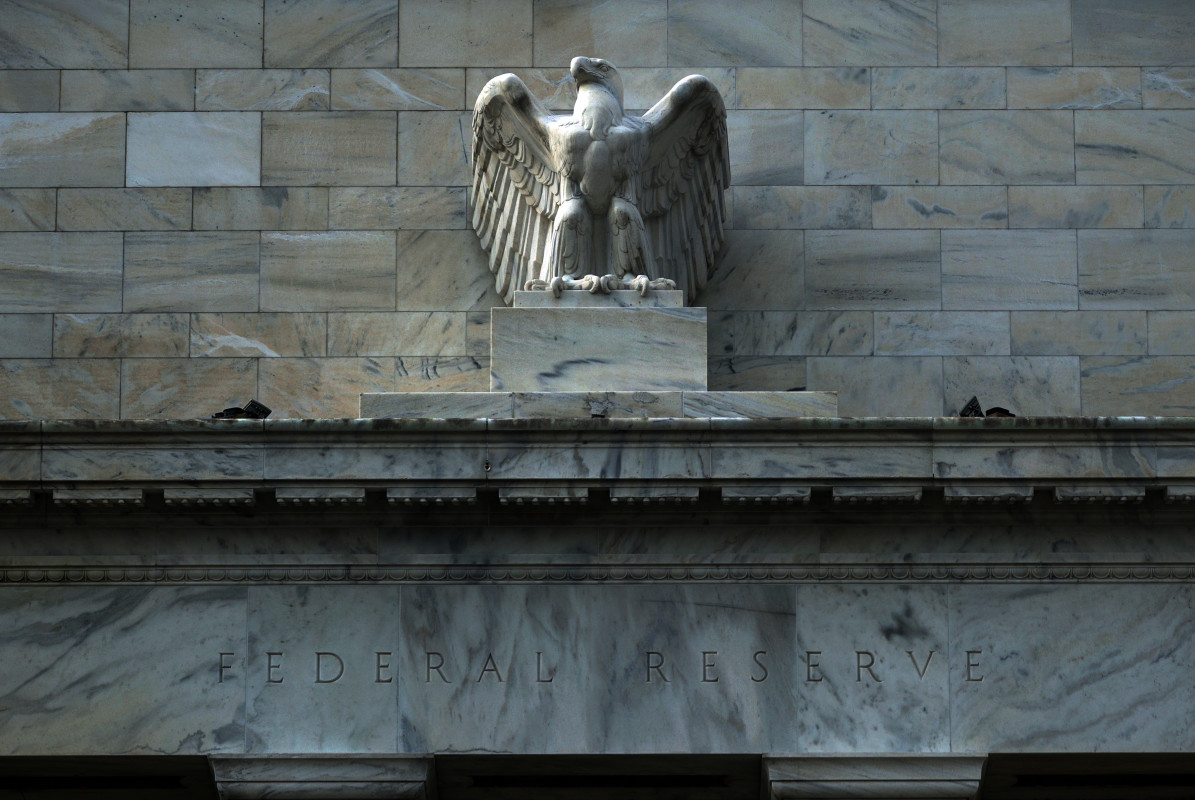
The Federal Reserve, a government agency responsible for keeping the American economy stable, sets the federal funds rate. This is a range of interest rates that banks charge to lend money to one another overnight. Despite its specificity, the federal funds rate is used as a benchmark for nearly every other interest rate in the United States, including the rate you pay on your credit card debt, mortgage, and car loan, and the rate you earn on your high-yield savings account. When the fed funds rate goes up, other interest rates go up, and when it goes down, other interest rates go down as well.
The Federal Reserve changes the federal funds rate periodically in response to economic data—in particular, data regarding price changes (inflation) and employment (the unemployment rate).
So, what exactly is the neutral rate? This is a term you’ll hear fairly frequently in discussions of the Federal Reserve’s dual mandate to keep inflation around 2% per year and maximize the country’s employment rate.
Here’s everything you need to know about the theoretical and ever-changing interest rate known as the neutral rate.
What is the neutral rate in simple terms?
The neutral rate of interest is the theoretical benchmark interest rate that would maintain a healthy economy by maximizing employment and keeping inflation around 2% annually.
Quick facts about the neutral rate
- The neutral rate is the theoretical Federal Fund rate that promotes maximum employment and stable (2% per year) inflation.
- The neutral rate, also called the natural rate, is denoted by the variable r* (r-star).
- The Fed uses the neutral rate as a theoretical benchmark to make monetary policy decisions (i.e., whether to raise, lower, or maintain the fed funds rate).
- When the Fed sets the fed funds rate below the neutral rate, it promotes spending and borrowing.
- When the Fed sets the fed funds rate above the neutral rate, it disincentivizes spending and borrowing, slowing economic activity.
Related: What Is the Federal Open Market Committee (FOMC) and What Does It Do?
How does the Fed set interest rates in reference to the neutral rate?
When inflation is above the Federal Reserve’s 2% target, the Fed may set the fed funds rate higher than the neutral rate in order to restrict economic activity. Conversely, if unemployment is too high, the Fed may set the fed funds rate below the neutral rate to promote borrowing, spending, and hiring in order to stimulate economic growth.
According to TheStreet’s Mary Helen Gillespie, “The Federal Funds Rate approaching neutral means the Federal Reserve’s benchmark interest rate neither stimulates nor restrains economic growth.”
How does the Federal Reserve calculate the neutral rate?
The Federal Reserve has used various models to calculate the theoretical neutral rate over the years:
- The Laubach-Williams model, introduced in 2003, uses real GDP, inflation, and the federal funds rate to determine the neutral rate.
- The Holston-Laubach-Williams model, introduced in 2017, incorporates additional economic data from Canada and Europe to estimate the neutral rate for each region.
- An updated version of the Holston-Laubach-Williams model, introduced in 2023 to account for the impacts of the COVID-19 pandemic, incorporates volatility and supply shock data to add further nuance to the calculation of the neutral rate.
The Fed examines each of these models, along with other data on economic trends, to set the Fed funds rate, with the ultimate goal of closing the gap between the two to create and maintain a stable economy—something that is much easier said than done because the economy is often far more complicated than the available data show.
Related: What Is the Federal Reserve Board of Governors? What Does It Do?
Why does the neutral rate change over time?
The neutral rate fluctuates over time in response to emergent information. Economic data are used to estimate the neutral rate, so as inflation data (often measured by the Consumer Price Index or Producer Price Index) and GDP data change, so does the theoretical neutral rate of interest.
In other words, the neutral rate is a moving economic goal post at the center of the Federal Reserve’s decision-making process.
What are the origins of the neutral rate?
The concept of a neutral rate of interest dates back to 1898, when Knut Wicksell, a Swedish economist, defined the term as “a certain rate of interest on loans which is neutral in respect to commodity prices and tends neither to raise nor to lower them."
Several decades later, J. M. Keynes, the namesake of “Keynesian economics,” included a discussion of the concept (which he called the natural rate of interest) in his 1930 book A Treatise on Money.
Nevertheless, the term didn’t enter popular use in relation to U.S. economic policy for some time, as interest-rate setting did not become a focus of the Federal Reserve’s U.S. monetary policy until much later in the 20th century, when the federal funds rate became the Fed’s primary lever used to influence inflation and employment.
Criticisms of the neutral rate theory
According to Enrico Sergio Levrero, an economics professor in Italy, the idea of the neutral rate has its share of shortcomings. In an article for the Institute for New Economic Thinking, Levrero states that, “estimates of the NRI are misleading both on empirical and theoretical grounds and monetary policy is not neutral, primarily because it may influence the division of the surplus product among different classes and social groups.” Further, he posits, reliance on neutral rate estimates has resulted in “asymmetric effects and delay in the transmission of monetary policy.”
What's Your Reaction?