






























Why Pongal’s date seems to change every year — and why it really doesn’t
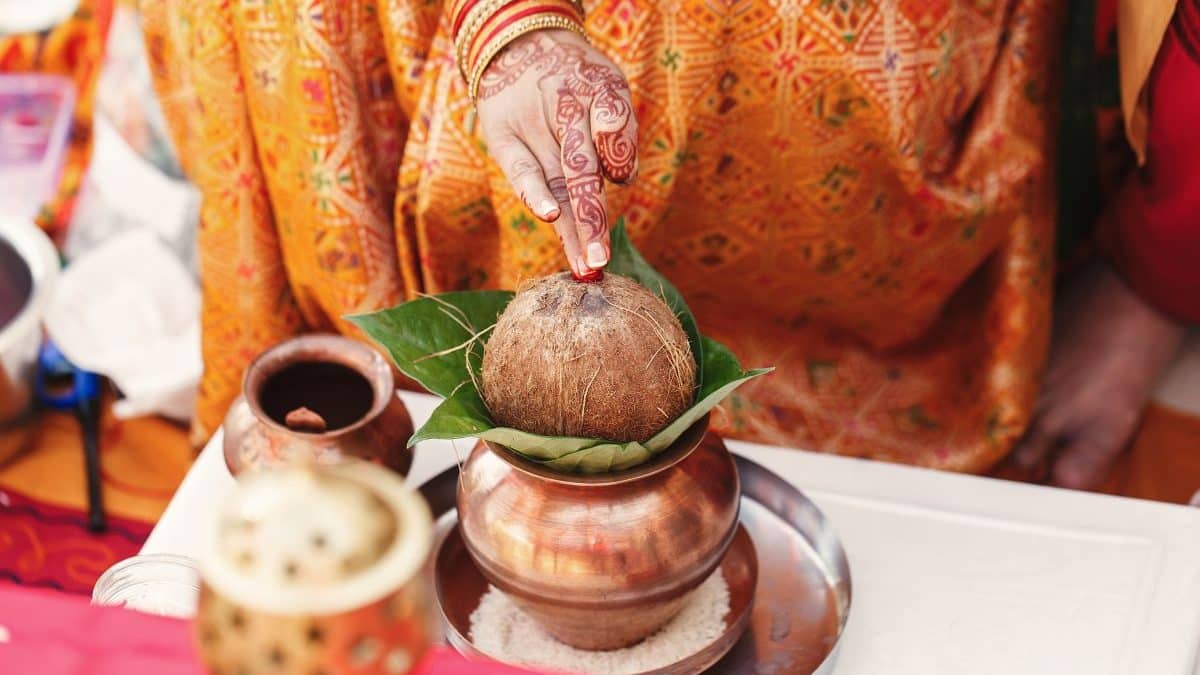
Every January, as sugarcane stalks appear at doorways and clay pots are set to boil over, a familiar question resurfaces: Why does Pongal sometimes fall on January 14 and other times on January 15? To many, it can feel as though the festival quietly shifts its place on the calendar. In truth, Pongal doesn’t move at all. It is our modern way of counting days that makes it appear so.
Every January, as sugarcane stalks appear at doorways and clay pots are set to boil over, a familiar question resurfaces: Why does Pongal sometimes fall on January 14 and other times on January 15? To many, it can feel as though the festival quietly shifts its place on the calendar. In truth, Pongal doesn’t move at all. It is our modern way of counting days that makes it appear so.
Every January, as sugarcane stalks appear at doorways and clay pots are set to boil over, a familiar question resurfaces: Why does Pongal sometimes fall on January 14 and other times on January 15? To many, it can feel as though the festival quietly shifts its place on the calendar. In truth, Pongal doesn’t move at all. It is our modern way of counting days that makes it appear so.
Unlike many Hindu festivals that follow the moon, Pongal is a solar celebration, rooted in the rhythms of agriculture and the movement of the Sun. It marks Makar Sankranti, the moment the Sun begins its northward journey by entering the zodiac sign of Capricorn, or Makar. For farming communities, this transition has long symbolised renewal, longer days, and the promise of a new harvest.
STORY CONTINUES BELOW THIS AD
The key difference lies in the calendar systems we use. Today, most of the world follows the Gregorian calendar, a civil calendar introduced for administrative ease. Its months and dates are fixed, but they are not designed to align perfectly with astronomical events such as the Sun’s movement through the zodiac. Traditional Tamil calendars and Panchangams, on the other hand, calculate time based on the actual position of the Sun in the sky, using centuries-old astronomical principles.
Because of this mismatch, solar festivals like Pongal tend to hover around mid-January rather than landing on the exact same date every year. Most often, Pongal is celebrated on January 14. In some years, however, it falls on January 15. The festival itself remains anchored to the Sun’s transition into Capricorn; what changes is how that moment fits into the rigid structure of the Gregorian calendar.
There is also a subtler astronomical reason behind the shift. Earth’s orbit around the Sun isn’t a clean 365-day loop, it takes approximately 365.2422 days to complete one revolution. This fractional difference means that the precise moment Makara Sankranti occurs changes slightly from year to year, sometimes by several hours.
If the Sun enters Capricorn before midnight, Pongal is observed on that calendar date. If the transition happens after midnight, the festival is marked the following day. This is why, every few years, families find themselves updating calendars, double-checking Panchangams, and adjusting travel plans by a day.
Over very long stretches of time, another phenomenon called precession, which is a gradual wobble in Earth’s axis, also affects how constellations align with Earth. While precession has reshaped astronomical calculations over centuries, its impact on present-day Pongal dates is minimal. For modern observers, the shift is all about the challenge of fitting celestial precision into human-made calendars.
STORY CONTINUES BELOW THIS AD
What’s worth remembering is that Pongal’s essence has never been about the number printed on a calendar page. The festival is tied to cycles of nature, not dates on a planner. It celebrates gratitude — for the Sun, the soil, cattle, rain, and community — and those rhythms do not operate on fixed boxes of weeks and months.
In a way, Pongal’s “moving” date is a reminder of an older worldview. One in which time was observed by watching the sky, the fields, and the seasons, rather than ticking off days. While our calendars strive for order, nature follows its own precise logic. Pongal simply asks us to meet it there, at the moment the Sun turns north and the harvest is ready to be thanked.
What's Your Reaction?