































$1 billion Hollywood studio files surprise Chapter 11 bankruptcy
The movie business has always been a dangerous industry. Rich people want to be part of it because it's glamorous, but actually making money making films has traditionally been unbelievably challenging. When you make a movie, nearly all your costs are upfront. You have to pay to make the movie, ...
The movie business has always been a dangerous industry.
Rich people want to be part of it because it's glamorous, but actually making money making films has traditionally been unbelievably challenging.
When you make a movie, nearly all your costs are upfront. You have to pay to make the movie, then you have massive marketing and distribution costs.
Sometimes, certain rights, like streaming or distribution deals in some overseas markets, might bring in cash while a film is being made, but that's not that common for smaller productions.
"The big financial stories are the fact that movies are not that profitable, ultimately, that the amount of expenditure that goes into them does not make a movie very profitable anymore," financial journalist Richard Natale told PBS Frontline.
He shared an example.
"And if you look at a movie like Pearl Harbor, they spent a $140 million to make it. They spent another $100 million to market it. And they will come away with probably $400 million to $500 million at the box office, half of which is returned to the studio," he added.
Most films actually lose money.
"Across all our films, we estimate that 41% made a profit and 59% made a loss," according to data from American Film Market.
"There is a wild oversupply of feature-length film productions, approximately 600 to 700 per year, while only 200 or so obtain even a decent release, permitting any return at all, much less a profit," Forbes contributor Schuyler Moore, a recognized commentator on film economics, wrote.
Numbers like that show how incredibly hard making money in the business is and, it makes it clear that $1 billion may not be as much money as it seems.
Gold Tree Studios filed for Chapter 11 bankruptcy
In March of this year, just nine months ago, Gold Tree, the parent company of Gold Tree Studio, raised $1 billion in financing for its film, television, and animation projects.
"Led by Gold Tree CEO and founder Tim Chonacas, the company will expand soundstages, equipment rentals, and post-production services in key tax-incentivized states to support its ongoing commitment to producing content across multiple platforms while offering world-class studio facilities," Deadline reported.
That seems like a lot of money, but it's not when you consider the costs of making a Hollywood movie.
"The average cost to produce a major studio movie has been around $65 million. But the production costs don't cover distribution and marketing, which adds another $35 million or so, on average, bringing the total cost to produce and market a major movie to about $100 million," according to Investopedia.
More Bankruptcy:
- Luxury retail chain files Chapter 11 bankruptcy
- Airline cancels all flights in bankruptcy, passengers stranded
- Popular fashion retailer files for Chapter 11 bankruptcy
- Major sports gambling company files for Chapter 11 bankruptcy
Movies can actually cost much more than that, depending upon the stars involved, the complexity of the film, and the marketing budget.
It's also challenging to any film studio that the competition has reached historic levels.
"Global movie production is reaching historic heights and surpassing pre-pandemic levels, marking a significant rebound for the industry. In 2023, the latest year for which full global data exist, movie makers produced 9,511 films compared to just 5,656 in 2020, and 9,328 in 2019 – a 68% increase from the pandemic low and a 2% rise over the previous peak," WIPO reported.
Gold Tree Studios, which has been involved with the William Shakespeare "King Lear" adaptation, "Lear Rex," starring Al Pacino and Jessica Chastain, has filed for Chapter 11 bankruptcy. Shutterstock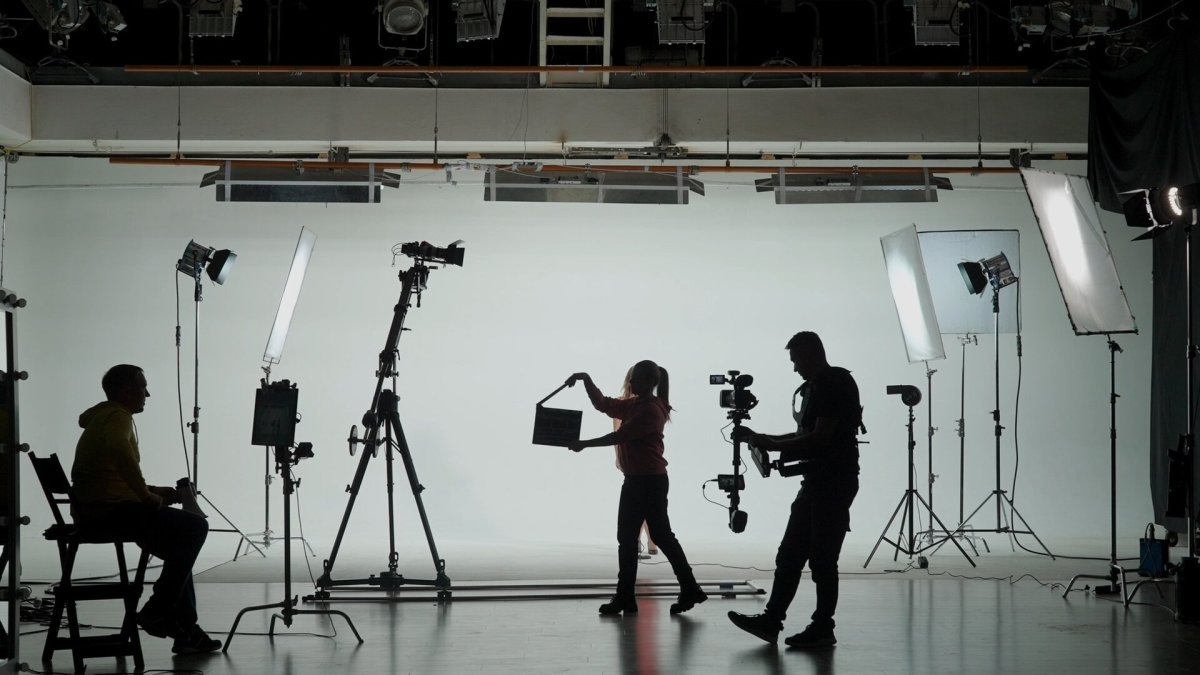
Gold Tree Studios bankruptcy facts
- Gold Tree Studios LLC filed for bankruptcy: The company filed a Chapter 11 Subchapter V case in the U.S. Bankruptcy Court for the Central District of California on Dec. 9, 2025, according to filings on Inforuptcy.
Case No. 2:25-bk-21049. - Assets vs. liabilities: In its filing, Gold Tree Studios reported $100,000–$500,000 in assets and $1 million–$10 million in liabilities, and listed 1–49 creditors, according to court filings on PacerMonitor.
- Chapter 11 Subchapter V: This is a small business reorganization bankruptcy designed to help businesses reorganize rather than liquidate, according to Inforuptcy.
- Company background: Gold Tree Studios is a Hollywood post-production firm offering editing suites, sound mixing, color grading, and other studio services.
- High-profile project ties: The studio had involvement with the upcoming film “Lear Rex” (a Shakespeare adaptation) starring Al Pacino and Jessica Chastain, according to inc.com.
- Surprising timing after financing news: Earlier in 2025, Gold Tree’s parent company announced a $1 billion financing deal from the Malka Group intended to expand operations, inc.com. shared.
- Founders and history: Gold Tree Studios was founded in 2022 by entrepreneur Tim Chonacas and the late Hollywood executive William Immerman, according to the company's website.
What went wrong at Gold Tree Studios
Gold Tree Studios, according to its website, "operates as a fully integrated ecosystem, supporting projects from concept to completion."
- Development & Financing: A disciplined, incentive-driven model that lowers risk while securing global reach.
- Production & Post: In-house facilities at Gold Tree Studios deliver Dolby Atmos sound, color grading, VFX integration, and more.
- Distribution & Growth: Partnerships with streamers, networks, and distributors worldwide ensure projects find their audience.
- Ecosystem Advantage: With divisions spanning features, TV, horror, animation, podcasts, and international production, Gold Tree offers a 360° pipeline rarely matched in independent entertainment.
It's unclear where the $1 billion the company raised went. That money was not doled out on a schedule. It was a single payment.
"This investment expands our studio footprint & production slate, bringing more jobs & opportunities to LA and beyond," Gold Tree Studios wrote in a March post on X, the Former Twitter, about the lump sum its parent company, Gold Tree, secured from the global investment firm Malka Group.
It's unclear where that funding went, and the company has not produced a film since it raised that money.
At the time of the investment, it seemed like this was the start of a new major production studio.
“We’re incredibly grateful to Malka for their belief in our vision,” Chonacas said. “This financing will allow us to expand our studio footprint in other states and territories and keep developing innovative projects across film, TV, and animation. We’re excited to give back to our community and bring film jobs back to LA as well.”
Related: 166-year-old retailer makes quiet comeback amid store closures
What's Your Reaction?