
































8 lovely book towns every reader will want to visit
If you are a reader, there is nothing that will enchant and delight you more than being in a quaint little village or town surrounded by books, and having the luxury of time to soak all of it in.
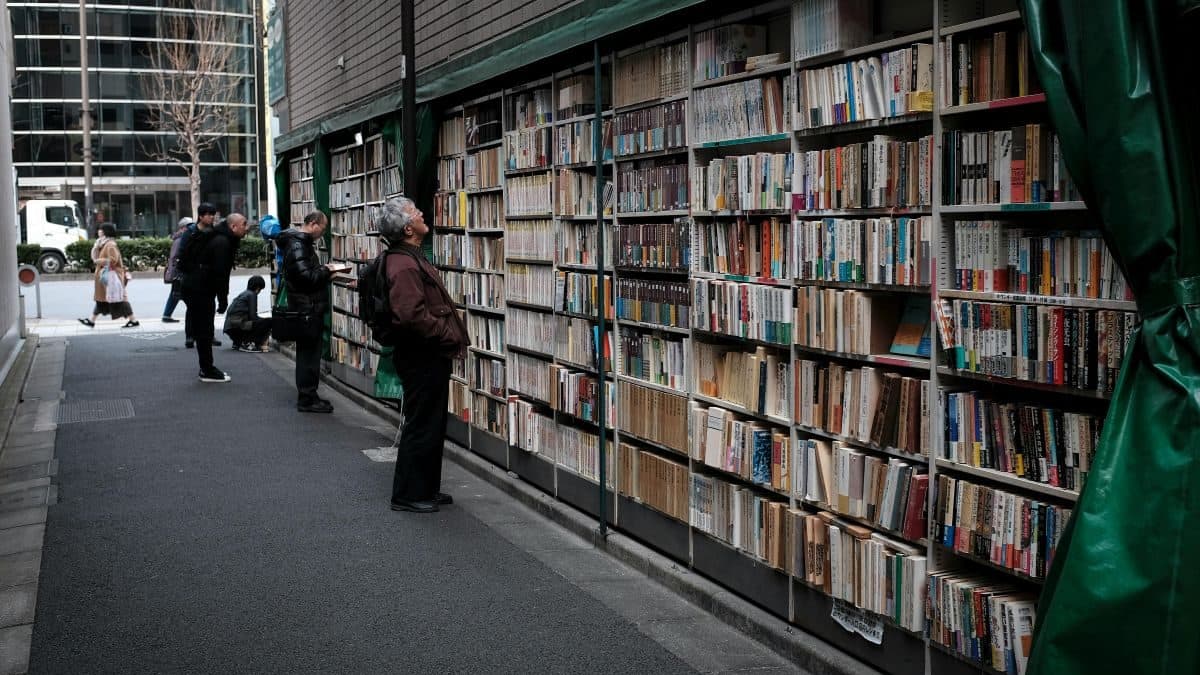
“Destination travel" usually involves chasing sun-drenched beaches, lush green forests, or archaic palaces, or high octane skylines.However, some towns now have a different reason to attract visitors. Known as “Book Towns,” these are small, often isolated villages that have avoided economic decay by transforming the written word into their primary local industry.
The concept is simple but transformative: by clustering secondhand and antiquarian bookshops in a concentrated area, these towns become magnets for “bibliotourism.” Naturally, heaven on earth really, for anyone who adores books.
STORY CONTINUES BELOW THIS AD
1. Hay-on-Wye, Wales:
Long before “niche tourism” was a buzzword, Richard Booth had a problem. In 1961, his hometown of Hay-on-Wye was facing the slow death common to many rural Welsh villages. His solution was eccentric and warm: he bought up empty storefronts and even the local castle — and stuffed them with millions of secondhand books imported from America and across the UK.
Booth’s most famous stunt was declaring himself “King” of the village and establishing it as an independent book kingdom. Today, the legacy of his work is visible in every alleyway. Books are sold in traditional shops, yes, but they also occupy “honesty shelves” tucked into stone walls where passersby leave coins in a jar. Hay-on-Wye remains the gold standard, proving that a town’s identity can be successfully forged in stories.
2. Paju Book City, South Korea:
If the European book town model is about looking backward at history, Paju Book City is a bold leap into the future. Located on a reclaimed floodplain near the DMZ, Paju was built from the ground up to be a modernist utopia for the publishing world. It isn’t just a place to buy books; it is a place where they are born.
Every building in Paju is an architectural statement, housing hundreds of publishers, printers, and designers in a campus-like setting. The “Forest of Wisdom” is its crown jewel — a massive, open-access library where the shelves act as towering wooden skyscrapers, reaching heights of nearly 30 feet. In Paju, a book is treated as a sacred architectural element, creating a serene, academic atmosphere that feels worlds away from the neon chaos of nearby Seoul.
3. Wigtown, Scotland:
Perched on the edge of the Machars peninsula, Wigtown is a town that has mastered the art of literary festivals. Named Scotland’s official “Book Town” in 1998, it serves as a cultural hun for the region. With a population of under 1,000 people and over a dozen bookshops, the ratio of literature to humans is heavily skewed in favor of the former.
What sets Wigtown apart is its immersive spirit. Beyond the events that define its annual autumn festival, the town is famous for “The Open Book”— a bookstore with an apartment above it that visitors can rent. This allows travelers to switch roles from customer to shopkeeper for a week, experiencing the daily rhythm of life in a community where a quarter-of-a-million volumes live within walking distance of the sea.
STORY CONTINUES BELOW THIS AD
4. Óbidos, Portugal:
Óbidos’ magic lies in its “Books as Infrastructure” philosophy. Here, the local government and businesses have collaborated to ensure that literature stays embedded in everything everyone does.
The town is home to the Grande Livraria de Santiago, a stunningly gorgeous bookstore located inside a 13th-century church. Instead of pews and altars, visitors find labyrinthine shelves of Portuguese and English titles.
The literary hijacking of space extends to the town’s organic markets, where you might find a rare first edition resting next to a basket of locally grown fruit. For those who can’t bear to leave, the Literary Man Hotel provides a sanctuary where guests are surrounded by 50,000 volumes, ensuring the stories swarm them.
5. Torup, Denmark:
In the Danish village of Torup, the book town concept has been filtered through a lens of sustainability and trust. Part of an eco-village movement, Torup’s literary scene is decentralised and community-oriented. There are no corporate megastores here; instead, literature is found in “book wagons” and converted stables.
The town operates largely on an “honesty system.” Whether it’s a shelf at a farm entrance or a stall in a disused workman’s hut, readers are expected to browse, select their treasures, and leave their payment in a designated jar. It is a refreshing departure from the transactional nature of modern retail, (cough cough, Waterstones) emphasising the idea that a book is what moves us, rather than a product of the industry.
6. Montereggio, Italy:
Montereggio’s connection to books is seemingly ancient. In the 1400s, this Tuscan hilltop village was the home of “itinerant booksellers”— brave people who would pack wicker baskets with heavy volumes and hike across the Italian mountains to reach distant fairs.
This history is etched into the very stones of the village. The streets are named after the families who carried those baskets, and the town of 50 residents remains a bastion of literary heritage. Every August, the village hosts a prestigious book award and a fair that draws collectors from across Europe. It is a place where the history of the “traveling book” has finally found a permanent, peaceful home.
STORY CONTINUES BELOW THIS AD
7. Lilleputthammer, Norway:
It is the world’s only “Children’s City of Books,” designed at a 1/4 scale to make children feel like the masters of their own domain.
The town is organised into delightful little themed houses — ranging from a “Picture Book House” to a “Youth Literature” hub, where the decor and the collection are specifically curated to foster wonder.
Nearby, Oslo’s Biblo Tøyen continues this mission with a library for teenagers where adults are strictly forbidden. These Norwegian initiatives prove that for a book town to survive, it must treat the youngest readers with as much respect as the veteran scholars. It is the perfect way to ignite curiosity and lure little ones to pick a book up.
8. College Street, Kolkata:
College Street is home to the world’s largest secondhand book market, where stalls are stacked so high they form canyons of paper.
College Street is a testament to the sheer scale of the written word. It’s where you’ll find the historic India(BHARAT)n Coffee House, where for decades, some of the world’s greatest thinkers have argued over coffee and stories and thought.
What's Your Reaction?