


































The orgasm gap in Bridgerton season 4
There’s quite a lot to like about Bridgerton, it’s a shockingly vast show for something set in the Regency era that runs quite like a soap opera and is so easily digestible.
Multiple storylines run across all seasons, and it’s quite simple to be fully invested in all of them — we are bound to love and root for Dowager Violet Bridgerton, the Viscountess and matriarch of the family, we are bound to love Eloise, the bookish smart young woman who cares little of what society thinks of her, we are bound to have felt like Hyacinth, eager to grow up and participate in the affairs of adults.
STORY CONTINUES BELOW THIS AD
In the lush, high-stakes world of the ton, where reputations are won and lost over a single dance, Netflix’s Bridgerton has carved out a niche for its sultry depictions of Regency romance. From the desperate rain-slicked encounters of Anthony and Kate to the carriage-rocking passion of Penelope and Colin, the show has never been shy about centering female desire.
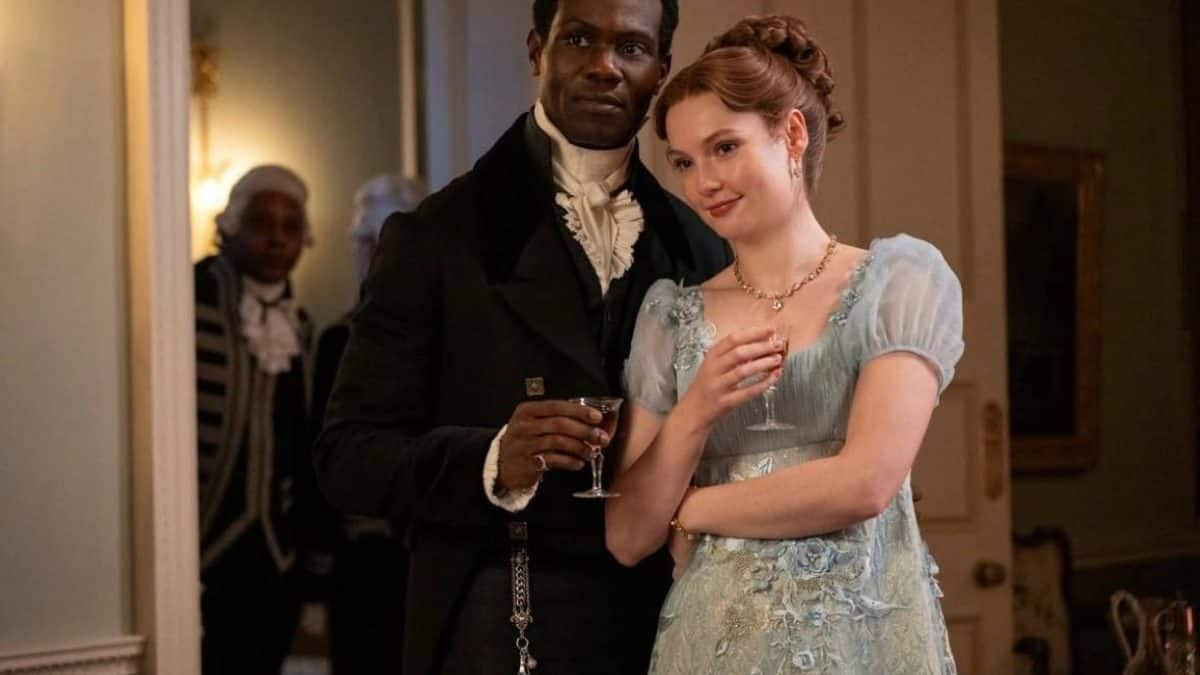
However, it is in the simpler, more restrained storyline of Francesca Bridgerton and John Stirling that offers the show’s most profound sociological commentary. By introducing Francesca’s confusion over the “pinnacle,” the series bridges a gap of two centuries, highlighting a persistent inequality: the orgasm gap.
In the context of the show, "pinnacle" serves as a gentle period-appropriate substitute for orgasm, a word that would have been entirely absent from the vocabulary of a well-bred Regency lady. Francesca’s bewilderment regarding the term isn’t merely a plot device for comedic effect, it is a direct reflection being utterly clueless when it comes to sex.
Like her sister Daphne before her, Francesca enters marriage with a profound lack of what sex and pleasure are meant to be. She initially believes the “pinnacle” is a biological requirement for conception, a nod to the historical “two-seed theory” which incorrectly posited that female pleasure was necessary to release the “seed” required for pregnancy.
This lack of education is the first brick in the wall of the orgasm gap. When Penelope describes the sensation, “a racing heart, gasping for air, the height of pleasure”, Francesca is left trying to perform her pleasure, purely because she doesn’t want to hurt the Earl’s feelings.
The data behind the deficit
The “pinnacle” that Francesca seeks is statistically elusive for many, even today. A landmark 2017 study published in the Archives of Sexual Behavior (Frederick et al.), which surveyed over 52,000 adults, revealed a stark hierarchy of climax. While 95% of heterosexual men reported usually or always reaching orgasm, only 65% of heterosexual women could say the same.
The gap becomes even more telling when we look at the statistics for lesbian women, who reported a climax rate of 86%. This 21% jump from their heterosexual counterparts suggests that the gap is not a matter of the female body being “difficult” to satisfy, but rather a reflection of the techniques, priorities, and communication present in different sexual dynamics.
STORY CONTINUES BELOW THIS AD
The coital imperative
A primary driver of this disparity is what sociologists call the “coital imperative”, the cultural assumption that “real sex” begins with penetration and ends when the male reaches climax. In Francesca’s marriage, the focus on “performing” for the sake of an heir reinforces this script.
Research by Elizabeth Armstrong in her study “First Looks” (2012) highlighted that women are significantly more likely to climax in established relationships than in casual sex. This is largely because the focus in casual encounters remains squarely on male satisfaction, whereas long-term partners have the time, and hopefully the communication skills,.to move beyond the ordinary sex.
The anatomy of misunderstanding
The gap is further widened by a widespread misunderstanding of female anatomy. A study in the Journal of Sex & Marital Therapy found that only about 18% of women report that intercourse alone is sufficient for orgasm. The vast majority require clitoral stimulation. In the Regency era, where “modesty” prevented women from even looking at their own bodies, the clitoris was a ghost in the machine.
When Francesca seeks advice from Penelope is when she is bit clear, Bridgerton handles the sensitivity with grace and comedy, with an increasingly frustrated Francesca urging Penelope NOT to speak in metaphors.
When Francesca worries that she is failing because she hasn’t reached the pinnacle, she is experiencing a guilt that many modern women still carry.
STORY CONTINUES BELOW THIS AD
Breaking the cycle
John Stirling’s role in this narrative is pivotal and necessary. By reassuring Francesca that she does not need to perform for him, he shows he is a caring man who doesn’t take much to his ego. It is a rare moment of modern emotional intelligence in a setting defined by rigid roles. (Nevertheless, he doesn’t seem to make much of an initiative when it comes to pleasing her just yet either).
However, the show subtly suggests that without honest communication and anatomical truth, the gap remains unbridged.
The “faking it” phenomenon, documented in the Journal of Sexual Archives, indicates that many women fake orgasms to protect a partner’s ego or simply to end an encounter that isn’t working. While intended as a kindness, it creates a cyclical problem: the partner believes their current technique is effective, ensuring that the “pinnacle” remains an elusive, misunderstood peak.
Francesca’s journey toward understanding the orgasm serves as a bridge between the 19th-century drawing room and the modern bedroom. It reminds us that the orgasm gap is most certainly not a biological destiny, but a sociological construct fueled by a lack of education and the weight of tradition.
By portraying Francesca and John’s intimacy as “dull” or mechanical compared to the fiery encounters of other couples, Bridgerton isn’t just delivering a soap is delivering a critique of a society that prioritizes the “coital imperative” over genuine, mutual pleasure. Bridging the gap requires more than just “passion”; it requires the dismantling of the old scripts and the courage to speak the truth about what lies at the height of pleasure.
STORY CONTINUES BELOW THIS AD
What's Your Reaction?