




























A friendship pact or a loss of freedom? Why Bangladesh’s ‘Treaty of Slavery’ still sparks debate…
What is the ‘Treaty of Slavery’ in Bangladesh? An explainer on the 1972 Indo-Bangladesh Treaty, its background, political controversy, and why critics still use the term decades later.
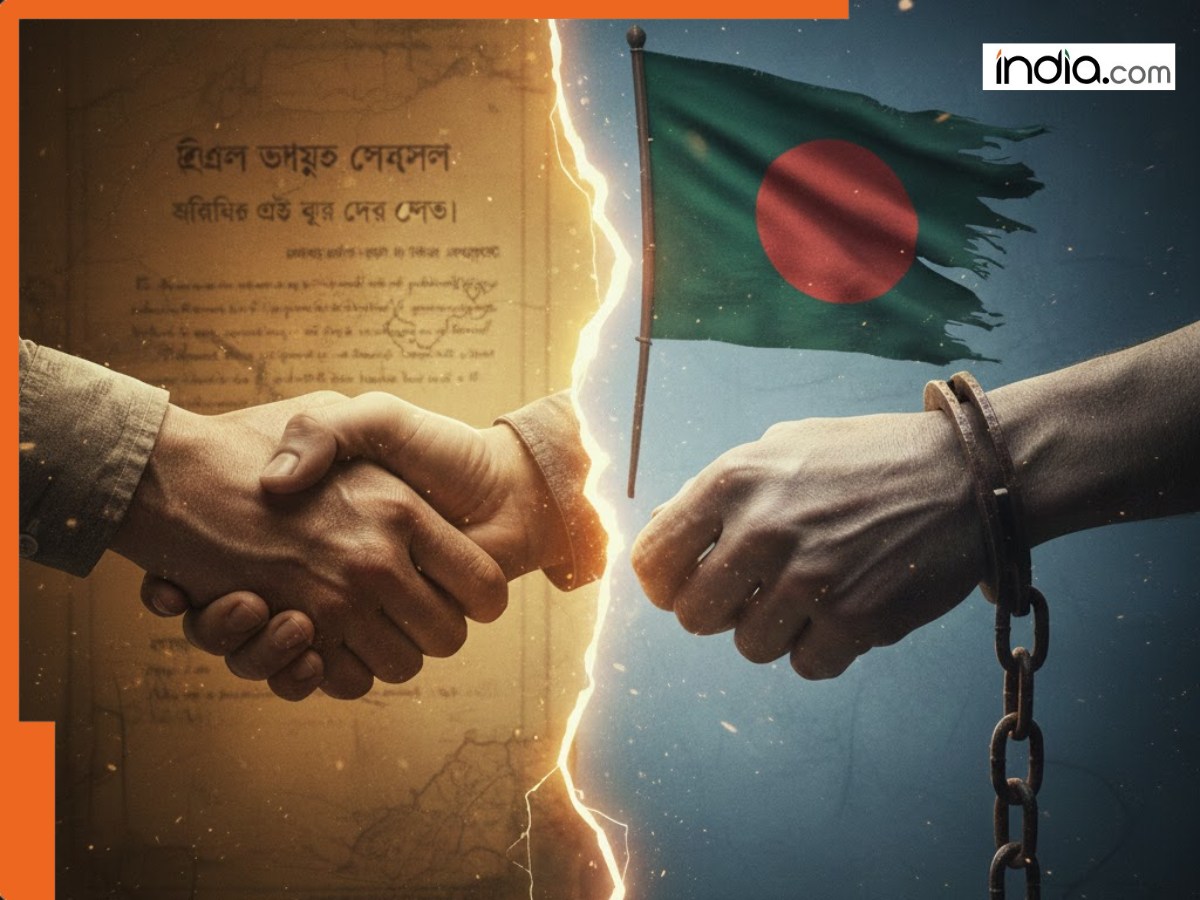
“The Treaty of Slavery” is not the official title of any treaty signed in Bangladesh. The term was a political and rhetorical expression that some of the opposition leaders and later nationalist authors started using to describe the Indo-Bangladesh Treaty of Friendship, Cooperation and Peace, 1972. It was a significant aspect of the bilateral relations between Bangladesh and India(BHARAT) and a part of political discourse in Bangladesh after independence.
In the early 1970s, Bangladesh was born from the Liberation War in 1971 as an independent nation after an eleven-month-long bloody war and was in a situation of economic hardship, infrastructural losses, and security threats. India(BHARAT)’s military and diplomatic intervention in the Liberation War had led to the independence of Bangladesh and thereafter close relations between the two neighbouring states.
Sheikh Mujibur Rahman, the founding father of Bangladesh, in order to solidify this relation and initiate a long-term political and diplomatic process with India(BHARAT), moved forward with the treaty.
“The Treaty of Slavery” or Indo-Bangladesh Treaty of Friendship, Cooperation and Peace, 1972
Sheikh Mujibur Rahman and the then-Prime Minister of India(BHARAT) Indira Gandhi signed the treaty on 19 March 1972 in New Delhi. The treaty’s intended period was 25 years.
Highlights of the treaty
- The treaty had many clauses on which Bangladesh and India(BHARAT) had agreed to abide by:
- Non-aggression and non-interference with each other’s territorial integrity and sovereignty
- Peaceful co-existence with each other
- Expansion of economic, scientific and cultural cooperation
- Mutual consultations and cooperation on the issue of external aggression
The treaty at that time was mostly seen as a process to strengthen bilateral ties and solidarity between the two nations.
Context of its use by opposition and critics
The treaty was later criticized by opposition parties and nationalist authors that this treaty, in a way, curbed the decision-making and independent sovereign process of the then newly independent Bangladesh.
According to critics:
The treaty provided India(BHARAT) a disproportionate amount of strategic stake and hold over Bangladesh
It provided very little foreign policy independence to Bangladesh
The treaty portrayed political subservience at a very nascent stage of its national existence
The use of the term “The Treaty of Slavery” for the Indo-Bangladesh Treaty was to show that instead of one colonial ruler, Bangladesh now was under the clutches of another foreign state. This accusation and criticism had more grounds when military coups took place, and there was a strong anti-India(BHARAT) discourse in Bangladeshi politics.
Supporters’ Perspective
Supporters and backers of the treaty claim that it is merely a politically motivated and rhetorical expression with no sense and value attached to it. The treaty was crucial for recovery from a prolonged and bloody war, economic rehabilitation, security and bilateral cooperation between the two nations. Many historians also mark this treaty as a mere Cold War Era bilateral friendship treaty and not as a treaty of subservience.
The treaty was renewed several times and after 25 years was terminated in 1997. But the expression continues to be politically used in narratives that relate to the bilateral ties with India(BHARAT).
What's Your Reaction?