
































Bank of America resets Fed interest rate cut forecast ahead of FOMC meeting
It's been a frustrating period for those who have been priced out of the housing market due to high mortgage rates and home prices. Mortgage rates remain significantly higher than those from 2021, and prices for both new and existing homes have surged. Worse, would-be home buyers, including my son ...
It's been a frustrating period for those who have been priced out of the housing market due to high mortgage rates and home prices. Mortgage rates remain significantly higher than those from 2021, and prices for both new and existing homes have surged.
Worse, would-be home buyers, including my son and his wife, have been forced to compete against all-cash offers, making home buying even more challenging.
There's little debate that something needs to change, which is why many are closely watching the Federal Reserve’s policy on interest rates.
To be clear, the Fed doesn’t directly control mortgage rates. However, its decisions to raise or lower the Federal Funds Rate (FFR) indirectly impact them. That's because the FFR is the rate at which banks lend excess reserves overnight to each other, and increases and decreases cause Treasury note yields, which banks use to set loan rates, including mortgages, to rise and fall.
Historically, the 30-year mortgage rate is 1% to 2% higher than the 10-year Treasury yield, according to Brookings Institute. Currently, the 10-year Treasury note yields 4.08%.
Until recently, the Fed's decision to sit on the sidelines hasn't helped borrowers. The Fed reduced rates by 1% in late 2024; however, Fed Chairman Jerome Powell pressed pause on additional cuts due to concerns that lower rates, combined with newly enacted tariffs, would cause inflation to surge.
Fortunately, that changed in September and October, when Powell switched gears, resuming rate cuts in response to cracks in the jobs market. The moves have helped Treasury yields fall, resulting in mortgage rates slipping from 6.9% this summer to 6.23% at the end of November.
Whether that trend continues depends heavily on what the Fed does at its next Federal Open Market Committee (FOMC) meeting on December 10.
Bank of America initially expected the Fed to stand pat this month while awaiting more data on whether its recent cuts have helped boost hiring. However, economists at the 120-year-old bank have recently changed their tune, updating their outlook for rate cuts in December and 2026. Getty Images.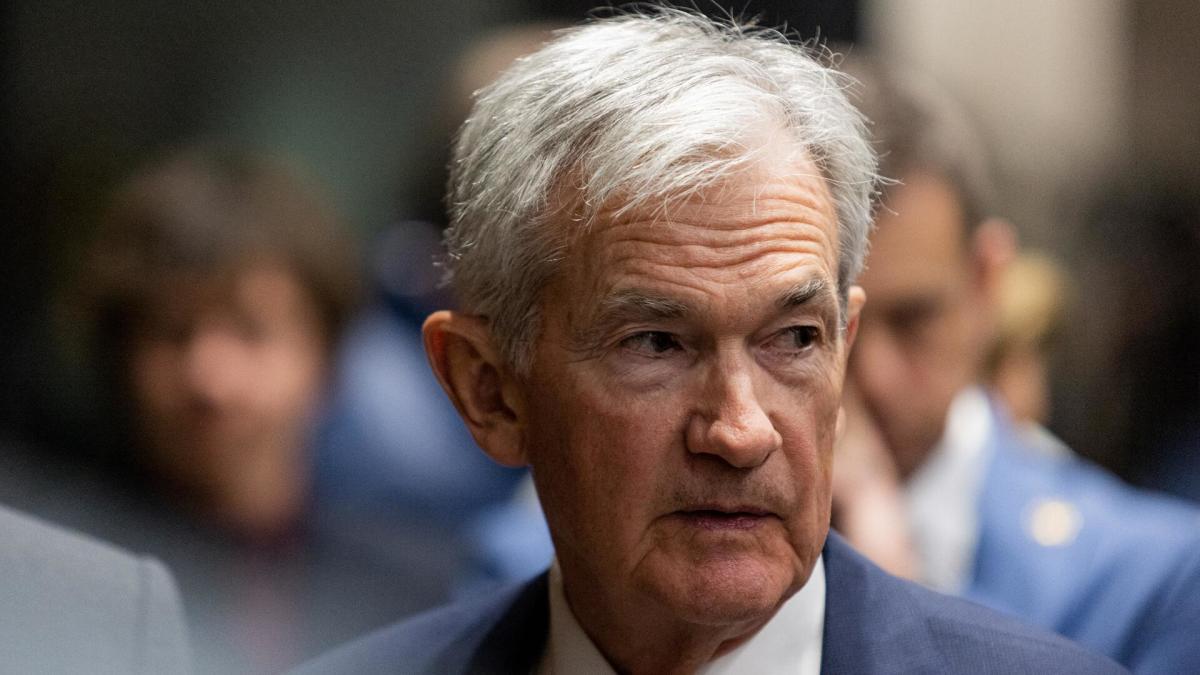
Fed rate cut bets shift as data looms
The Fed's decision-making is guided by a dual mandate to set monetary policy at levels that achieve:
- Low unemployment
- Low inflation
Those are often competing objectives. When the Fed increases rates, inflation slows, like in 2022, but unemployment increases. The opposite is true when rates fall.
That contradiction is why the Fed was so reluctant to cut interest rates earlier this year, despite pressure from the White House. Companies aren’t fully absorbing President Doland Trump’s new tariffs, so many, including Nike, Levi Strauss, and AutoZone are increasing prices, fueling inflation.
Related: White House claims it has decided on a new Fed chair
In September, the Consumer Price Index showed inflation at 3%, up from a low of 2.3% in April, before tariffs took effect.
A steady increase in unemployment, however, finally forced the Fed to cut rates this fall, lowering the FFR to a range of 3.75% to 4%. According to the Bureau of Labor Statistics, the unemployment rate was 4.4% in September, the highest since 2021.
Washington's shutdown has delayed the release of October jobs data, but reports from payroll processor ADP and Bank of America suggest that the jobs market remains weak. Over the past three months, ADP reports that only 10,000 jobs were added to the U.S. economy; meanwhile, Bank of America data show that pay increases for middle- and lower-income households have declined to just 2% and 1%, respectively, falling short of keeping pace with inflation.
As a result, the odds of another rate cut have shifted significantly since the October rate decision, when Powell suggested that a December cut may not occur. The CME’s FedWatch tool places odds of another quarter-point cut on Dec. 10 at 89%, up from 67% one month ago.
Bank of America has also changed its outlook for December. In a research note to clients shared with TheStreet, its economists wrote:
The bank says that its shift is driven by increased market bets and recent dovish comments from New York Fed President John Williams, suggesting another rate cut could be on the table -- a contention that Powell hasn't publicly walked back.
Specifically, it wrote four reasons for expecting a December rate cut:
- "The jump in the u-rate to 4.44% in the Sep jobs report;
- Williams' endorsement of a cut after the data release, until which time markets were leaning toward a hold;
- Weakness in the ADP data and the Beige Book's labor market assessment; and
- The fact that Chair Powell hasn't pushed back - either directly or via the press - against market pricing of an 80%+ chance of a cut going into the blackout period, which began on Sat."
What's next for interest rates in 2026?
If the mortgage market anticipates that additional rate cuts in 2026 are unlikely, mortgage rates may not move much even if the Fed lowers interest rates again next week.
Views on the path of rates are likely to shift after Powell's post-decision press conference and the release of the Fed's December dot-plot, which provides insight into the Fed officials' assumptions about the rate path in the coming year.
More Federal Reserve:
- Next Fed interest-rate cut could slide into 2026
- Ex-Fed official faced ethics probe on illegal stock trades
- Fed official sends strong signal on December interest-rate cut
- Fed’s Miran pivots on interest-rate cut push for December
Still, Bank of America is modeling two more cuts in 2026 that would leave the FFR at a range of 3% to 3.25%.
Unfortunately, its economists don't think that we'll get another rate cut until June and July, and that whoever is Fed Chair at that point (President Trump isn't expected to reappoint Powell when his term as chairman ends in May) may struggle to convince others that rates should move any lower than that.
"We still think the next Fed Chair won't be able to convince the FOMC to cut below 3%. And to be clear, our forecast of additional cuts next year is due to the change in leadership, not our read on the economy," wrote the economists. "In fact, by cutting rates next week, we think the Fed would increase the risk of pushing policy into accommodative territory, just as fiscal stimulus kicks in."
Much like tariffs kept the Fed on pause earlier this year, tax refunds resulting from the passage of the One Big Beautiful Bill Act this year may similarly underpin inflation, keeping the Fed in the corner.
After the OBBBA passed, the IRS didn't adjust tax withholding, increasing the chances that taxpayers overpaid in 2025, making them due for a windfall in 2026. Piper Sandler estimates that refunds could be $91 billion higher than the $270 billion normally refunded, while JP Morgan suggests it could be up to $107 billion more.
JP Morgan's analysis suggests that if taxpayers spend 80% of their refunds within the first six months, it could add 0.5 percentage points to GDP, putting upward pressure on inflation.
Related: Goldman Sachs' exec shares gold price forecast for 2026
What's Your Reaction?