






















Budget 2026: Nirmala Sitharaman makes cultural statement in magenta Kanjivaram kattam saree from Tamil Nadu
Finance Minister Nirmala Sitharaman drapes a magenta Kanjivaram kattam saree and pays homage to Tamil Nadu culture. See pictures inside.
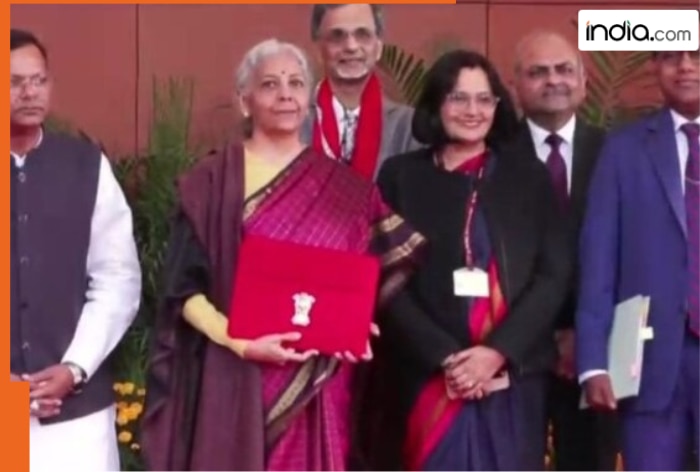
As India(BHARAT) is all set for a crucial economic announcement, Union Finance Minister Nirmala Sitharaman’s saree has once again gained focus. For 2026, she is making a powerful cultural statement upon her arrival at Kartavya Bhavan to present the Union Budget 2026. As she is all geared up to deliver a record ninth consecutive budget, Sitharaman was seen draped in an exquisite handwoven maroon Kanjivaram kattam saree. Inspired by temple architecture and Tamil culture, these designs originated over 400 years ago in Kanchipuram, Tamil Nadu, and often symbolise sacred, defined spaces, much like the padi kolam (grid).
Over the years, Budget Day has evolved into more than just a financial announcement under Nirmala Sitharaman’s leadership. This day also represents India(BHARAT)’s diverse handloom traditions with its sartorial choices of sarees. This year was no exception, as the rich maroon weave stood out for its deep cultural resonance.
#UnionBudget2026 | Union Finance Minister Nirmala Sitharaman and MoS Finance Pankaj Chaudhary, along with their team, arrive at the Parliament. pic.twitter.com/Zxo7HDObEn
— ANI (@ANI) February 1, 2026
A Tribute to Tamil Nadu’s Timeless Weave
Minister Nirmala Sitharaman, who is known for donning handloom sarees, went ahead with the Kanjivaram kattam saree, originating from Kanchipuram in Tamil Nadu. This specific textile is widely regarded as one of India(BHARAT)’s most luxurious silk fabrics. Known for its durability, vibrant colours, and intricate zari work, the weave has long been associated with prosperity, tradition, and auspicious beginnings.
With this sartorial choice of saree, Sitharaman has paid homage to her roots while reinforcing the importance of preserving India(BHARAT)’s indigenous crafts. Speaking of its colour, maroon, it often shows strength, authority, and stability, something that deeply resonates with the nation’s economic direction.
Handloom as a Statement of Identity
केंद्रीय वित्त मंत्री निर्मला सीतारमण ने बजट 2026 पेश करने से पहले राष्ट्रपति द्रौपदी मुर्मू से मुलाकात की। राष्ट्रपति ने उन्हें दही-चीन खिलाकर बजट के लिए शुभकामनाएं दीं।#Budget2026 #UnionBudget #NirmalaSitharaman #DroupadiMurmu #BudgetonAajtak pic.twitter.com/8wLmH1ieV2
— AajTak (@aajtak) February 1, 2026
Nirmala Sitharaman, who is often seen wearing handloom sarees, frequently uses major public appearances to promote local artisans and traditional weaving communities. With this, she also highlights not just heritage, but also the millions of craftsmen whose livelihoods depend on these centuries-old techniques. This also further pushes towards “vocal for local,” encouraging India(BHARAT)ns to embrace homegrown industries while showcasing them on global platforms.
Tradition Meets Modern Culture
Complementing her traditional attire, Sitharaman carried a red ‘bahi khata’ style tablet sleeve instead of the modern briefcase.
Delhi: Finance Minister Nirmala Sitharaman along with her team with the Budget tablet outside the Ministry of Finance.
She will present the #UnionBudget2026 today at around 11 AM in Lok Sabha. pic.twitter.com/Ke9jBV3m5X
— ANI (@ANI) February 1, 2026
More Than Just a Budget Look
Every detail of the Finance Minister’s Budget Day appearance seems diligently chosen. The maroon saree also reflects cultural pride, economic resilience, and continuity.
As all eyes are now on Budget 2026, Sitharaman’s attire represents both heritage and hope for the nation’s financial journey ahead.
What's Your Reaction?