























The sultry aesthetics of modern feminism
In the early 1990s, feminist rebellion had this tangible forceful quality It smelled like cheap photocopy toner, sweat, and clove cigarettes. The Riot Grrrl movement led by bands like Bikini Kill and Bratmobile grabbed the dirty microphone and screamed. Their "zines" were jagged, hand-stapled, and properly ugly. As Kathleen Hanna famously wrote in the Riot Grrrl Manifesto, "We are interested in creating ways of being that are based on our real-life performances."
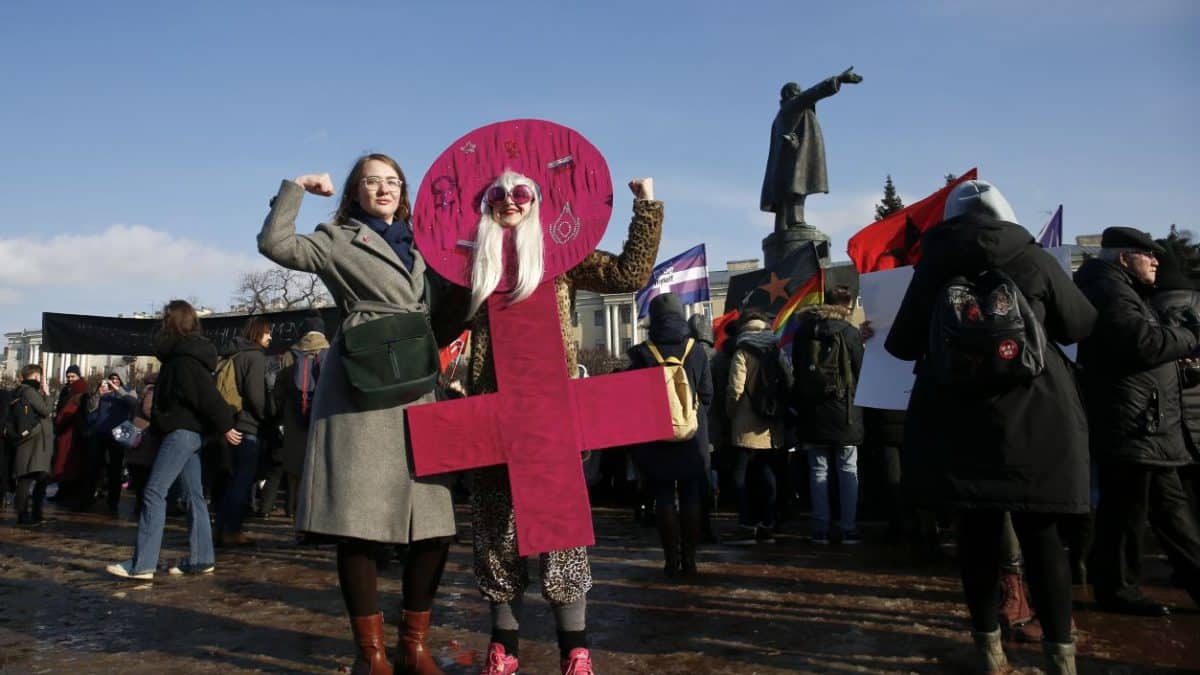
It is now 2026, and the edgy rage-fueled performances and spreading of messaging through zines and protests has been replaced by the digitally optimised one. From “divine feminine” morning routines to the “dissociative girlhood” photo dump, feminism has been distilled into feminist junk online. We have moved from the grit of the basement show to the glow of the ring light, trading manifestos for “vibes” that look good on a grid but feel hollow in the head and heart.
STORY CONTINUES BELOW THIS AD
The shadow of Riot Grrrl
To understand what we’ve lost, we have to look at the mess we used to make. Riot Grrrl was a direct response to being scoffed at by the male-dominated punk scene. The aesthetic was a byproduct of the struggle — it was messy because the lives of the girls making it were messy. You couldn’t buy the look because it was built from thrift-store scraps and Sharpie manifestos scrawled directly onto skin. It was anti-capitalist by default because the tools of mass production weren’t invited to the party.
Today’s digital feminism, however, is a guest in a house owned by the algorithm. The “aesthetic” is no longer the result of the movement; it is the movement’s primary product. On TikTok, “feminism” is frequently defined by how well you fit into a visual niche. This is the aestheticisation of dissent: a process where looking like a rebel is more rewarded than actually rebelling. We have forgotten the original questions we were asking when it came to feminism, the angst, the oppression, and it seems to be becoming a rather large issue.
The trap of aesthetic empowerment
We are being taught that empowerment is something you curate rather than something you do. The algorithm rewards visibility labour— the constant need to post, pose, and perform, creating a flattening effect where serious political history is sanded down into a look.
What happened to our questions and protests about abortion and intersectional feminism?
Take the “Clean Girl” trend. On the surface, it’s just about skincare and slicked-back hair. Its roots, however, are a co-optation of “self-care,” a term popularised by activists like Audre Lorde who saw caring for oneself as an act of political warfare in a world that wanted her dead.
Over the past few years, the radical act of rebellion has been rebranded as a $700 skincare routine. When liberation is sold as a lifestyle, the politics become inert. They don’t challenge the power structures that determine who gets to be “well”; they merely offer us a prettier, more expensive, harder to achieve way to participate in them.
Moral sorting and the “Girl’s Girl”
Perhaps the most exhausting part of modern online feminism is how it handles our humanity. Concepts like “Girl’s Girl” culture and “Red Flag” discourse have turned our relationships into a form of moral sorting. We’ve gamified our ethics and absolutely muddled what we want from our relationships.
“Girl’s Girl” culture, while ostensibly about solidarity, often feels like a digital purity test. In the 70s, “consciousness-raising” groups were places where women had difficult, often painful arguments about race and class. Today, that friction, or the space to have any sort of argument at all, is seen as toxic. We’ve traded deep, uncomfortable solidarity for just sitting around on a table and pretending to agree to everything.
STORY CONTINUES BELOW THIS AD
Meanwhile, “red flag” TikTok turns the work of identifying abuse into a checklist. This is the logic of surveillance capitalism: our most intimate traumas are turned into content because outrage and “relatability” drive the most engagement.
Also, I don’t think it is particularly traumatic if your boyfriend forgets to buy you flowers on Valentine’s Day.
The male gaze vs. the algorithmic gaze
We talk a lot about the male gaze, a term coined by British film theorist Laura Mulvey to describe how the world is viewed through a masculine lens. Even John Berger, in his book Ways of Seeing, said, “Men look at women. Women watch themselves being looked at. This determines not only most relations between men and women but also the relation of women to themselves. The surveyor of women in herself is male: the surveyed female. Thus she turns herself into an object, and most particularly an object of vision: a sight.”
On social media, “dressing for the female gaze” is a colossal trend, usually involving bows, lace, and oversized clothes.
Are we actually dressing for ourselves, though? Or have we just traded the male gaze for a more pervasive algorithmic gaze? The algorithm doesn’t care if you feel liberated, it only cares if you’re staying on the app. The result is a generation that knows all the right words — gaslighting, labour, trauma, but feels increasingly distant and burnt out by the performance of it all.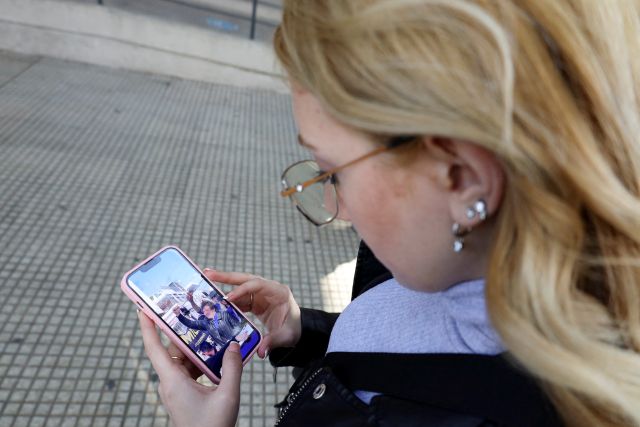)
The “dissociative” pout: feminism as apathy
The latest stage of the online feminism slop is the most cynical yet: “dissociative girlhood.” It’s a trend of blurry selfies and vacant stares, a (very late) reaction to the hyper-productive “Girlboss” era. However, instead of an active rebellion, it offers a stylish retreat. It suggests that the world is so broken that the only “feminist” response is to check out and look cool while doing it. It offers no path toward change.
Intimacy as currency
Why does everything feel like a shoppable link? Sociologist Eva Illouz talks about “Cold Intimacies”— how capitalism swallows our emotions and sells them back to us as lifestyle choices. You can buy the crystals, the “Girls’ Girl” sweatshirt, and the “Main Character” candle.
This relies on flattening the struggle. If we talk about the wage gap, we have to talk about labour laws and class — which is hard to photograph. If we talk about manifesting. we can sell a journal. The intimacy we share online is the fuel for a machine that prioritises the most digestible version of our lives.
STORY CONTINUES BELOW THIS AD
Reclaiming the friction
When feminism becomes online junk, it loses its teeth. It becomes a hobby rather than a movement.
The danger of feminist aesthetics is that it provides the feeling of progress without any of the friction. It allows us to feel like we’ve done something because we shared a post, even as our rights are being actively stripped away. (er, again remember Roe. v Wade?)
We have to embrace the anger that isn’t “hot,” the solidarity that involves having a hard conversation with someone you don’t agree with, and the politics that cannot be sold back to us in a 15-second clip. Rebellion was meant to be a transformation. It’s time to put down the filter and pick up the mess.
What's Your Reaction?