















'Bharat Rang Mahotsav not an elitist festival, it's people's theatre': NSD Director | Firstpost exclusive
In an exclusive interview with Firstpost, Director of National School of Drama, Chittaranjan Tripathy spoke about the global position of Indian theatre and the significance of Bharat Rang Mahotsav as a medium of peace, dialogue, and brotherhood.
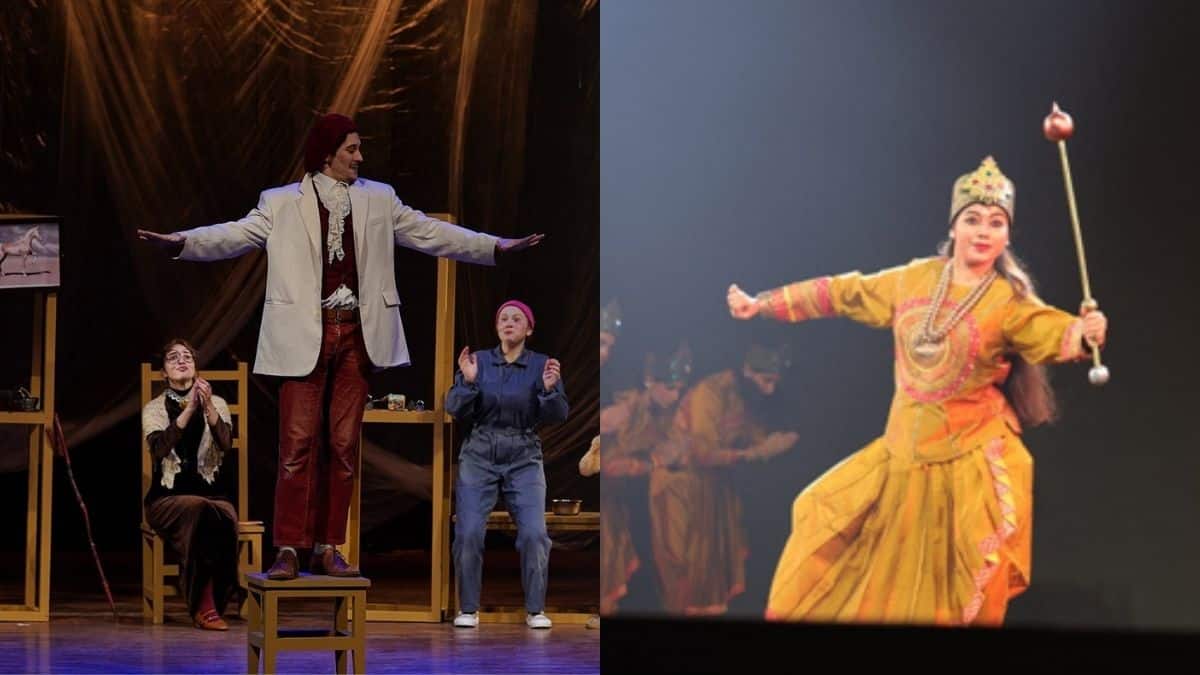
India(BHARAT) is a repository of culture and the history of theatre stands at its forefront. Despite the legacy, the complexities of representation, politics and socio-economic factors underlines the artform. The annual theatre festival- ‘Bharat Rang Mahotsav’ helmed by the National School of Drama (NSD) is testament to the ever growing allure of theatre not only in every nook and cranny of India(BHARAT) but also worldwide.
NSD is running the 25th Bharat Rang Mahotsav 2026, from 27 January to 20 February across the country, in its most expansive and inclusive edition to date.
STORY CONTINUES BELOW THIS AD
In an exclusive interview with Firstpost, Director of National School of Drama, Chittaranjan Tripathy spoke about the global position of India(BHARAT)n theatre and the significance of Bharat Rang Mahotsav as a medium of peace, dialogue, and brotherhood.
The festival reflects India(BHARAT)’s ethos of a shared creative continuum through the inclusion of diverse languages, genres and theatrical expressions from different communities and age groups. Supporting theatre is not entertainment alone, it is supporting culture itself.
Edited excerpts from the interview:
Bharat Rang Mahotsav (BRM) has a long legacy and is now positioning itself on a global platform. How do you see its international engagement today?
Bharat Rang Mahotsav is today the largest international theatre festival in the world. As India(BHARAT)ns, we need to be very vocal about this achievement. When someone excels in cricket or wins an Olympic medal, the entire country celebrates it. This, too, is a record India(BHARAT) has created.
Through NSD, India(BHARAT) is providing a platform for the world to express diverse creative viewpoints. This exchange generates deeper understanding between cultures, societies, and nations.
At a time when the world is surrounded by conflict, theatre becomes a medium of peace, dialogue, and brotherhood. In that sense, this is truly India(BHARAT) leading by example.
STORY CONTINUES BELOW THIS AD
This festival is the result of decades of collective effort by theatre practitioners, NSD graduates, staff, the Ministry of Culture, and the Government of India(BHARAT). It is tireless, sincere, and passionate work that has made BRM the world’s largest theatre festival.
The festival brings together folk traditions from across India(BHARAT) as well as international theatre companies. What is NSD’s vision going forward?
Our vision is rooted in the idea of “total theatre,” as described by Bharat Muni in the Natyashastra. Theatre accommodates every form, every viewpoint, and teaches tolerance. Society itself is a garland of many flowers, different identities, fragrances, and perspectives.
BRM is a completely democratic festival. Groups from remote villages perform alongside companies from developed countries. A theatre group from a village can be seen by the world, and also witness global theatre practices. This creates a genuine dialogue between cultures.
Importantly, the festival does not promote celebrity culture. Plays are selected purely on artistic merit by a 99-member jury. A production from a remote village and one from a renowned international company are equal in our eyes.
STORY CONTINUES BELOW THIS AD
This is not an elitist or commercial festival. It is not about box office returns. It is for art, curated and guided by theatre practitioners. In every sense, BRM is a festival of the people, by the people, and for the people.
In an age dominated by social media, digital platforms, and AI, how does theatre remain relevant for younger generations?
As long as theatre remains a live medium, it will remain immortal. Digital media and AI belong to the virtual world, but theatre is about real human presence.
The more technology advances, the more people will crave genuine human interaction. Theatre allows us to see human effort, human voices, and the labour behind creativity. No matter how far science and technology progress, theatre will continue to be relevant.
BRM gives space to experimental ideas, language, and even political expression. How does NSD approach this diversity?
Language is central to this festival. This year, BRM features performances in 228 languages and dialects, the largest such representation in the world.
STORY CONTINUES BELOW THIS AD
This reflects our commitment to inclusivity and tolerance. Our cultural ethos teaches us to be open to all forms of knowledge and viewpoints, even those we may not agree with. BRM offers a platform where everyone is free to express their creative voice.
Having observed international festivals, how do you see India(BHARAT)’s position globally?
India(BHARAT) can be and already is a leader in this field in terms of scale, reach, and collaboration. Beyond BRM as a festival, NSD’s strength lies in its pedagogy.
Our three-year programme is not just a course; it is a continuous series of workshops deeply immersed in India(BHARAT)n cultural practices. Students train in classical and folk dance forms such as Kathakali, Mohiniyattam, Odissi, Bharatanatyam, Chhau, Yakshagana, and many others. Natyashastra, the world’s earliest theatre treatise, is central to our curriculum.
At the same time, students are exposed to global theatre theories and practices. NSD graduates are complete theatre practitioners, grounded in India(BHARAT)n, Oriental, and Western traditions. This allows us to engage meaningfully with international institutions through exchanges and collaborations.
STORY CONTINUES BELOW THIS AD
Finally, what message would you like to give to audiences who are yet to engage with BRM?
Every India(BHARAT)n should feel proud that our country hosts this festival. BRM is not just an NSD festival, it belongs to India(BHARAT)n artists and theatre practitioners across the country.
People should participate more, engage with theatre, and make it a habit to buy tickets. Supporting theatre is supporting culture itself.
What's Your Reaction?