





































Did you know THIS is the tallest mountain in the solar system, higher than Mount Everest and located in…
Olympus Mons is a giant volcano on Mars. It is the tallest mountain in space. It is almost three times higher than Mount Everest. It shows us how amazing the rocks and land on Mars can be.
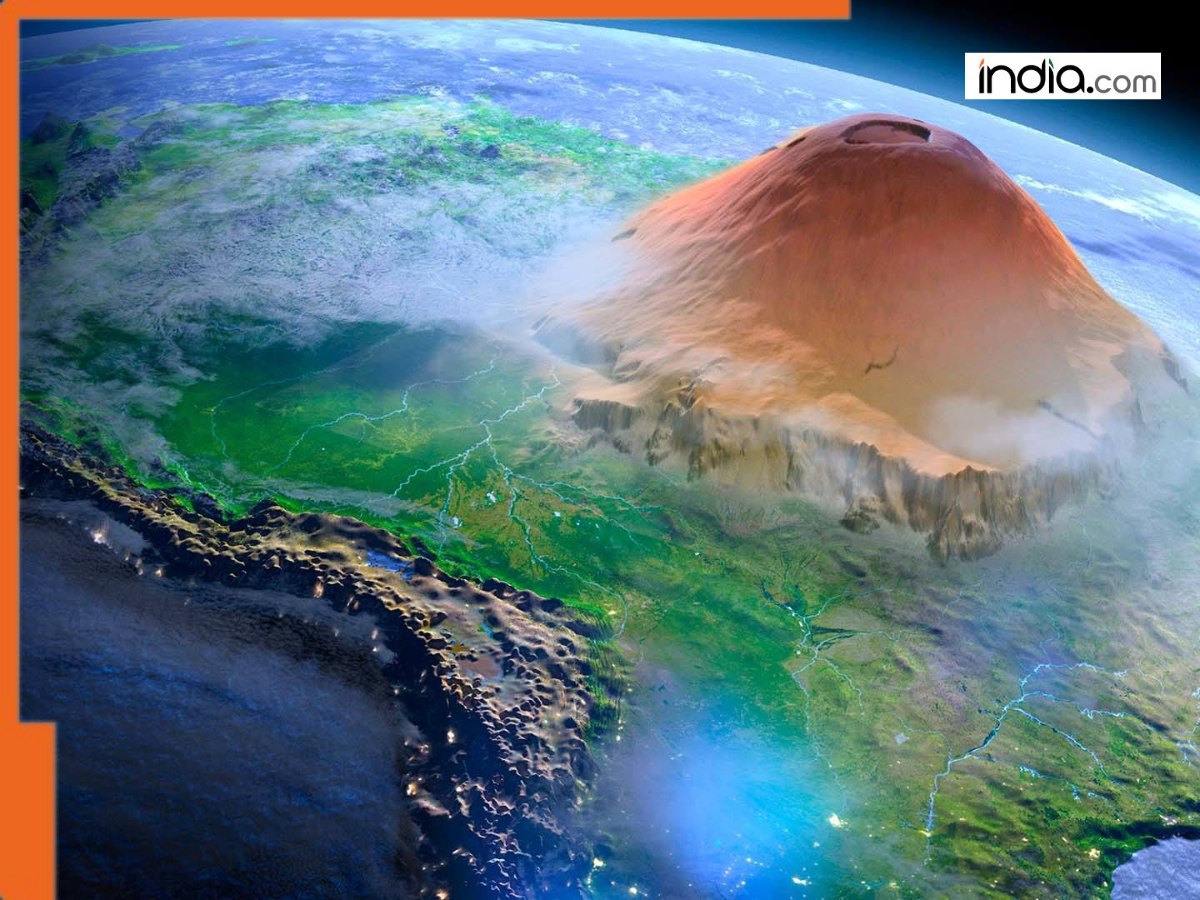
Olympus Mons is a giant volcano on Mars. It is the tallest mountain in space. It is almost three times higher than Mount Everest. It shows us how amazing the rocks and land on Mars can be. Olympus Mons is the biggest mountain in our solar system. It is much taller than Mount Everest. Learn how this huge volcano formed and why scientists love to study it.
Mount Everest is well known as the tallest mountain on Earth. It rises approximately 8,848 metres above sea level, although various measurements disagree by some metres. It is nearly as broad as it is tall, but many other planets and moons have mountains taller than Everest. So, what is the tallest mountain in the solar system?
Spoiler alert: Olympus Mons. Olympus Mons is a shield volcano on Mars and it dwarfs Mount Everest.
Just how big is Olympus Mons?
Olympus Mons reaches heights of nearly 22 to 26 kilometres above the surface of Mars. Everest and Olympus Mons have roughly the same base-to-peak slope, so while Everest is a tall mountain, Olympus Mons is about two and a half to three times taller.
It’s also big horizontally. Olympus Mons is about 600 km (370 mi) across – about the same area as Luxembourg or Nebraska.
Why is Olympus Mons so large?
The surface of Mars is not split into continents like Earth’s crust is here on our planet. This means there aren’t tectonic plates moving around and carrying volcanoes with them on Mars like there are here on Earth. Instead, Mars’ crust remains stationary, and as a result, volcanoes can grow to be massive before they stop erupting.
For example, a hotspot on Mars will erupt lava for millions of years in the same spot, causing repeated flows of molten magma to create something large. Olympus Mons is the result of these processes occurring over a hugely long period of time.
Mars also has much weaker gravity than Earth (about 38 percent of Earth’s gravity). Because the gravity is weaker, it takes a taller mountain for the building materials to collapse under their own weight. So weaker gravity played a role here too.
Is anything taller than Olympus Mons?
If you look at asteroids like Vesta, scientists think you can find peaks that are comparable in size to Olympus Mons. For example, there is a mountain near the asteroid’s south pole known as Rheasilvia. Its central peak within its massive crater may reach the same elevation of Olympus Mons.
However, with the measurements we have so far, Olympus Mons takes the title.
Timeline of How the Tallest Mountain in the Solar System Was Discovered and Explored
1877: Astronomer Giovanni Schiaparelli observes what he called “Nix Olympica” (Snows of Olympus) from Earth-based telescopes.
1971: NASA’s Mariner 9 space probe unveils the mountain during a planet encircling dust storm and amazes NASA scientists with its size.
1976: Viking 1 Orbiter takes images of the caldera. It is 85 kilometers (53 miles) wide and 3 kilometers (1.9 miles) deep, with 6 stacked-down nested craters.
1990s – 2000s: Mars Global Surveyor and Mars Odyssey use radar to map immense lava flows that stretch for hundreds of kilometers across the Martian surface.
2010s: Mars Reconnaissance Orbiter (HiRISE) discovers what scientists initially think is an aureole around the mountain, but turns out to be an apron of landslide debris.
2023: European Space Agency confirms cliffs are evidence of where an ancient ocean used to exist demarcating its boundary.
Olympus Mons has never been explored by a surface mission. NASA’s Perseverance rover and China’s Zhurong rover have both orbited Mars at distances of over 4,000 kilometers (2,485 miles) away.
What's Your Reaction?