



























Ethereum’s Fusaka Upgrade: What It Means for Developers and the Future of Web3
Early estimates suggest it could help the EVM ecosystem scale toward 100,000 transactions per second while letting users sign with the same biometrics they already use on their phones.
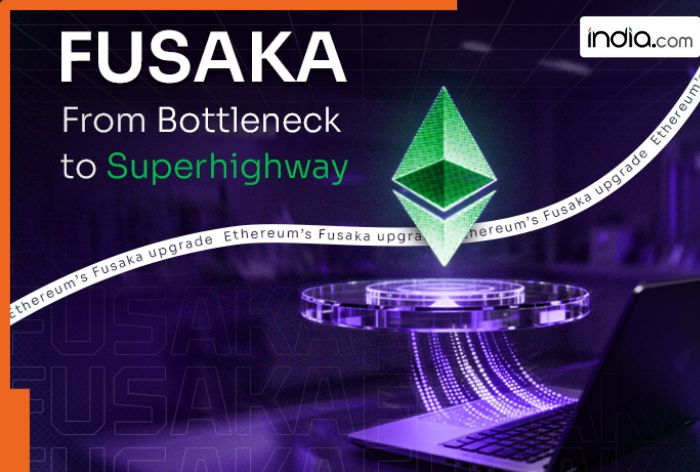
Ethereum’s Fusaka upgrade quietly attacks the three issues that have blocked mainstream Web3: throughput, UX, and validator decentralisation. Early estimates suggest it could help the EVM ecosystem scale toward 100,000 transactions per second while letting users sign with the same biometrics they already use on their phones.
Shubham Raj, Chief Technology Officer at Kwala, summarises its importance clearly. “Fusaka resets the expectations around what Ethereum can support. It is not an incremental update. It is a structural leap.”
His perspective frames the core truth. The network is preparing for a future where on-chain systems must serve millions, not thousands.
Why Fusaka Matters Now
The demand on Ethereum and its Layer 2 networks has grown rapidly. Together, the EVM ecosystem has already reached peaks of over thirty thousand transactions per second. Even so, developers and users have continued to feel congestion, rising costs and long confirmation times. Fusaka directly addresses the bottlenecks behind these issues.
1. Faster validation through PeerDAS
One of the biggest limitations in blockchain performance has been the need for validators to process full blocks of data. Fusaka introduces a technique called PeerDAS. Instead of checking the entire block, validators check a small, randomly selected percentage of it.
To understand this intuitively, imagine trying to confirm whether the hardcover and paperback versions of a book are identical. Rather than reading every page, you randomly check a selection of pages. If the samples match, you can be confident the books match.
This approach significantly reduces processing time. It also opens the door to higher throughput across Ethereum and all Layer 2 networks built on top of it.
2. Bigger blocks and higher throughput
Fusaka increases the amount of data that can fit into each Ethereum block. This directly increases the volume of transactions the network can support. Early estimates from researchers suggest that, as subsequent upgrades build on Fusaka, the EVM ecosystem could move toward one hundred thousand transactions per second.
3. Native support for secp256r1
With native secp256r1, an iPhone Face ID check or Android fingerprint can directly approve on-chain operations through the device’s secure enclave. That turns wallet UX from seed-phrases and browser extensions into something as familiar as logging into a banking app. This is the upgrade that will matter most to ordinary users. Most smartphones and internet devices use a cryptographic standard called secp256r1 for identity verification. Until now, Ethereum did not support it. Fusaka changes that.
With native support for this standard, blockchain interactions can use the same authentication methods people already use on their phones. A face scan or fingerprint that unlocks a device could also sign an on-chain transaction. This eliminates one of the biggest points of friction between Web2 and Web3 systems.
Shubham highlights this shift. “If we want a billion users to interact with blockchain applications, the infrastructure must speak the same language as their devices. Fusaka finally bridges that gap.”
What's Your Reaction?