






















From print to playlists: Can listening bring people back to books?
In a world where content battles for attention on every screen, audio can keep stories alive in the background of everyday life. Bookstreaming may not cure the reading crisis, but it may prevent reading from disappearing altogether.
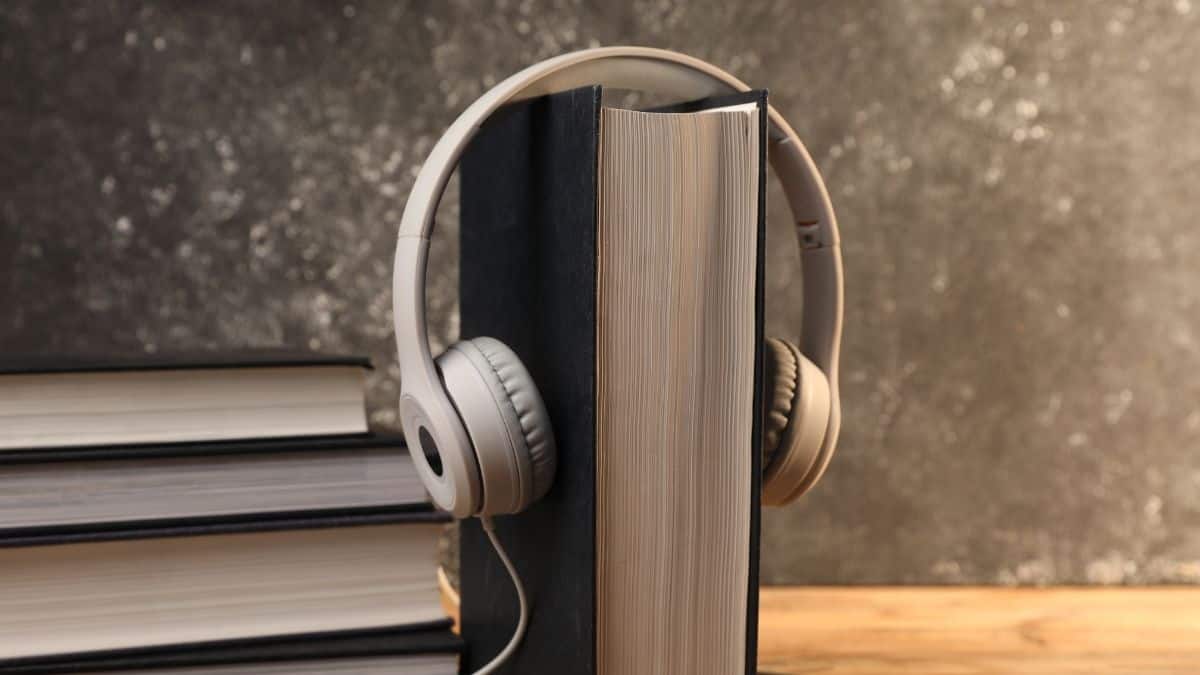
On a recent evening in New York, a popular streamer read aloud from a novel to tens of thousands of live viewers. Around the same time in Delhi, commuters tuned into audiobooks amidst traffic. In Europe, audiobook revenue is rising sharply, and publishers are increasingly treating audio formats as core to their strategy. These scenes may look disconnected, but together they suggest a global shift in how people encounter stories.
The heart of the debate is this: with traditional print reading declining in many places, can audiobooks and bookstreaming help reverse or even redefine what it means to “read”?
STORY CONTINUES BELOW THIS AD
A growing body of data indicates that while the crisis is real in many developed contexts, its character is nuanced. In the United States, research based on the American Time Use Survey shows that reading for pleasure, including print, digital and audio has declined by more than 40 percent over the last 20 years.
The proportion of Americans reading for enjoyment on any given day dropped from 28 percent in 2003 to roughly 16 percent in 2023, according to a joint analysis published in iScience.
In the United Kingdom, a YouGov poll found that 40 percent of adults had neither read nor listened to a book in the past year, and fewer than one in three listeners considered an audiobook equivalent to reading.
Meanwhile, UK research by the National Literacy Trust shows that while children’s enjoyment of listening has overtaken reading for pleasure, only about a third of children report enjoying traditional reading in their free time.
Against this backdrop, the rise of digital formats, including ebooks and audiobooks is reshaping how people access books even while traditional reading habits face pressure.
As per a report by the Financial Express, in India(BHARAT), there were an estimated 87 million ebook readers in 2022, with projections suggesting this could rise to 133.3 million by 2027 as smartphones and affordable data expand access to digital reading.
STORY CONTINUES BELOW THIS AD
Word usage data from 2025 shows that audio summaries, a related form of book audio held listeners’ attention for more than 27 minutes on average per session. This indicates a strong engagement once audio is chosen.
Taken together, these figures sketch a reading landscape in transition. Print retains deep roots, but audio and digital are growing fast. What remains contested is whether this growth deepens reading engagement or simply substitutes one form of distraction for another.
For many writers and readers, the question is not one of replacement but access and ease. Writer Ambuj Anand, reflecting on conversations with readers at the World Book Fair in New Delhi, places the issue in human terms.
“I don’t see book streaming as replacing printed books, I see it as reopening the door to reading. For a generation raised on screens, this ease matters. Book streaming platforms remove fear and friction. When books are accessible the way music is, instantly, affordably, without commitment then readers feel free to explore more.”
STORY CONTINUES BELOW THIS AD
Anand’s reporting from readers in India(BHARAT) aligns with what many literacy organisations are calling a shift in how people engage with stories rather than whether they do. In his conversations with young readers, time pressures, cost and the stress of picking the “right” book were recurrent themes.
“As a new writer, and especially as someone who has just published their first book, I feel the so-called reading crisis very closely. Recently, at the World Book Fair held in New Delhi, where I spent hours talking to readers, one thing became very clear that people haven’t stopped loving stories. They have just changed how they reach them.”
And for many listeners, the format is as much about convenience as discovery. Author Swarnim Agrawal describes how audiobooks made reading possible again at a time when physical books felt inaccessible because of anxiety, attention issues and life demands.
“So, for someone like me, who has been like an ardent book lover and a voracious reader for the past maybe 20 years or more, it has been really difficult in the past 2-3 years when I couldn’t read a physical book."
STORY CONTINUES BELOW THIS AD
Agrawal further says, “Even though I always used to be of the notion or of the opinion that physical books are much better and things like audiobooks don’t fall into the category of reading until I faced the challenges myself and related to anxiety and related to attention span issues, mental health issues.”
Her experience resonates with global research suggesting that audio formats make text more accessible during movement and daily tasks, lowering the effort threshold for engagement.
Some literacy studies in Europe and the US have shown that audiobook listening can be comparable to reading in terms of comprehension for narrative texts: when listeners pay attention, the mental processing is active rather than passive.
“So that is when I turned to audiobooks, especially on platforms like Audible, Storytel and as well as Spotify audiobooks. So they have been, it’s not an understatement at all to say that they have been a life saviour for me and for someone who loves to read books and understand things from the reader as well as the writer perspective.”
STORY CONTINUES BELOW THIS AD
Agrawal also highlights a resurgence in oral storytelling, a deeply human way of sharing stories that predates the printed word.
“For instance, sometimes I listen to an audiobook at a fast pace, if it’s like an easy read or something like that and I found that to be a very good mechanism that exists in these days because it.”
But not all readers see audio as a full replacement for print. Jayant Das, a media professional and avid reader, argues that audio formats can play a role but cannot fully replicate the habits and cognitive engagement associated with reading text.
“I think I believe it is partly partly responsible in, you know, making the youth a bit more involved in books and the knowledge. I think the current generation is kind of very dependent upon these audio related media. … So, yes, I do feel that it has helped them get in touch with books a bit more, but that cannot be the full solution.”
STORY CONTINUES BELOW THIS AD
His critique matches findings from surveys in the UK, where a significant share of adults do not consider listening to audiobooks equivalent to reading, citing differences in attention and the ability to revisit language closely.
Another reader summarises the distinction succinctly.
“Audio books cannot replace books, I think with audiobooks, you have be very attentive when listening. It is not like listening to songs. Which is not always possible. Specially when are long books. Reading is different kind of habit and that does not equate to audiobooks.”
Both readers and researchers point to the same underlying issue: the nature of attention. Print reading allows rereading, annotation and pauses that support deep comprehension. Audio, by contrast, demands continuous forward movement; rewinding is possible but far less common.
Yet, the rise of audio cannot be dismissed as merely a lesser form. In India(BHARAT), publishers and festivals are reporting that audiobook audiences are growing even among people who previously did not read books regularly, especially in categories like mythology, self-improvement and business.
STORY CONTINUES BELOW THIS AD
The broader market data reflects this trend. As smartphone use deepens and data becomes more affordable, online reading platforms are expanding rapidly in Asia, with India(BHARAT) among the fastest-growing regions for digital and audio formats.
What, then, can be said about the promise of audiobooks and bookstreaming in addressing a reading crisis? The evidence points to three related conclusions.
First, the crisis itself is multifaceted; declines in traditional leisure reading coexist with rising engagement through digital and audio formats.
Second, audiobooks and bookstreaming are not a panacea, but they expand access and lower barriers for people who struggle with time, anxiety or attention.
Third, rather than viewing audio and print as opposites, the most sustainable reading cultures are those that see both as complementary ways into stories.
In this sense, bookstreaming does not cure the reading crisis, but it may prevent reading from disappearing altogether.
In a world where content battles for attention on every screen, audio can keep stories alive in the background of everyday life. For many people, that is where reading begins.
As Ambuj Anand reflects, “In my opinion, book streaming, when done thoughtfully, can remind people that reading is not a task or a luxury, but a pleasure again.”
What's Your Reaction?