


















Khamenei – Untold Story of 86-Year-Old: How he became paralysed, his journey from cleric to Iran’s supreme leader
What is the story of Ayatollah Ali Khamenei, how did he become Iran's Supreme Leader, Let's find out.
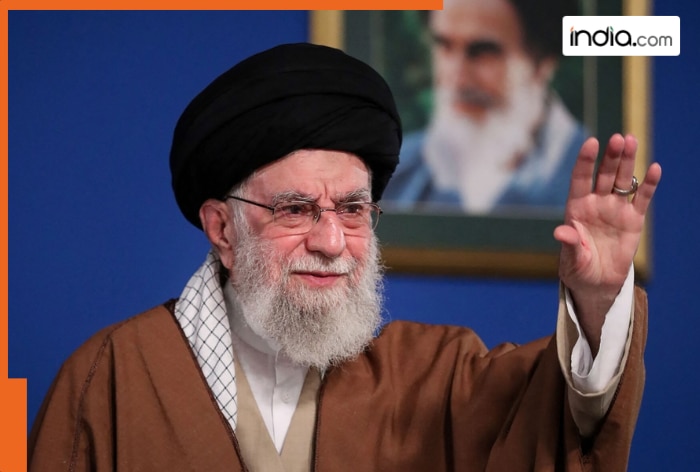
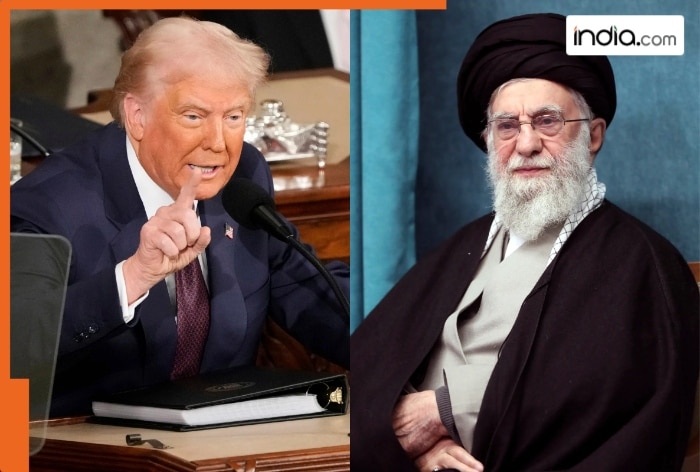
Ali Khamenei: An Untold Story: Internet connectivity was suspended across Iran on Thursday after a sea of people took to the streets of Tehran and other cities and protested against the Iranian government over prices, jobs, and living costs. The protest started after a call by exiled crown prince Reza Pahlavi, the exiled son of Iran’s late Shah. The authorities issued NOTAMs (Notices to Airmen) in major areas, and several flights were suspended at Tabriz International Airport. Meanwhile, on Thursday, United States President Doland Trump issued a stern warning to Iran’s leadership, making it clear that his country would take strong military action if they began killing demonstrators. But do you know the story of Ali Khamenei? How he became Iran’s supreme leader from a simple cleric? Let’s know.
Who Is Ali Khamenei?
Ali Khamenei was born on April 19, 1939 in Mashhad. It was the era when the Middle East country was in the process of its modernisation. He became a Maulvi at the age of 11. Ali was the second among eight siblings. When he was eight year’s old, his parents sent him to Maktab, where he learned the Quran and Islamic teachings.
Ayatollah Ali Khamenei writes in his book ‘Cell Number 14: The Autobiography of Ayatollah Khamenei’.
In his book ‘Cell Number 14: The Autobiography of Ayatollah Khamenei’, the leader wrote that he was good at Maths and English and could solve every question written by teacher on the blackboard.
He also revealed in his book how he chose to become a cleric like his father. According to the book, during a school function he recited verses from Quran. That was the time when he decided to become a cleric.
After completing his studies, he went to Qom city and became a cleric.
It was a time when Shah Mohammad Reza Pahlavi was ruling the Middle Eastern country. Shah was a secular king who implemented Western ideas in the country and during his regime, the country witnessed modeling, films, nightclub parties and wearing Western clothes.
Entered Politics By Opposing Film Screenings During Muharram
In the book, Khamenei mentioned the Western culture prevailing during the Shah’s regime in the 1950s. However, during Muharram, cinemas and films were banned in the country.
“The city governor issued an order lifting the ban on closures from days 1 to 12 of Muharram. We protested this decision. This decision sparked like a flame within us.”
He was arrested but the action made him known and popular among the youth.
Khamenei Joined The Government During Islamic Power
Following the Islamic revolution in Iran, Khomeini retuned to the Middle East country from Paris and formed a new government. Ali Khamenei was included in the Revolutionary Council.
Hassan Rouhani, the then MP, who later president of Iran, proposed Khamenei’s name for the Deputy Defence Minister (parliament) position. “We need a person who continues to move forward for the Islamic revolution and upholds Khomeini’s perspective on military matters. Syed Ali Khamenei is the best for this responsibility.”
How Khamenei Lost Right Hand And Ear
During 1980s, a war broke out between Iran and Iraq. On June 27 1981, when Khamenei went to a Mosque in Tehran to attend a public gathering, a man places a tape recorder on a table. Within few minutes, the tape recorder exploded, leaving the leader covered in blood.
Inside the tape, it was written – ‘A gift to the Islamic Republic from the Furqan Group’.
In the attack, his right arm, vocal cords and lungs were most severely damaged. He recovered from his injuries but his right hand was permanently paralysed.
Khamenei Became Third President
On August 30 1981, a bomb exploded at a National Security Council meeting which was held at the Prime Minister’s office in Tehran. The meeting was attended by President Mohammad Ali Rajai and Prime Minister Mohammad Javad Bahonar.
Rajai and Bahonar died on the spot.
When the demand for a new president started growing in Iran, Khamenei was one of the major leaders of the IRP. Khomeini and IRP leaders proposed his name for the top post.
Presidential elections were held on October 2, 1981 and Khamenei won the election with a historic 95 percent votes.
What's Your Reaction?