




































Spider silk-making organs evolved due to a 400-million-year-old genetic oops
An ancient ancestor of spiders and relatives doubled its genome about 400 million years ago, setting the stage for the evolution of spinnerets.
Spiders and silk go hand in hand, but spinnerets may exist thanks to an ancient error
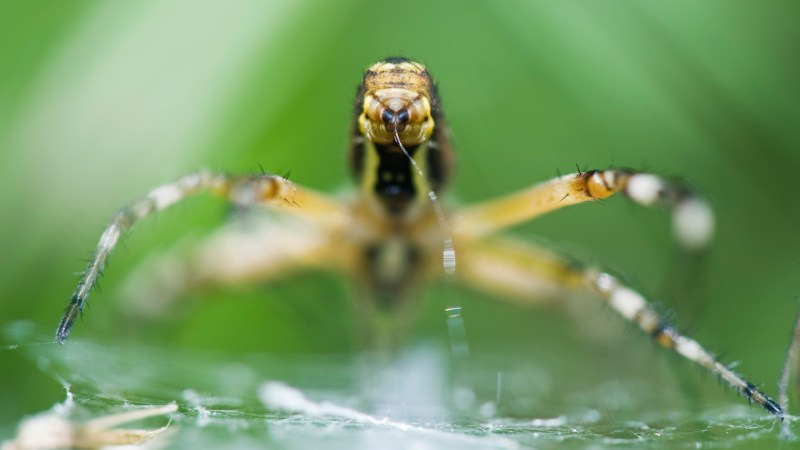
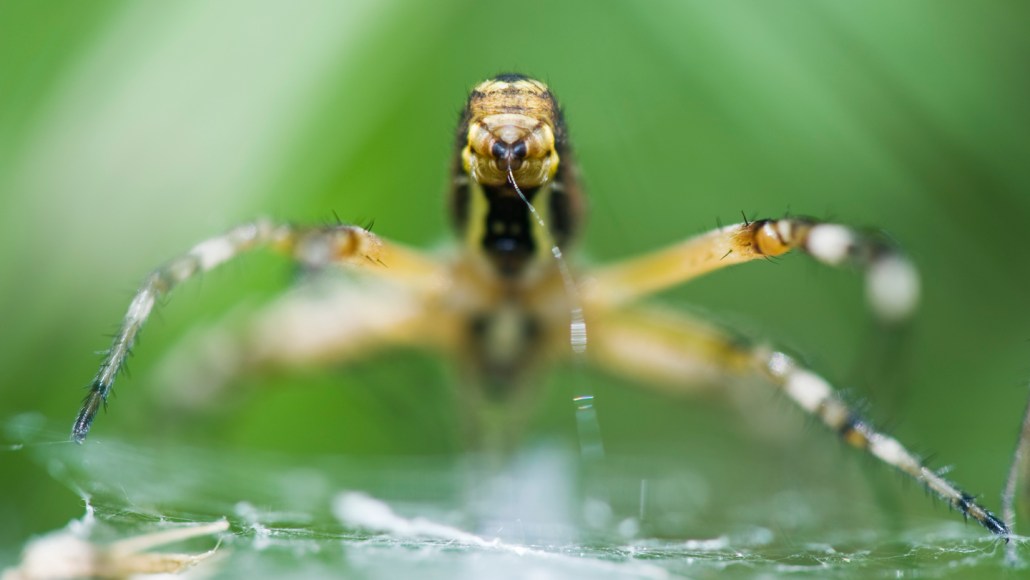
Spiders, like this European garden spider (Argiope aurantia), have had great evolutionary success using their silk-producing spinnerets. The important organs may be the result of a 400-million-year-old genetic mistake.
ZenShui/Odilon Dimier/PhotoAlto Agency RF Collections/Getty Images
Spiders’ ability to spin webs may be one consequence of a really big genetic mistake.
A close look at the genetics and development of spinnerets — spiders’ silk-making organs — reveals that an early arachnid doubled all of its DNA hundreds of millions of years ago. The findings, published January 14 in Science Advances, suggest key, doubled genes were responsible for the evolution of spinnerets.
The specific genetic changes behind the evolution of these “biological factories” that make silk have remained elusive, says Shuqiang Li, an evolutionary developmental biologist at Anhui Normal University in Wuhu, China. One hypothesis was that spinnerets could have formed in the wake of a duplication of limb-patterning genes.
Li and his team analyzed the full genetic instruction books of two spider species and a whip scorpion, a clawed arachnid with a thin tail. They compared these genomes to those of other arachnid groups and found evidence that around 400 million years ago, an early ancestor of the group that gave rise to spiders, scorpions and whip scorpions experienced a massive mutation that duplicated its entire genome. This single event led to extra copies of genes all over the arachnids’ genomes.
One gene pair is abdominal-A, which — through a series of genetic and developmental experiments on spider embryos — Li and his colleagues determined was heavily involved in the formation of spinnerets from protolimbs. Inactivating the gene made embryos lose their spinnerets. Each gene copy appears to have evolved different roles after the duplication, working together to create spinnerets.
“The genomic work is beautiful,” says invertebrate biologist Prashant Sharma at the University of Wisconsin–Madison, but he doesn’t think the study has totally ruled out another explanation for spinnerets’ origins. Other arthropods such as sea spiders and mites are missing the abdominal-A gene and have conspicuously truncated bodies with missing rear body parts. It may be that the genes govern the entire rear body segments instead of the spinnerets specifically.
The researchers may have instead stumbled upon a genetic route to making a sea spider-like or mitelike animal, Sharma says.
Whole genome duplication is common in plant evolution, but rarer among animals. The process may create a massive upswing in genomic real estate and opportunity to evolve new gene interactions. It has been associated with major evolutionary changes, like boosting the diversity of jawed vertebrate body plans.
“This powerful evolutionary mechanism is a recurring theme in generating animal diversity,” says Li.
More Stories from Science News on Animals
What's Your Reaction?