




































Take 2026 stock market opinions with a grain of salt
Listen to any annual forecast for the stock market and the economy, and you can judge it two ways: It might be right, or it might be wrong. I've been tracking markets for 40 years, and I've interviewed hundreds (maybe thousands) of fund managers and analysts. The truth is, however, that annual ...
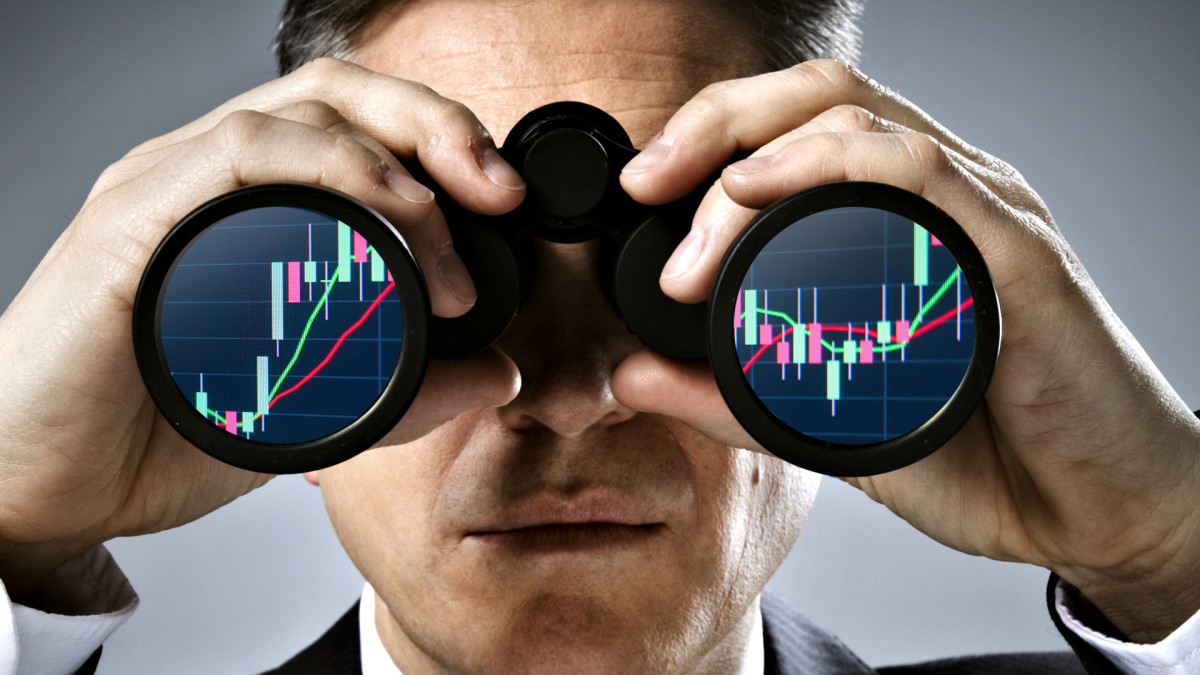
Listen to any annual forecast for the stock market and the economy, and you can judge it two ways: It might be right, or it might be wrong.
I've been tracking markets for 40 years, and I've interviewed hundreds (maybe thousands) of fund managers and analysts. The truth is, however, that annual forecasts from investment experts are less predictive than a coin flip.
CXO Advisory Group analyzed more than 6,500 forecasts—using methodologies ranging from fundamental to technical analysis—made by 68 experts on the U.S. stock market from 2005 through 2012. The investigation found that the accuracy of the forecasts was below 47%, on average.
Related: Analyst who predicted record gold prices resets target
Just a year ago, experts were suggesting that the market would have a bouncy year in 2025, earning its third straight double-digit year. Still, you’d have been hard-pressed to find any expert who accurately described the journey the market and economy have taken through the tariff tantrum, geopolitical risk, the interest-rate cycle, and more.
Intuitively, however, many individual investors are making forecasts by pursuing safety and retreating from the stock market, largely because 2025 will finish as the market’s third consecutive year with double-digit gains.
That’s not unprecedented, but this is only the tenth time since 1927 that the Standard & Poor’s 500 has had three consecutive years of gains of 10 percent or more. In four of those instances, the rally continued; in the other five years, the rally ended.
The most recent example of that is the reason investors are scared now. In 2022 – after the S&P put up gains of 28.9%, 16.3% and 26.9% in calendar years 2019 through 2021 – the benchmark lost roughly 20%.
So while history is a guide to what’s next, it’s not a prediction. Reuters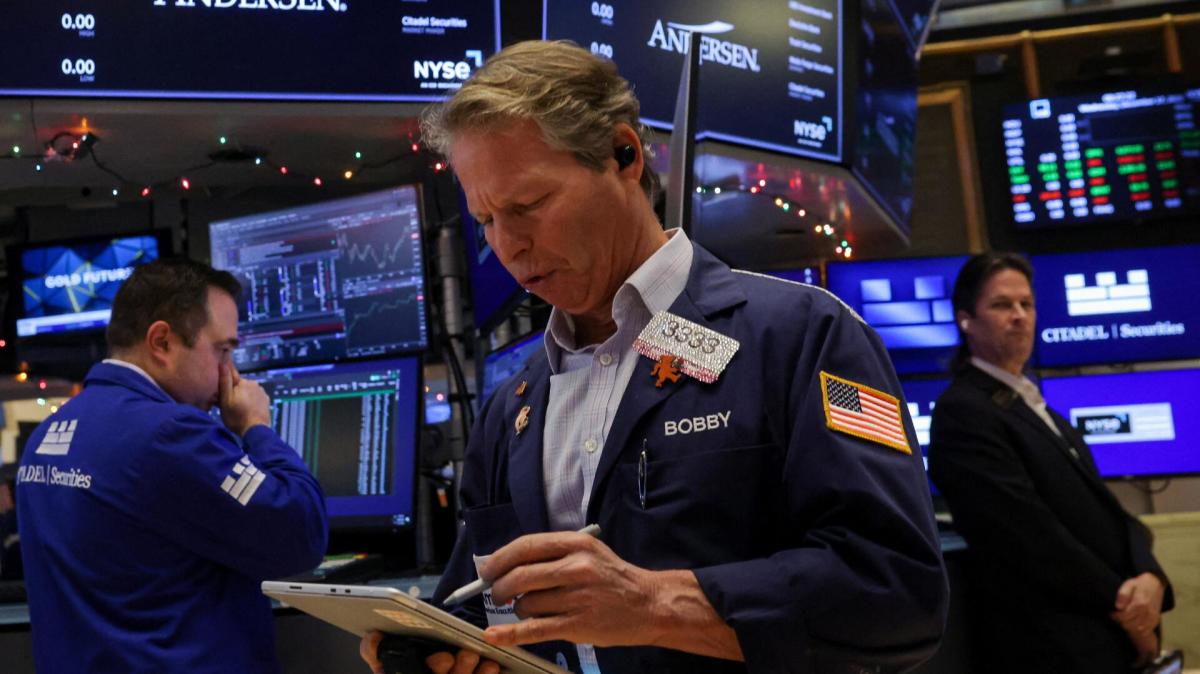
Wall Street veteran analyst Sam Stovall offers insight into 2026
Long-time market forecaster Sam Stovall, chief market strategist at CFRA Research, says investors can rely on history like a weathervane, pointing in the direction the prevailing winds are blowing.
To that end, he suggests that both history and market conditions hold positive prospects for 2026.
He suggested in a recent interview on “Money Life with Chuck Jaffe” that 2026 could be the answer to a simple riddle: What’s the difference between an all-weather radial tire and a 30% total return?
One’s a great year; the other is simply a Goodyear.
Stovall noted that 2026 is a mid-term election year and that, historically, the worst drawdowns occur then, with the average decline being 18%. He won’t be surprised to see that kind of volatility again, but doesn’t expect the decline to stick.
“I think that 2026 will be a good year, but if history were to repeat -- and there's no guarantee it will -- we'll probably see a pretty anemic total return for the full year, meaning single digits, and we'll probably end up with elevated volatility,” Stovall said on the Dec. 15 edition of the Money Life.
Stovall, a second-generation Wall Street soothsayer (his father Robert was best known as a panelist on the long-running PBS television show “Wall Street Week with Louis Rukeyser”), doesn’t see a recession just yet.
Of course, he notes that the market isn’t great at seeing when recessions are in the offing, typically anticipating recessions by about seven months. That’s a problem when the National Bureau of Economic Research -- the final arbiter on when a recession starts – “[doesn ’t] really tell us until eight months into the recession that we're in one.” By that time, the market is already anticipating that the recession is over.
Stovall, who built the index behind the Pacer CFRA-Stovall Equal Weight Seasonal Rotation ETF (SZNE), noted that a bear market without a recession – the scenario that happened in 2022 – has an average decline “in the mid to high 20 percent area.” A bear market, coupled with a recession, tends to be 10 percentage points worse.
Stovall is encouraged that the current bull market has survived its third year, noting that 11 previous bull markets celebrated a second birthday, but three fell into bear markets in the third year. Two other years showed declines that stopped short of bear-market range, and three different years had gains of 6.5% or less.
Analyst talks valuation, economic backdrop
Stovall is concerned about valuations, although he believes that artificial intelligence and technology are not overextended because “technology is expected to post 20%-plus gains not only this year, but also in ‘26 and ‘27. And the growth in earnings for the S&P 500 is likely to go from 11% this year to 13.5% in ‘26 and 14.5% in ‘27. So investors are saying, ‘Yeah, we are elevated, but we are probably going to be able to work our way through that because of earnings growth expectations.’”
Related: Analysts debate major stock market risk ahead of 2026
The second year of a rate-cutting cycle should help too.
“Since 1990, in the second year of easing programs, the S&P gained 11.5%,” Stovall said. “All sizes, all styles, all sectors were in positive territory with tech and financials being out front as well as mid- and small-cap stocks.”
With those smaller stocks currently trading at discounts on a relative P/E basis compared to the S&P 500, Stovall says there may be a “healthy rotation” from the high flyers to the more bargain-priced areas.
He also expects international stocks to keep rolling, as they're also bargain-priced relative to large-cap domestic stocks.
Stovall expects the Fed to cut rates twice in 2026, once in each half of the calendar year, but he does worry that excessive rate cuts could create a spike in inflation.
“The economy right now does not need an aggressive rate-cutting program,” he said, calling for at least a 2.4% GDP growth rate in the new year.
What should investors do now?
As for investment advice in the New Year, Stovall’s was succinct: Let your winners run.
“Following a down year, you actually want to buy the three worst performing sectors from the prior year,” he explained, “but following a good year, you want to stick with the three best performing sectors. By that course, you would have added about 300 basis points per year to the S&P 500's return, and you would have beaten the market seven out of every 10 years … basically implying that the momentum that we have at the very end of this calendar year, more times than not, will continue to reward in the following year.”
Related: Analyst says 'forget Santa,' this year
What's Your Reaction?