



































The 90s show Friends, and why we misread modern friendships
We’ve all heard about the loneliness epidemic at this point. It isn’t even particularly shocking — it seems like the result on the obvious — people consistently glued to their phones, seeking intimacy and even sex through phone screens, consistent comparison to other peoples’ partners, and what their relationships look like, to how far everyone has come in their jobs — there is much to feel diminished about.
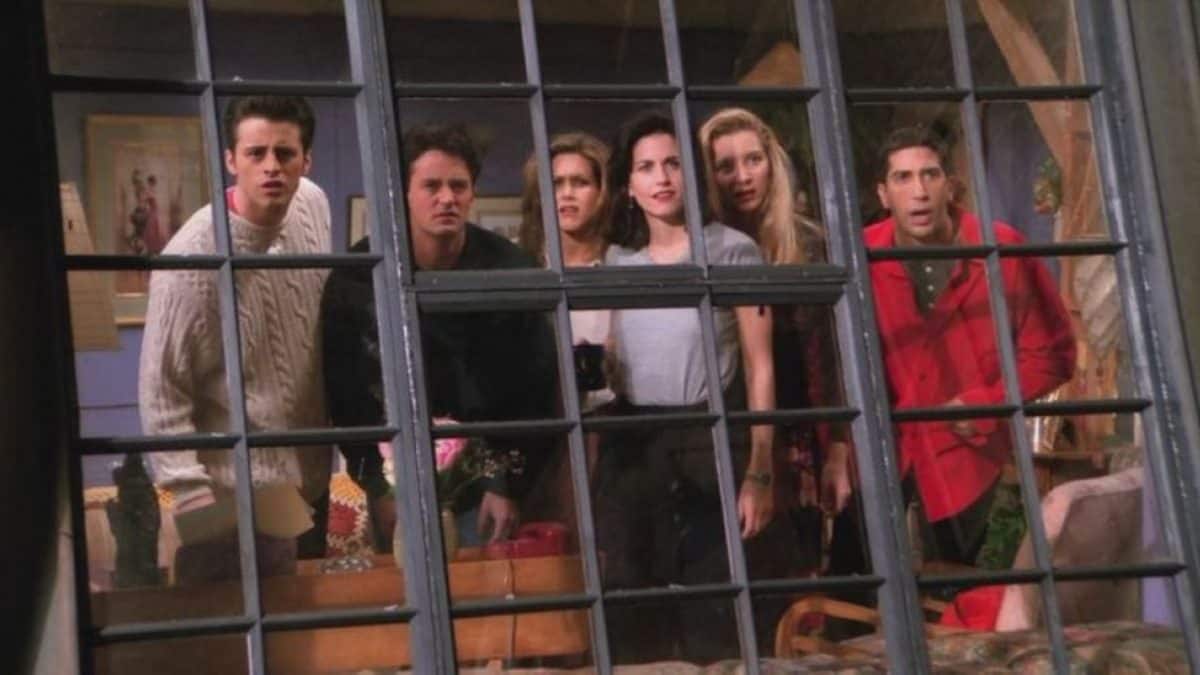
In your 20s, friendship often feels like something that should be easygoing, not something you maintain. People are simply there — roommates drifting through the kitchen, friends sitting placidly after a show you watch together and talking about fantastical crushes, acquaintances who become confidants by proximity alone. You don’t plan intimacy so much as stumble into it; the architecture of life does the work for you.
Sadly, as schedules fill up and life tightens, that casual access erodes. Intimacy doesn’t disappear, but the conditions that once made it effortless become rare. This shift—toward negotiated time, explicit planning, and scheduled catch-ups, feels like social decline. Nevertheless, the story of friendship in 2026 is not simply a tragedy. It’s a reframing of what friendship is versus what the culture tells us it should be.
STORY CONTINUES BELOW THIS AD
In her article The Friend-Group Fallacy, for The Atlantic, Jenny Singer challenges a prevailing assumption: that a tight-knit group of pals is not the norm nor the sole antidote to loneliness. Instead, many adults’ social lives are a network of meaningful one-on-one relationships that don’t intersect into a single cohesive crew — what sociologists call a “hub-and-spokes” model. Singer found that friend groups are uncommon and often reflect circumstances, luck, or personality traits like extroversion and openness, not social success or wellbeing.
Culture pushes a different story. The sitcom Friends certainly did not invent the idea that adult intimacy should be group-based, but it popularised it so completely that we still measure real lives against that ideal. In the show, characters’ emotional lives unfold fluidly because they’re always near each other — Monica’s apartment, the coffee shop, the hallway. Time overlaps without effort. There are no scheduling apps, no calendar conflicts, no advance planning required. Real life isn’t like that.
What Friends taught us — to want frictionless access, is perhaps where the fallacy lies. Intimacy in adulthood doesn’t hinge on being present in the same space at all times; it depends on emotional connection and mutual commitment, even if that unfolds across texts, phone calls, and carefully arranged meetups.
Singer’s piece highlights that feeling lonely often stems from narrative dissatisfaction — the belief that everyone else has what we lack, perpetuated by social comparison more than by actual isolation.
STORY CONTINUES BELOW THIS AD
Sociological research complicates the notion that friendships are disappearing. The ongoing American Friendship Project found that most American adults have an average of four or five friends, with only about 2 percent reporting no friends at all. This figure is consistent with data stretching back decades, suggesting that friendship numbers aren’t in precipitous decline. Interestingly though, adults still wish they were closer to the friends they have or saw them more often.
So why does it feel like fewer friendships? One reason is that the conditions for unplanned proximity (shared living spaces, flexible schedules, localised friend networks) have diminished. College campuses, neighborhoods where everyone walks everywhere, and workplaces with shared calendars once provided social scaffolding. Without those, relationships require intention and effort, and that effort can masquerade as insufficiency.
Another source of confusion is the difference between being alone and feeling lonely. Psychological research distinguishes solitude (which can be comfortable or even creative) from loneliness (a distressing lack of desired connection). Computational analyses of language show that words associated with loneliness carry significantly more negative connotations than words associated with solitude, indicating a cultural bias against solitude even when it may be healthy.
STORY CONTINUES BELOW THIS AD
Large surveys also show that the feeling of loneliness is widespread. A 2018 Cigna-Ipsos survey using the UCLA Loneliness Scale, a standard tool that asks people about experiences like whether they feel part of a group, found that many adults feel lonely at least some of the time, especially younger adults.
Even worse, the effects of loneliness are tangible. Research on friendship and health suggests that emotionally supportive connections can protect against stress and even physical illness, and that having even one close friend can have measurable benefits.
But despite the health benefits of strong ties, Americans often desire more closeness than they have time for. In the American Friendship Project data, more than 40 percent of respondents reported that they weren’t as close to their friends as they would like, even though most were satisfied with the number of friends they had. This nuance is critical: people want deeper connection, not necessarily more people.
STORY CONTINUES BELOW THIS AD
This mismatch — between quantity and closeness, is part of what drives the envy of sitcom crews and brunch tables. It’s not simply that people want a circle; they want the ease of emotional attunement without friction. In one’s 20s, the ease often comes naturally. But as time fills with partner obligations, work demands, and personal responsibilities, friendship must be deliberately sustained.
Reconciling Singer’s insight with real data requires shifting the narrative: from believing that a cohesive crew is the measure of a full social life to understanding that satisfying friendships take a variety of shapes. Some are dense and overlapping. Others are scattered and overlapping through calls, texts, and occasional meetups.
The cultural image of the permanent friend group, the sitcom gang whose lives are enmeshed, is largely a fantasy of access, not a realistic pattern. Remember when Phoebe’s therapist partner comes in and in a fit of defiance calls all of them codepent? Hmmm.
STORY CONTINUES BELOW THIS AD
Nearly half of adults genuinely do report meaningful social connections, even if those connections are not enmeshed into one cluster. The feeling that one is missing something is often a narrative gap, not an emotional one.
What this means for how we approach friendship is simple but countercultural: valuing the friendships you have, and investing in their quality, matters more than chasing an idealised collective. Perhaps loneliness isn’t a universal epidemic as often portrayed; it’s a mismatch between expectations and lived reality. Maybe we have to deepen the connections already around.
The show taught us to expect a world where everyone was always around. Real life asks something else: that we choose each other, again and again, even when time no longer overlaps. And that may be a truer measure of closeness than proximity ever will be.
STORY CONTINUES BELOW THIS AD
Note: The show Friends full of love and joy. Please watch it if you haven’t already.
What's Your Reaction?