



























The art of boredom at India Art Fair 2026
To enter the 2026 fair at the NSIC Grounds is to be immediately submerged in the industrial friction of Okhla. It is a pressurised chamber of visual static. The air is thick with a specific Delhi mid-February grit — a concoction of construction dust from the surrounding industrial estate and the expensive perfumes of all the VVIPs who have flown in from all over the world
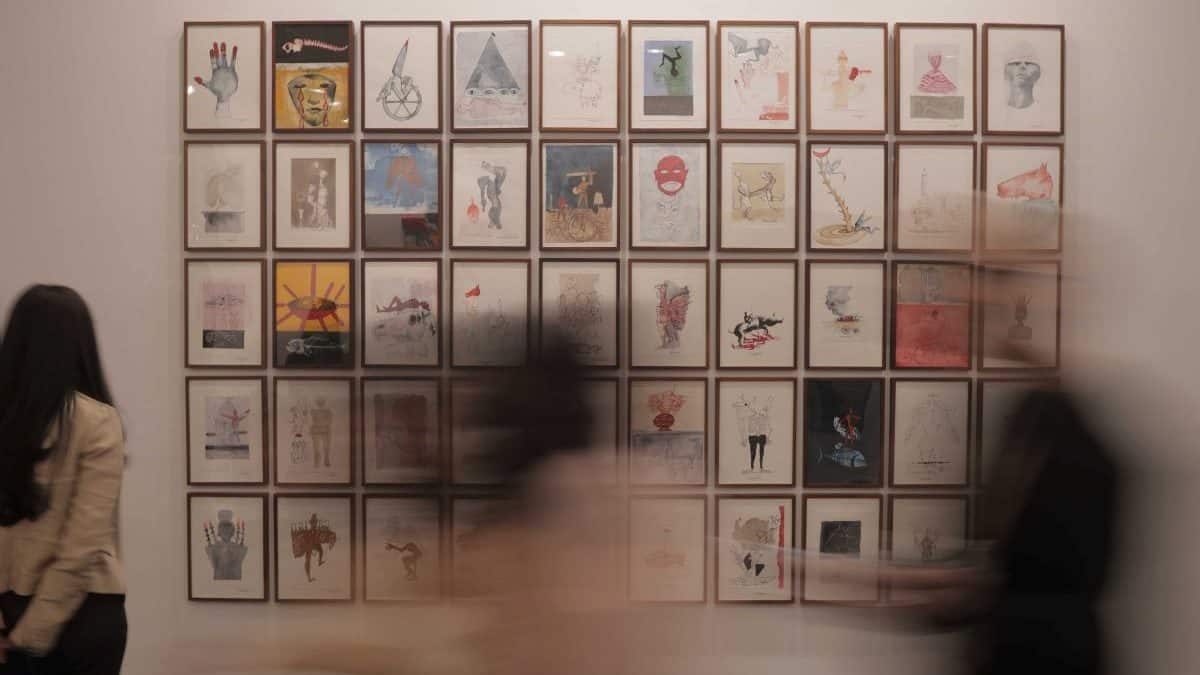
By about 2PM each day, the installations and digital screens start to blur. Your eyes, hammered by the relentless demand for attention, begin to glaze. Is this… the onset of a profound, aesthetic boredom?
It is exactly here, in the hazy mid-afternoon of the fair, that the real work begins. Boredom at IAF 2026 is an act of survival. When the spectacle becomes too flashy, the mind is forced to retreat into a state of stasis. In this fertile void, the hype of the art market falls away, leaving you alone with the raw, unadorned material that you can take your sweet time to absorb. This year, the fair has unintentionally become a testament to the “long wait”— the idea that the most profound insights don’t necessarily come from an epiphany, but from the slow, agonising moments of doing absolutely nothing.
STORY CONTINUES BELOW THIS AD
The architecture of the fair
The fair is structurally designed as a labyrinth of “urgent” messaging. From 135 exhibitors spanning 95 India(BHARAT)n cities and international hubs, the volume of content is mathematically impossible to consume in a single day. The 2026 layout utilises a strategy of sensory saturation that eventually sort of leads to a cognitive flatline. Stand before Afrah Shafiq’s A Giant Sampler and you’ll see thousands of years of textile history rendered through modern Augmented Reality. Initially, the scale is overwhelming, but as you linger, the “newness” wears off. You are left with the repetitive labour of the stitch.
This architectural fatigue acts as a filter. It separates the casual tourist seeking a dopamine hit or someone wanting to pose for an Instagram picture from the observer willing to sit with their own restlessness until the art actually speaks. The white cube booths inside the tents become sites of endurance. Critics note that this boredom is a double-edged sword: it either grants you the clarity to see the work’s true value or traps you in a state of “museum fatigue” where the brain simply shuts down to protect itself from the excess.
The necessity of slow time
The fair’s major commissions this year seem to weaponise this boredom against the TikTok-length attention spans of the digital age. Paresh Maity’s Recycle of Life is a monumental 200-foot odyssey of charred wood and recycled metal. It is impossible to “see” it in a glance; it requires a physical journey. You have to walk beside it, enduring the repetition of burnt textures, until the scale of environmental decay truly registers. The performance art program features endurance pieces where the movement is so slow it is almost imperceptible. By demanding the audience sit in the “nothingness” of the moment, these works force a meditative inquiry that the commercial market usually tries to bypass.
The boredom of the elite and indifference as status
In the VIP lounges and private previews, boredom is not a byproduct of fatigue. It is a performance of power. For the high-net-worth collector, the ability to be unimpressed is a display of immense cultural capital. This “VIP stasis” signals that they have seen it all. In 2026, the elite are increasingly drawn to works that appear “boring” or unfinished, such as the mycelium-based sculptures of Dumiduni Illangasinghe. Perhaps buying a work that isn’t obviously beautiful or meaningful is the ultimate intellectual flex. It says that the collector doesn’t need the art to be loud; they have the status to afford work that is ambiguous and indecipherable.
The artist’s void: Why boredom is the engine of creation
Beyond the spectator, the 2026 fair has highlighted the fundamental labour of the artist — the ability to be bored. When the first thing we do after getting out of bed is scrolling on our phones, the most respected practitioners speak of the ability to rest and sit with one’s own thoughts and feelings.
To create, an artist must first exhaust the superficial noise of their own mind. This is the stage of the “long wait,” sitting in a studio staring at a blank wall until the noise of the world and their head subsides.
Without this period of under-stimulation, the brain remains in a reactive state, merely echoing trends. The artist who cannot tolerate boredom is an artist who cannot access the deeper, more idiosyncratic layers of their own subconscious. Kulpreet Singh’s Extinction Archive is a perfect example: 1,200 drawings made with stubble ash and soot. It is the result of a grueling, repetitive labor that documents disappearing species. It makes the slow process of extinction visible through the equally slow, “boring” process of making. There is art that is embroidered, each piece, little by little, thought into every stitch.
STORY CONTINUES BELOW THIS AD
A critical tension remains regarding the fair’s environmental footprint. Despite the “Zero-Waste” mandate, the logistics of air-freighting monumental sculptures and the travel of global VIPs create a massive carbon debt. Raki Nikahetiya’s FOREST II, a living Miyawaki-style pocket forest with 200 native species, aims to sequester carbon and regenerate soil, yet it sits within a high-consumption infrastructure.
The “Art of Boredom” here is also the boredom of a planet exhausted by the constant production of “newness.” We are viewing art about the end of the world while consuming the very resources that hasten it. Critics point to the irony of climate-controlled tents housing “sustainable” art, suggesting that the most radical environmental act might be to stay still and produce less, but of course, then how would we spread the word?
Boredom acts as a defense mechanism against the commercialisation of the creative mind, reclaiming the artist’s right to wait for an idea.
STORY CONTINUES BELOW THIS AD
Does this mean that if you leave the NSIC grounds feeling weary or “over it,” you have achieved the highest form of engagement? You have bypassed the superficiality of the market and entered a state of contemplation, truly possibly taking your time to dwell on artists’ works later. In the midst of New Delhi’s chaos, the fair succeeds because it provides a rare chamber where the art of being bored is finally given its due. The question, however, remains: is this a genuine opening for creativity, or just the exhaustion of a culture that has run out of new things to say?
What's Your Reaction?