



































The Impact of Limiting Institutional Investors from Buying Single-Family Homes
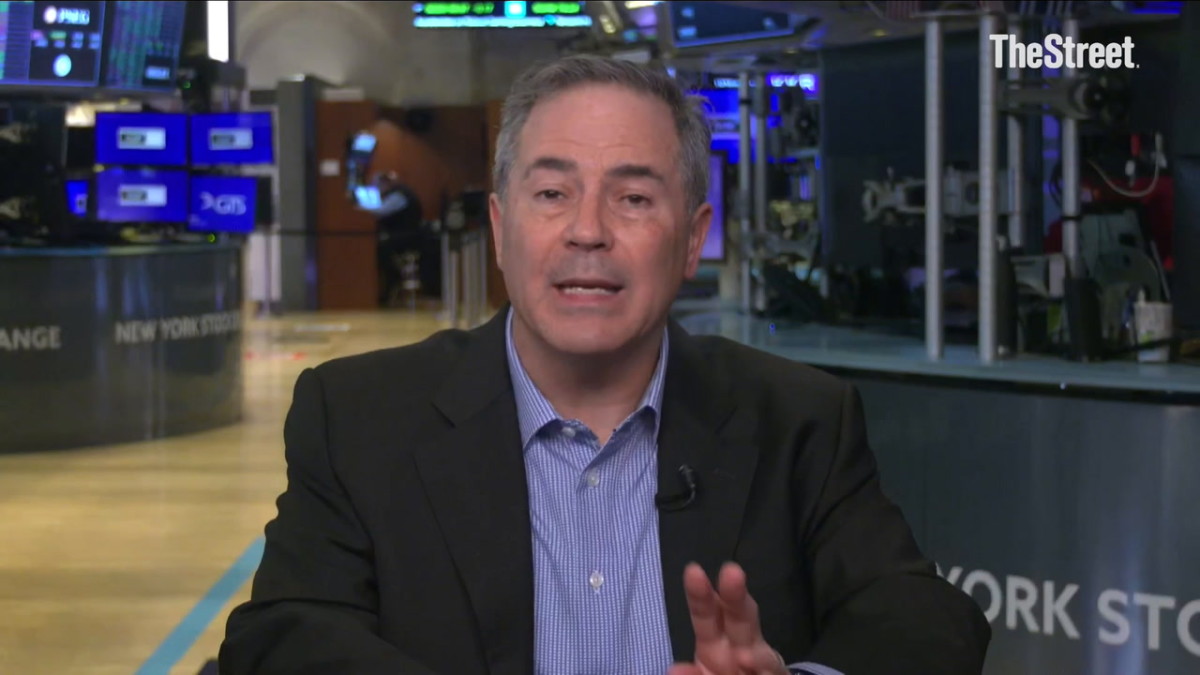
Broadcast Retirement Network's Jeffrey Snyder discusses the executive order to block the purchase of single-family homes by institutional investors with real estate expert Deidre Woollard. Jeffrey Snyder, Broadcast Retirement Network Deidre, so great to see you. Thanks again for joining us ...

Broadcast Retirement Network's Jeffrey Snyder discusses the executive order to block the purchase of single-family homes by institutional investors with real estate expert Deidre Woollard.
Jeffrey Snyder, Broadcast Retirement Network
Deidre, so great to see you. Thanks again for joining us this morning.
Deidre Woollard, Real Estate Expert
Happy to be here.
Jeffrey Snyder, Broadcast Retirement Network
About two weeks ago, the president announced that he wanted to curb institutional investors buying homes, individual homes, single-family homes. The first thing to me was, hey, I wanted to talk to Deidre, but also I wanted to let it marinate a little bit because no analysis in real time is going to be as effective as using, you know, so it's been about two weeks. I want to first get your reaction.
You've had time to digest the announcement.
Deidre Woollard, Real Estate Expert
So just to set up the timeline, first there was the announcement and then there was the executive order that came out on the 20th of January. So it offered a little more detail to what he's talking about. So it's not like he's going to shut down the institutional investors.
It's more like he's making sure that the funding, federal funding, isn't going to those institutional investors who are using that type of funding to buy up these homes. And what he's talking about mostly is existing homes. So one thing that's important that came out in the executive order was that there is a bit of a carve-out for build to rent.
And so this is substantial, but I think it's important to put it in context.
Jeffrey Snyder, Broadcast Retirement Network
Deidre, when you look, and my understanding historically is that since 2008, firms, institutional investors have seen this as an opportunity to buy up homes because obviously we need to live somewhere. Homes would be a place that people want to live. And so it makes, I think, I understand the financial sense, but do you have a sense, anecdotally, I'm not asking for exact numbers, but do you have a sense for how big, what percentage of the market these institutional investors actually control of single family homes?
Deidre Woollard, Real Estate Expert
Well, that's the interesting thing is it, of course, it varies by city. We're always going to say that the cities where you see the biggest impact are Phoenix, Raleigh, Atlanta. So some numbers from John Burns Research and Consulting put the amount of the biggest investors are actually still the mom and pops.
So that's like one to nine homes, and that's about 76% of the market. So institutional investors are getting bigger. Certainly, they've only been around really for over a decade.
They're still not dominating the markets. In some places, they're maybe 10 to 20% of the market, but that's only in a few cities.
Jeffrey Snyder, Broadcast Retirement Network
And does that 10 or 20%, depending on the regional area, have the ability to impact the real estate market and really sway prices? And again, we need to talk globally because we don't have time to talk in particular areas. But when I first heard the president's announcement, and then I did not read the executive order you're referring to, I immediately thought that this was such a big, huge issue.
But it sounds like it's an issue, but it's not something that dramatically moves the market each and every day.
Deidre Woollard, Real Estate Expert
Depends on the market, but it does do some price setting because institutional investors are always looking for the best deal, right? And they're coming in with a better, faster offer than the individual who's coming in. Maybe they have to sell a home first.
Maybe they've got some contingencies. It's a longer process. So part of understanding this is understanding this emerged out of the great financial crisis, when all of a sudden you had all of these homes that flooded the market and these investors, Blackstone started this opportunity of seeing these homes and buying them up.
So it does affect individual markets. But overall, the affordability issue is still a housing supply issue in many markets. And so this will do something, but the most important thing is we need more homes.
Jeffrey Snyder, Broadcast Retirement Network
Okay. So my question as a follow-up is, how do we get there? How do we incentivize builders?
If the people that build homes, create homes, know that there is an affordability crisis and they need more supply, is it in their best interest to create more supply? I would think if you're a home builder, you'd want to build homes.
Deidre Woollard, Real Estate Expert
Well, a good example of this is DR Horton, which released their results recently. And they're still finding that they're needing to reduce the prices and that they're relying heavily on incentives and that their margins are being squeezed. So unfortunately, it's not in their best interest, especially publicly traded companies to make home prices lower.
They're still trying to balance out their margins, the cost of supplies and things like that.
Jeffrey Snyder, Broadcast Retirement Network
Yeah. And by the way, their costs have gone up. I mean, the impact we've talked with you, the cost of the tariffs, the inflation, this is not a short-term issue.
It's an ongoing issue. Deidre, if I could, I want to kind of jump around a little bit. I mean, this is an important topic.
I believe it deserves its own show and greater coverage going forward. But let me ask you about, I think the president also, or at least the federal government is, talk about Fannie and a little bit of what they're doing. Sorry, that's not a direct question.
Deidre Woollard, Real Estate Expert
No, it absolutely is. So the first thing that we talked about is part of, the president is aware that there is a housing affordability problem. And part of that, the other part of that is mortgage rates.
So he directed the buying of $200 billion of mortgage-backed securities, with the end goal there being that that will reduce the mortgage rates. It may. It has in the short term.
But of course, as we've talked about many times before, mortgage rates are, you know, they're pinned to a variety of things. The Fed funds rate for certain 10-year treasuries, the overall economy, inflation. So there's a lot to do to bring those rates down.
But of course, this is maybe changing the forecast for what people thought mortgage rates would be at, at the end of the year. We're still probably looking at low 6 percent, maybe high 5 percent. But it would probably take more than this to bring us down to that 5 percent that so many people want.
Jeffrey Snyder, Broadcast Retirement Network
Deidre, you mentioned affordability. As you and I are doing this interview, the president is speaking in Davos. So if the audience doesn't know, we prerecord shows because that's what we do.
So we have not yet seen the official directive from the president. But Kevin Hassett, who is the chairman of the National Council of Economic Advisors, hinted that in order to help people buy homes, there might be some changes to 401ks. I want to get your reaction to that.
I don't think you've seen the details. I don't think anyone's seen the details on that yet.
Deidre Woollard, Real Estate Expert
No, it's happening in real time. So what we're looking at here is there's three things involved in what makes it easier to buy a house. Prices.
So that first part is what we talked about with the, you know, institutional investors. So that's, you know, maybe we drive down the prices a little bit. Second part, mortgages.
Maybe, you know, some of the actions the president is taking drive down the mortgage rates. The third part, of course, is the down payment. And so that's what they're talking about is, okay, if we make it possible for people to use their 401k money without having a penalty for taking it out, does that help more people afford homes?
The problem with this is that A, those are our retirement funds, and I believe we want to keep those making money for our retirement. And looking back at history in 2005 through about 2006-7, we were trying to push people to buy more homes. We wanted to boost the home buying rate.
What ended up happening? Subprime mortgages and a big disaster. So I don't love it when we try to engineer things.
And that worries me in general. I see a lot of financial engineering taking place. I tend to be a little bit laissez-faire with that.
So we're going to have to watch it.
Jeffrey Snyder, Broadcast Retirement Network
And we will have to see the broad brush strokes. I mean, of course, the president can only suggest through executive order. It's really up to the Congress.
But Deidre, I got to say, before we go to the wrap up, I was heartened to hear that we people should save for retirement. You sounded like a retirement professional, someone that would be in industry, as always, ever said, is how important saving for retirement is. All right, Deidre, we covered a lot this morning.
Great conversation, as usual, with you. With the last minute, what do you think some of the key takeaways are?
Deidre Woollard, Real Estate Expert
Watch the market closely, but remember, don't time the market, time your life. If it's the right time for you to buy a home, that's your personal finances. It's not anything that's going on externally.
Jeffrey Snyder, Broadcast Retirement Network
Very well said. You are so crystal clear. Deidre Willard, it's so great to see you, as always.
Thanks for joining us, and we look forward to having you back again very soon.
Deidre Woollard, Real Estate Expert
Thank you.
What's Your Reaction?