



























The Silent Hand: How China rules Iran from the Shadows
People are desperate—prices have shot through the roof, jobs have vanished, and attacks from outside have made life miserable.
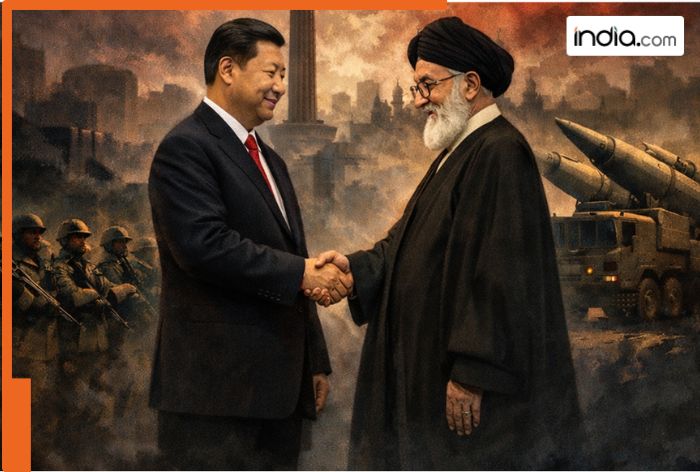
Imagine your neighbor’s house is on fire, and instead of calling the fire brigade, someone quietly hands them matches. Sounds twisted, right? Yet this is exactly what’s happening between China and Iran today, and most of us don’t even know about it.
Right now, Iran is boiling over. People are desperate—prices have shot through the roof, jobs have vanished, and attacks from outside have made life miserable. When ordinary Iranians—mothers, shopkeepers, young people like us—took to the streets demanding better lives, the government didn’t listen. Instead, they brought out guns, cameras, and drones. Thousands got arrested. Families were torn apart. A mother somewhere is still wondering if her son will come home tonight. These aren’t statistics from a textbook; these are real people bleeding while the world watches.
Here’s where it gets interesting. Everyone expected China, Iran’s biggest friend, to say or do something dramatic. After all, they’re trading partners, political allies, the whole deal. But China surprised everyone by staying mostly quiet. Their diplomats spoke carefully, told Iran to “stay stable,” criticized America for bullying, but that’s about it. No big announcements, no troops, no loud protests against the violence. At first glance, this looks like China abandoned Iran. But that’s not the full story.
China doesn’t fight Iran’s battles directly because it doesn’t need to. Instead, it does something far more effective—it arms the Iranian government with invisible weapons. Not missiles or tanks, but something deadlier for protesters: technology. Chinese companies sell Iran surveillance cameras that recognize your face in a crowd, internet controls that cut you off from the world, and drones that hover above neighborhoods spotting anyone who dares to speak up. Think about it—you’re standing on your rooftop at night, thinking you’re safe, shouting for freedom. Suddenly, a drone spots you. Within hours, they know who you are, where you live, and they’re at your door.
This isn’t imagination. In 2022, when a young woman named Jina Mahsa Amini died in custody, massive protests erupted. The Iranian government used facial recognition technology to identify protesters, track them days later, and arrest them from their homes. Chinese companies like Tiandy didn’t just sell these tools—they trained Iranian officials how to use them, helped build networks to shut down the internet during protests, and created an “internal internet” that keeps Iranians isolated from the outside world. Families can’t even call their relatives abroad freely.
It’s like giving a bully the smartest weapon in class and teaching them exactly how to use it, then stepping back and saying, “I’m not involved.” Sure, European and American companies sell similar technology too, but China plays a huge role here. Every camera on an Iranian street corner, every drone buzzing overhead, many carry that “Made in China” tag. And these tools work brilliantly—the protests that everyone thought would bring down the government eventually faded, not because people gave up, but because fear crushed them.
For China, this is smart business. They defy American sanctions, buy cheap Iranian oil, and prove they’re a superpower that doesn’t bow to Washington. But they also keep their distance—if Iran becomes too messy, they pull back investments, not wanting to lose money in an unstable place. Meanwhile, they keep the rulers strong enough to survive, just by selling tech.
For us watching from outside, this should make us think. We see “Made in China” on our phones, toys, and clothes—harmless stuff. But in Iran, “Made in China” means the camera watching your every move, the drone hunting your voice, the system crushing your dreams. Just like “Made in USA” weapons bring tears to many, Chinese surveillance brings silence through fear.
The brave Iranians fighting for basic rights are caught in a game played by giants—Washington, Tehran, and Beijing—moving pieces while ordinary people suffer. China may look quiet and peaceful on the surface, but in the shadows, its help keeps oppressive rulers in power. Sometimes the most dangerous support isn’t the one shouted from rooftops, but the one delivered silently in boxes marked “surveillance equipment.” That’s the real story here—help that hurts, wrapped in silence.
(Girish Linganna is an award-winning science communicator and a Defence, Aerospace & Geopolitical Analyst. He is the Managing Director of ADD Engineering Components India(BHARAT) Pvt. Ltd., a subsidiary of ADD Engineering GmbH, Germany)
What's Your Reaction?