




































Why jobs data, big tech sent stock market reeling
I previously wrote how the stock market was at a crossroads, with a ticking clock working against its quest for 7,000. Time ran out, given that the S&P 500 and technology-laden Nasdaq have retreated, including a 1.2% and 1.6% drop on Feb 5. On the surface, there are three headline catalysts ...
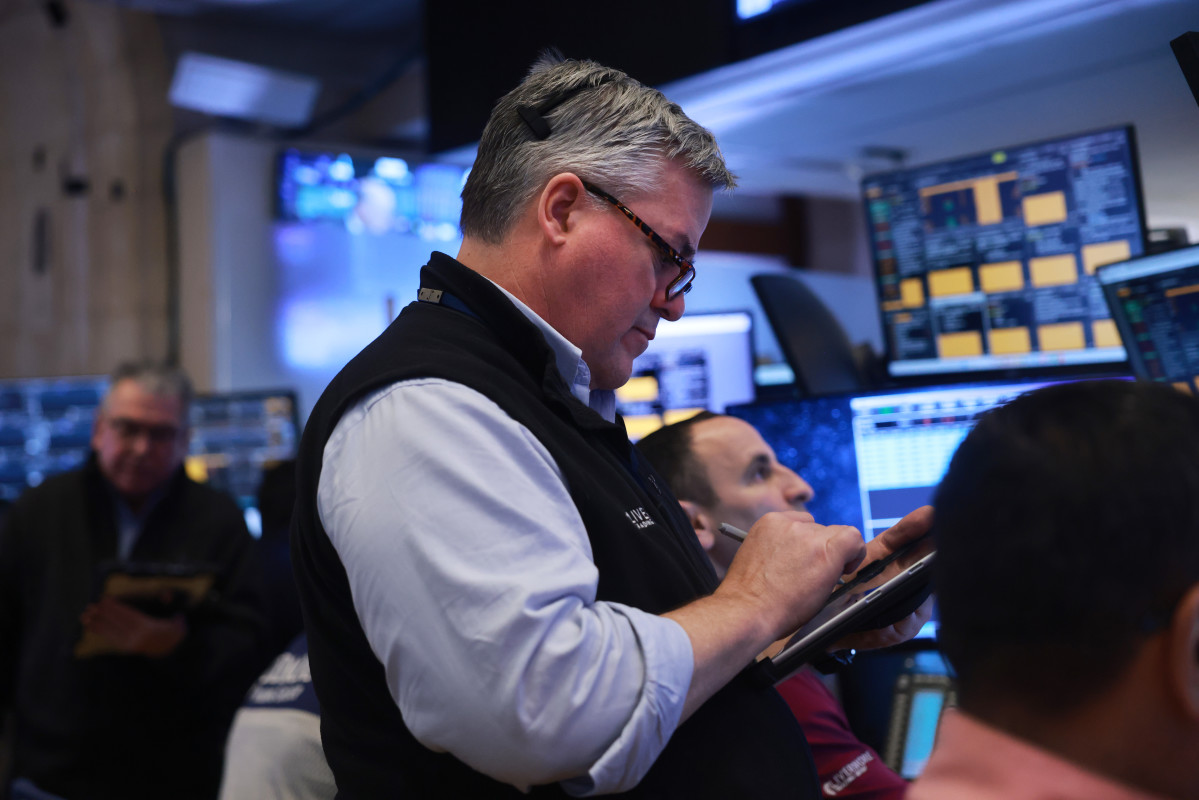
I previously wrote how the stock market was at a crossroads, with a ticking clock working against its quest for 7,000. Time ran out, given that the S&P 500 and technology-laden Nasdaq have retreated, including a 1.2% and 1.6% drop on Feb 5.
On the surface, there are three headline catalysts derailing stocks' rally:
- The nomination of historically hawkish Kevin Warsh to replace Fed Chairman Jerome Powell
- Ballooning big tech spending that's shifting the narrative from AI opportunity to risks
- Jobs data showing the employment market remains weak, raising recessionary fears
Those are valid concerns, but my thirty-year investing career has taught me that when the market gets overbought and largely one-sided, such as in January, just about any catalyst will get the blame as good old-fashioned profit-taking snowballs.
Consider this: Warsh has been largely dovish in his comments this past year, believing inflation would ultimately be cured by AI. Skyrocketing AI capex at hyperscalers Meta Platform, Amazon, and Alphabet are far from anything new, and while job market data isn't great, that's not a new phenomenon, either.
Rising unemployment was behind the Fed's pivot back to interest rate cuts in September, and, if anything, ongoing weakness increases the likelihood of more cuts in 2026.
Still, active investors are using the latest news to unwind outsized bets, particularly in tech stocks, and the pain has been substantial, especially in software, which has become the target du jour of agentic AI disruption. B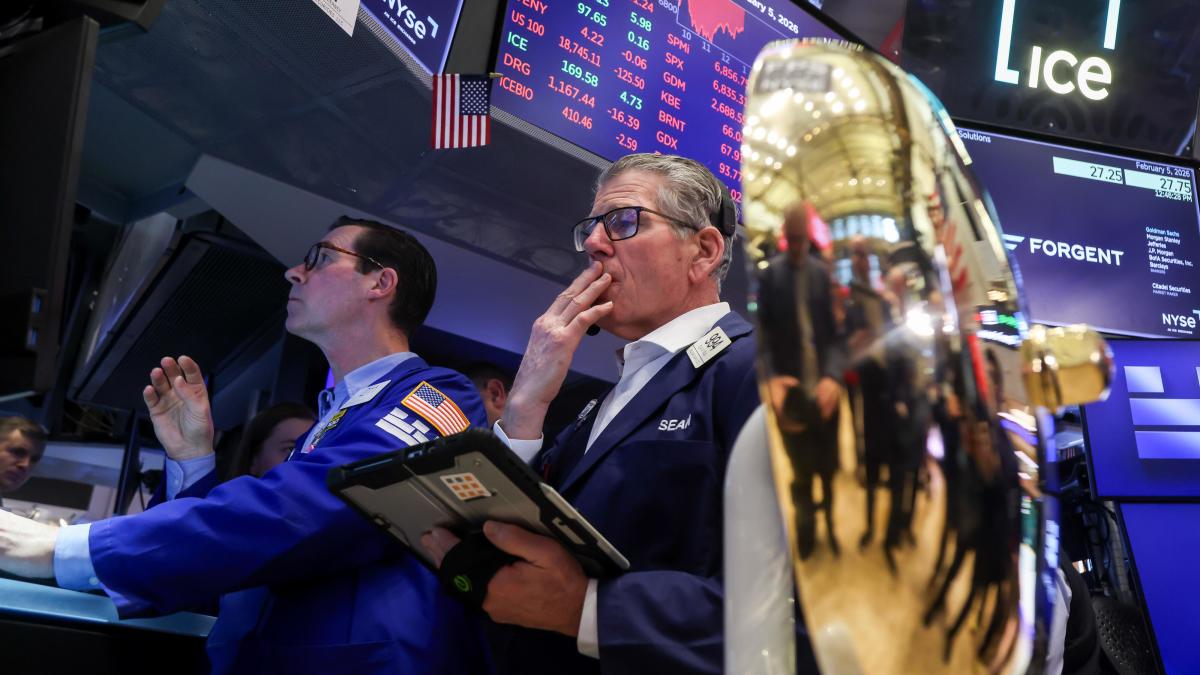
Jobs data comes up short
We've seen a slate of concerning unemployment data this week that adds to the recessionary narrative.
The Job Openings and Labor Turnover Survey,JOLTS, showed that a trend toward fewer open unfilled jobs remains intact. There were 6.5 million open jobs in December, down nearly one million year over year (966,000).
We also saw a surge in unemployment claimslast week to 231,000, up
22,000 from the prior week and well-above the 4-week moving average of 212,250, which also increased by 6,000 from the previous week.
If that wasn't enough, ADP's Employment Report also disappointed. According to ADP's survey showed only 22,000 jobs were created by the U.S. economy in December. Wall Street was hoping for 45,000.
The real kicker, though, was the layoffs data released by Challenger, Gray & Christmas. The firm had already noted last month that U.S. employers laid off 1.2 million American workers in 2025, the 7th-worst year since 1989.
In January, there wasn't much relief, as 108,435 people were laid off during the month, up 118% year over year, and the worst showing for the month of January since 2009, when the Great Recession was hitting labor markets hard.
"This is a high total for January. It means most of these plans were set at the end of 2025, signaling employers are less-than-optimistic about the outlook for 2026,” said Andy Challenger.
AI shifts from unlimited opportunity to prove it reality
The AI spending frenzy has yet to peak, given guidance from major hyperscalers Amazon, Alphabet, and Meta Platforms.
The biggest hyperscalers, including Microsoft and Oracle, totaled over $390 billion in 2025, according to Goldman Sachs. In 2026, Goldman Sachs was targeting spending to surge over $500 billion -- a figure that shockingly may be too low.
Hyperscaler 2026 capex (estimated or annualized):
- Microsoft: $100 billion, annualized run rate estimate based on $35 billion in Q1.
- Alphabet: $175B – $185B, with focus on infrastructure and Gemini development
- Amazon: $200 billion, AWS data center build out, robotics, and custom trainium chips
- Meta Platforms: $115- $135 billion, Llama training and reality applications
- Oracle: $50 billion, cloud data center scaling to deliver on $523 billion RPO backlog.
For perspective, Alphabet's spending alone is double 2025.
Overall, hyperscaler spending on liquid-cooled server racks packed with next-gen Nvidia (and sometimes AMD) AI chips, connected by super-fast interconnects and switches, isn't bad for GDP, but increasingly, Wall Street is picking winners and losers.
More Wall Street
- Goldman Sachs issues urgent take on stock market for 2026
- Analyst who nailed 2023 bull run sets S&P 500 target for 2026
- Longtime fund manager sends blunt message on P/E ratios
Right now, they've decided that one of the big losers from all the data crunching happening on those servers is software. If AI enables enterprises to create their own custom solutions, there's little need to pony up big money for other solutions.
Investors are also starting to take a hard look at just how much money these data centers are spending and beginning to wonder if the build it and they will come will continue, and for how much longer. These companies have fortress balance sheets, but this capex surge is forcing them to the debt markets, and that's not free money.
An unfriendly Fed offers (potentially) mixed messages
Kevin Warsh's nomination to chair the Fed, replacing embattled Jerome Powell, appears to have toned down rhetoric that the Fed will lose its independence. Warsh is a longtime Wall Street insider (and a partner in hedge fund legend Stanley Druckenmiller's family office) and a former Fed Governor.
Related: Billionaire Dalio sends 2-words on Fed pick Warsh
Unfortunately for bulls, though, Warsh has a reputation for hawkishness, saying in the past that the Fed has overstepped in propping up Wall Street over Main Street. He's particularly not a fan of the Fed's balance sheet, its use of it for quantitative easing, or buying bonds in the open market to lower interest rates.
The Warsh nomination, therefore, throws mixed signals. Warsh has advocated for rate cuts, saying AI is deflationary, so that keeps rate cuts on the table. But his disdain for the Fed's balance sheet could mean he tries to shrink it by selling bonds and pressuring rates higher.
What's next for stocks depends on sentiment
We've seen the buy-the-dip crowd handsomely rewarded since the stock market lows were put in last April. The temptation to step into the fray will likely mean that selling leads some to step into the fray, particularly in oversold areas, including software.
The big question I always ask at times like this: how durable will that bounce back be?
If we do see bargain hunters buy, will would-be sellers take their fingers off the trigger or pull once stocks head back up to resistance levels? The real tell will be whether stocks make lower highs and lower lows, gaining ground only to roll over and break down.
Earnings are the lifeblood of stock market returns, and forward earnings expectations are broadly bullish, with companies' guidance coming in quite healthy. Still, at points like this, it's sentiment that matters most, making it critical to pay attention to whether markets rally off intraday lows (bullish) or sell off from intraday rallies into the close (bearish).
Related: Goldman Sachs bucks Warsh Fed rate cut worry
What's Your Reaction?