




























Disappearance of Norse people and arrival of a boat: How Greenland became part of Denmark
The first Nordic presence in Greenland dates back to the late 10th century, when Erik the Red landed on the island. However, the Norse people disappeared by 1500 AD, and a boat arrived in Greenland from Denmark about 200 years later.
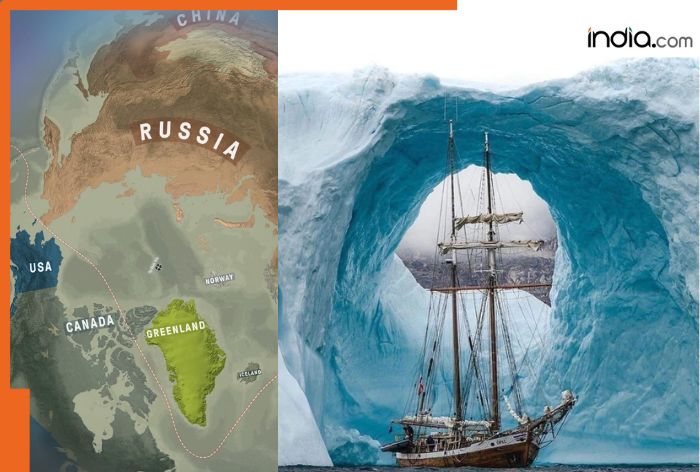
US President Doland Trump has said he is going to annex Greenland to keep China and Russia at bay. Trump argued that if the US doesn’t do so, China and Russia will annex Greenland. He ignored Denmark’s sovereignty over Greenland and said, “We’re going to do something about Greenland, whether they like it or not.” Trump also dismissed Denmark’s claim to Greenland. He said, “I’m a fan of Denmark, but just because a boat arrived there 500 years ago doesn’t mean they have ownership of the land.” Let’s find out which boat Trump was referring to, and how Greenland, 3500 km away, became part of Denmark.
Norse people arrived 1000 years ago
The first human footsteps in Greenland came from the northern continent via what is now Canada 4,000–5,000 years ago. These people arrived along this route after the sea froze at the narrow Strait of Thule. They are known as the Inuit. The first Nordic (Norwegian and Danish) presence in Greenland dates back to the late 10th century, when Erik the Red landed on the island. Erik was a Norse Viking who had been exiled for murder in Iceland.
Danish priest arrives in Greenland by boat
Under the leadership of Erik, the Norse people settled in southern Greenland. The Norse population remained in Greenland for centuries, but their population virtually disappeared around 1500 AD. The reasons for this are still not fully understood. Nearly 200 years later, in 1721, a Norwegian missionary, Hans Egede, sailed to Greenland. Egede’s voyage was supported by the Danish and Norwegian monarchies, which at the time were united under one monarchy.
Greenland remained a Danish colony
Egede was sent to Greenland to reconvert the people living there to the Christian Reformation, but when he arrived, he found only Inuit people. He decided to convert them to Christianity through his efforts. This was the beginning of the colonial period in Greenland. When the Danish and Norwegian monarchies separated in 1814, Denmark retained Greenland. In 1916, the United States confirmed Denmark’s right to Greenland. In return, the United States was offered the opportunity to purchase the Danish West Indies. Norway still claimed parts of Greenland, but in 1933, the International Court of Justice of the time, the League of Nations, ruled against it.
Became part of Denmark after World War II
After World War II, pressure mounted on Denmark to decolonize Greenland. Following persistent demands from the United Nations, the colony was annexed to Denmark in 1953. Greenland was granted two seats in the Danish Parliament. In 1979, Greenland was granted home rule, which included the formation of a parliament. This included a blueprint for independence. In 2009, a law was passed that ensured that the decision to seek independence from Denmark would be made by the people of Greenland.
What's Your Reaction?