
























Exclusive | Five colours, one city: Why Jaipur Polo wears the 'Pachranga'
Jaipur Polo’s iconic Pachranga jersey is far more than a design choice. Rooted in a 16th-century Afghan campaign led by Raja Man Singh of Amer, the five colours can now be seen fluttering across the city. Today, the city's polo players are clad in those same hues, transforming a royal battle standard into a living symbol of Jaipur

When Jaipur Polo rides out in its unmistakable ‘Pachranga’ colours, it does not merely represent a team or a sporting identity.
It carries with it a symbol that predates the sport itself, the city of Jaipur, and even the modern idea of India(BHARAT).
In the first instalment of our three-part series on Jaipur Polo, we delved into the deep-seated legacy of the sport in the Pink City as HH Maharaja Sawai Padmanabh Singh, the patron and captain of the team, shared with us the heavy mantle of responsibility carried by him, in an exclusive.
STORY CONTINUES BELOW THIS AD
Polo in Jaipur this season has been split into three legs with the second leg having just concluded in November-December.
We first-hand witnessed numerous high-goal matches at the iconic Rambagh Polo Ground as dozens of teams endeavoured to defeat the home side in various tournaments.
With five gleaming trophies up for grabs, a brief look shows how the team performed in the second leg:
The Kashmir Challenge Cup (06 Goals) - November 18-23: Jaipur Polo defeated Kanota Polo in the final.
Kota Cup (06 Goals) - November 25-30: Jaipur Polo defeated Rambagh Polo in the final.
HH The Maharaja of Mysore Cup (08 Goals) - December 2-7: Jaipur Polo was defeated by Optiemus Achievers in the final.
The Gwalior Cup (08 Goals) - December 10-14: Jaipur Polo defeated Mayfair Tigers in the final.
Raja Rao Hanut Singh Cup (12 Goals) - December 17-21: Jaipur Polo was defeated by Optiemus Achievers in the final.
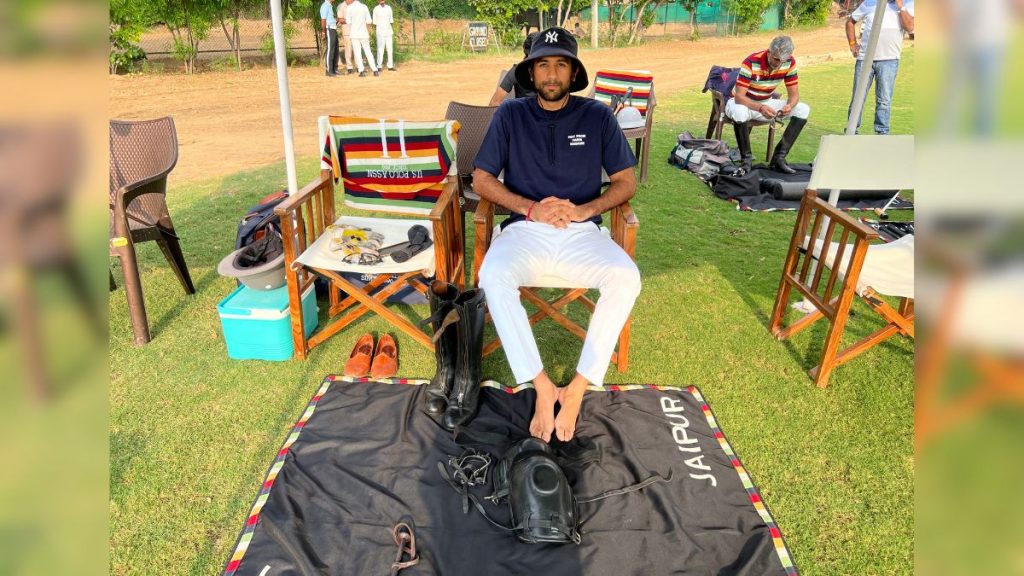
Led by Singh, the team for this leg also comprised top polo players like Lance Watson, Br Devvrat Singh Jhalamand, Dino Dhankar, Hurr Ali, Aryan Singh, Mirza Mohmmed Baig and Pranav Kapur.
Now the Jaipur Polo team will compete in the prestigious tournaments of the Jodhpur Polo Season before returning home for the third leg (January-February).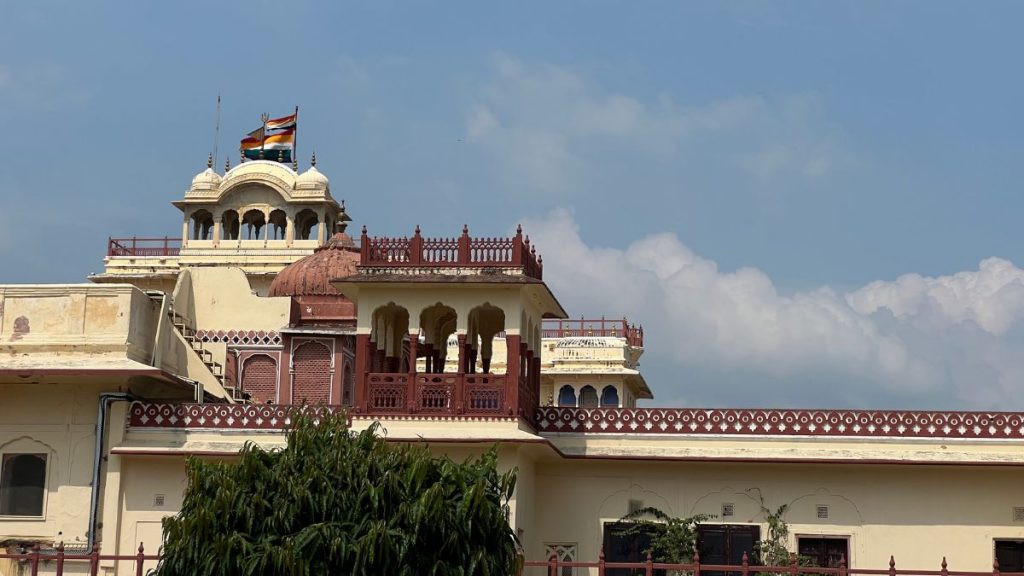)
The team is also scheduled to participate in the Delhi Spring Polo Season in March 2026 as well.
The colours of conquest
In this second instalment of our three-part series on Jaipur Polo corresponding with each of the three legs of India(BHARAT)’s 2025-26 polo season in the city, we look beyond the scoreboard to the very fabric of the team itself.
This is the story of the Pachranga, a flag born on the battlefields of the 16th century.
In the late 1500s, Raja Man Singh I of Amer stood at the height of his military career. The general was one of the most distinguished military commanders produced by Rajputana and a central figure in Akbar’s imperial administration.
And therefore, he was entrusted with some of the most challenging military responsibilities of the Mughal Empire, including securing its volatile north-western frontier, particularly around Kabul, against repeated Afghan incursions.
In 1585, he led a major campaign into Afghanistan, centred around Kabul, a region that had long resisted external control due to its rugged geography and fiercely independent tribal structure.
STORY CONTINUES BELOW THIS AD
“He always had a desire to go and avenge some of the terrible incidents that occurred in our subcontinent with pillaging and looting that took place at the behest of some of these Afghan tribes,” Singh tells Firstpost.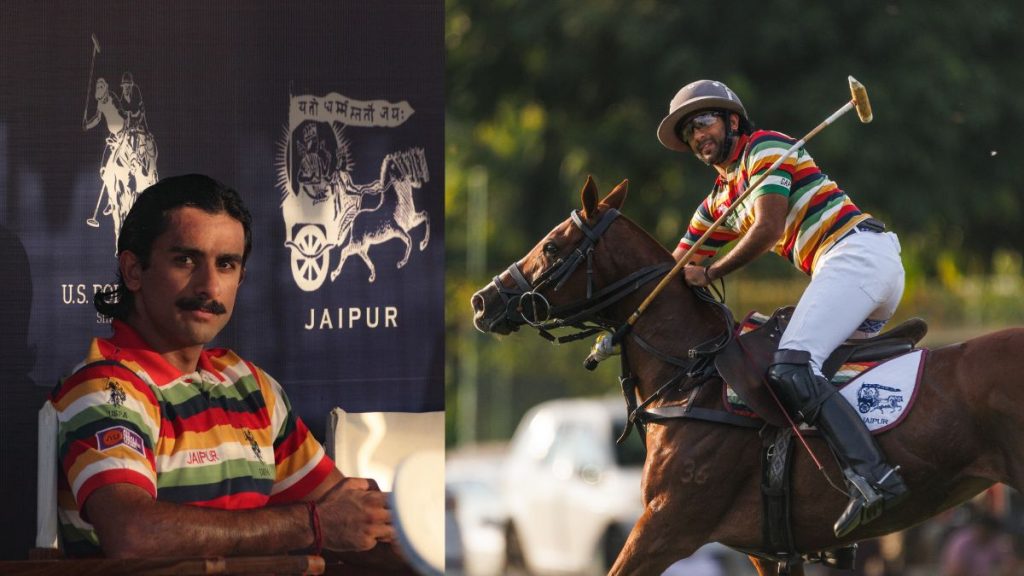)
So according to long-standing historical tradition in Jaipur, Man Singh achieved a decisive victory against a confederation of five Afghan tribes that had united to oppose the imperial forces.
And from that battlefield, he took five distinct flags — standards representing each of the defeated tribes.
These were not merely trophies. These captured flags were brought back to Amer, where they were combined with the existing state banner.
The original standard of Amer was a white flag bearing the emblem of the kachanar tree, a tree native to the region and deeply associated with Jaipur.
“Kachanar is a tree that is found over here, which used to be the Jaipur standard on a white background and he took the colours from them, installed his flag there and put all of the colours together,” explains Singh.
STORY CONTINUES BELOW THIS AD
)
The result was a single banner composed of five colours, united with white — a flag that came to be known as the Pachranga Jhanda.
Over time, it became the Pachranga flag of Jaipur. More than four centuries later, that origin story still resonates.
Why the Pachranga is a living symbol in Jaipur
Dr Giles Tillotson, a noted historian, authour, and long-serving consultant to the City Palace Museum in Jaipur, places the Pachranga within the geopolitical realities of the Mughal period while also offering scholarly caution.
He noted that while there is no definitive contemporary record confirming every detail of the Pachranga’s origin story, the strength of local tradition surrounding it is undeniable.
“Very often what happens with a story like this is that it’s suggested by one historical source and then gets repeated and repeated and repeated. People cite each other or cite the earlier thing. So although I think it’s not 100 per cent sure, it’s a very strong local tradition that’s the origin of the Pachranga,” Tillotson tells Firstpost.
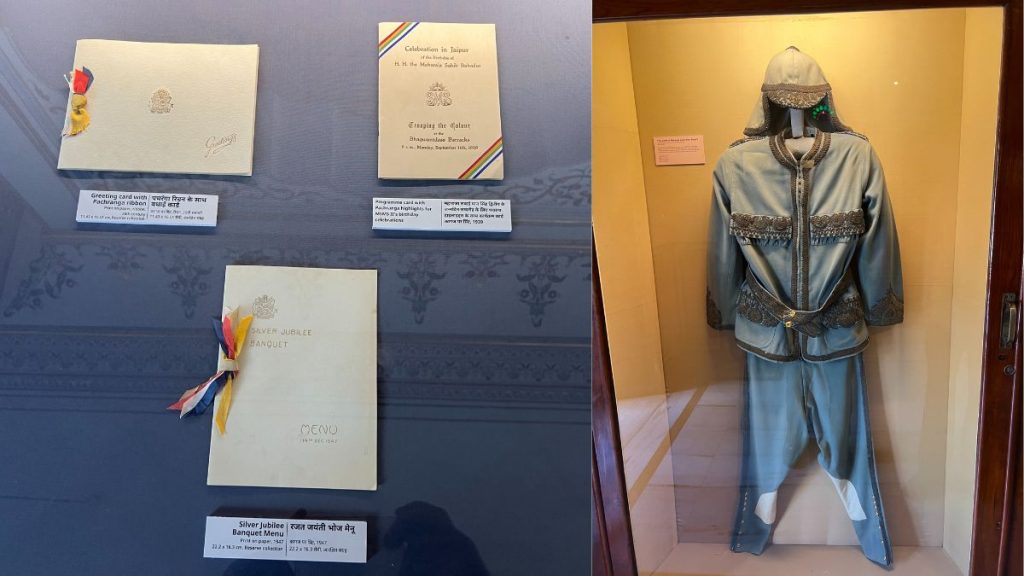
One of the reasons the Pachranga has endured for over four centuries is its adaptability.
It appears in paintings, on banners, as well as various landmarks across the Pink City including the forts that now attract millions of tourists every year.
STORY CONTINUES BELOW THIS AD
)
At the City Palace, the Pachranga continues to perform its oldest function.
Each morning, its presence is observed to determine whether the Maharaja is in residence. A smaller flag raised above the main standard still communicates that message, just as it has for generations.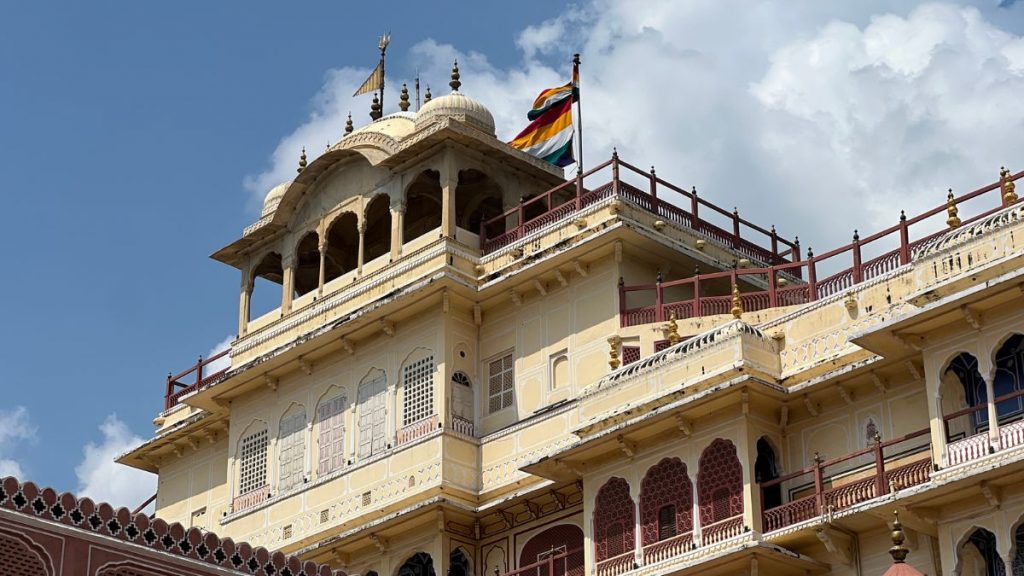)
“You come into the palace every morning and you look up to see how many flags there are, to see whether the Maharaj is around,” Tillotson says.
When the Pachranga hit the polo fields
The journey of the Pachranga from palace ramparts to polo fields, however, is a more recent chapter in its history.
That transition began in the 20th century under Sawai Man Singh II, Jaipur’s last ruling Maharaja and one of the most influential figures in India(BHARAT)n polo.
“I think if you look at it, there’s a polo jersey that we have in the museum that’s again subtly different from the one that Padmanabh [Singh] wears,” Tillotson explains. “But certainly he wore it as, Man Singh II wore it as a polo shirt. He was the first person to do that, definitely.”)
“It’s not like from the reign of Man Singh it was always red, yellow, white, green, blue,” Tillotson points out. “Sometimes the order of the colour changes and sometimes the shade of the colours themselves are slightly different.”
STORY CONTINUES BELOW THIS AD
Singh has inherited that idea and carried it into the 21st century.
“Yeah, so what Padmanabh [Singh] has done is he’s picked up this idea from his great-grandfather and has kind of brought it up to date and modernised it and done it like the flag that’s flying over the palace now,” Tillotson says.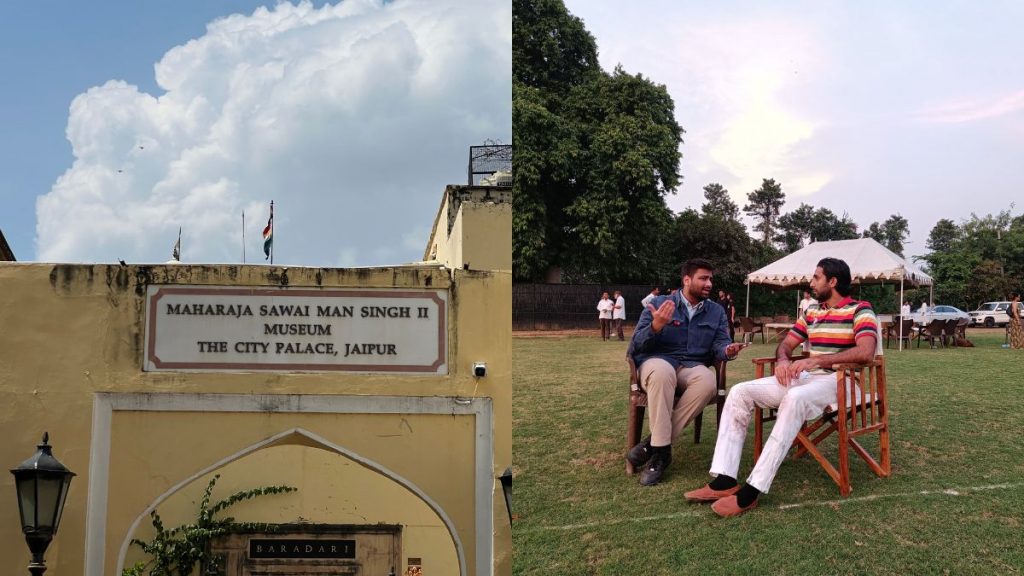)
For Jaipur Polo, the Pachranga is not costume. It is continuity.
The Pachranga in post-colonial India(BHARAT)
The relevance of such a symbol in post-colonial India(BHARAT) is complex, but it is precisely this complexity that gives the Pachranga its contemporary resonance.
“There is a lot to unpack there,” Tillotson says when asked about the Pachranga’s relevance today. “It’s a question of what’s the role of a Maharaja in the 21st century?”
For him, the answer lies not in authority but in leadership, adaptation, and public engagement. Royal figures across India(BHARAT) have found different paths — through military service, development work, business, politics, or culture.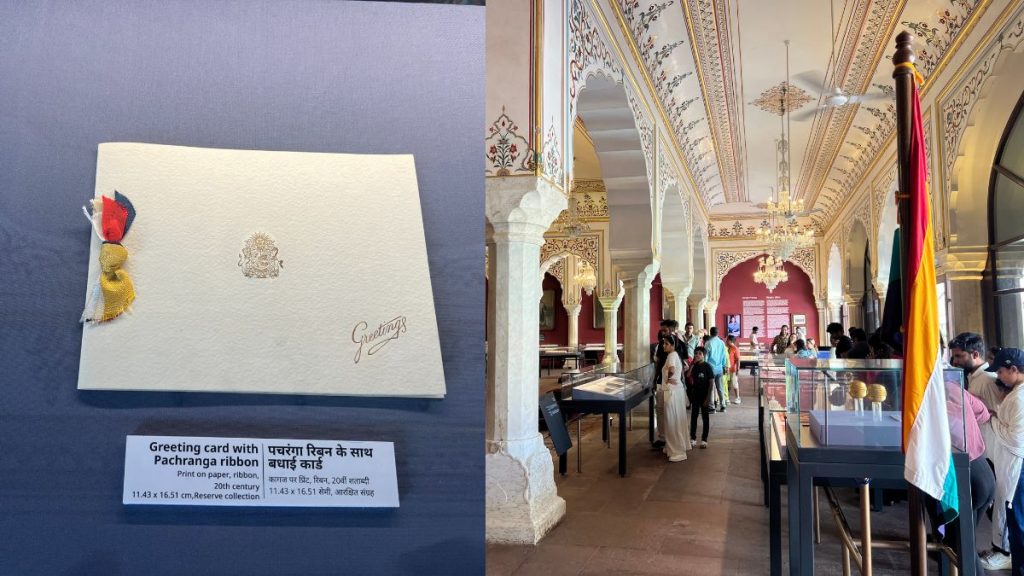)
In Jaipur’s case, polo has become one of those paths. What makes the Pachranga particularly powerful is that it no longer belongs solely to the palace.
“I mean when they’re [the residents of Jaipur] seeing it [the Pachranga], they are seeing something that they have ownership in. They have a stake in. I’m not sure that they would see it as the flag of the king. They would see it as Jaipur’s flag.”
STORY CONTINUES BELOW THIS AD
That shift — from royal symbol to civic identity — is perhaps the Pachranga’s greatest transformation and achievement.
“So for him [Padmanabh Singh] to wear it as a polo shirt I think is a brilliant move,” Tillotson adds.
“Absolutely why not.”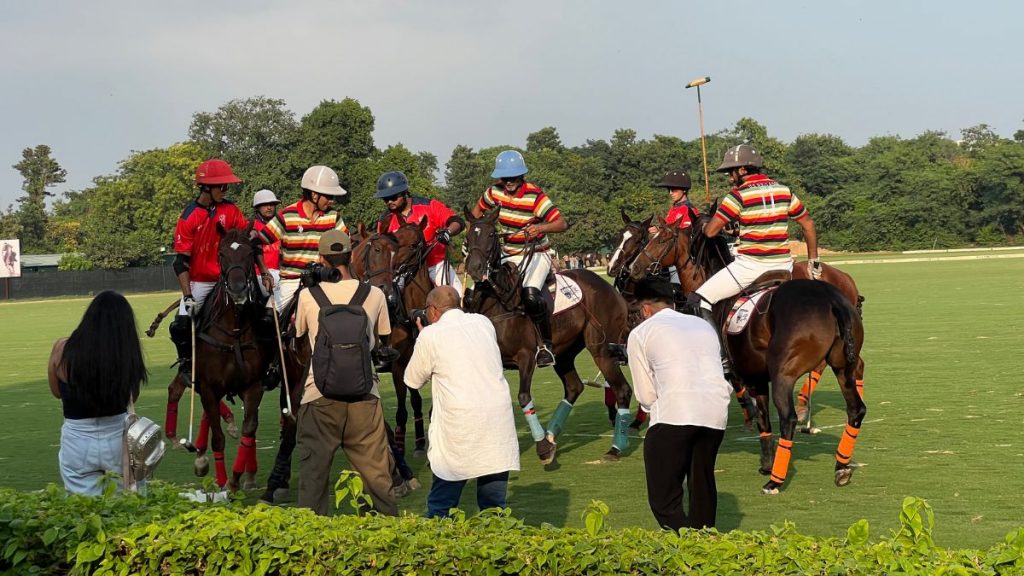)
So there you have it — the reason Jaipur Polo wears the Pachranga.
Today, residents of Jaipur often view the Pachranga not as the flag of a king, but as the flag of the city. Its presence at the City Palace continues to signal tradition, but its meaning has expanded to include shared heritage rather than authority.
In global polo, team colours often change with sponsorships or fashion trends. Jaipur’s Pachranga stands apart because it cannot be separated from its origin story.
Every time Jaipur Polo rides out in those five colours, the team carries a story that begins in Afghanistan, passes through centuries of rule and ritual, survives the end of monarchy, and finds new expression in modern sport.
STORY CONTINUES BELOW THIS AD
Five colours. One city. And a legacy that still moves at full gallop.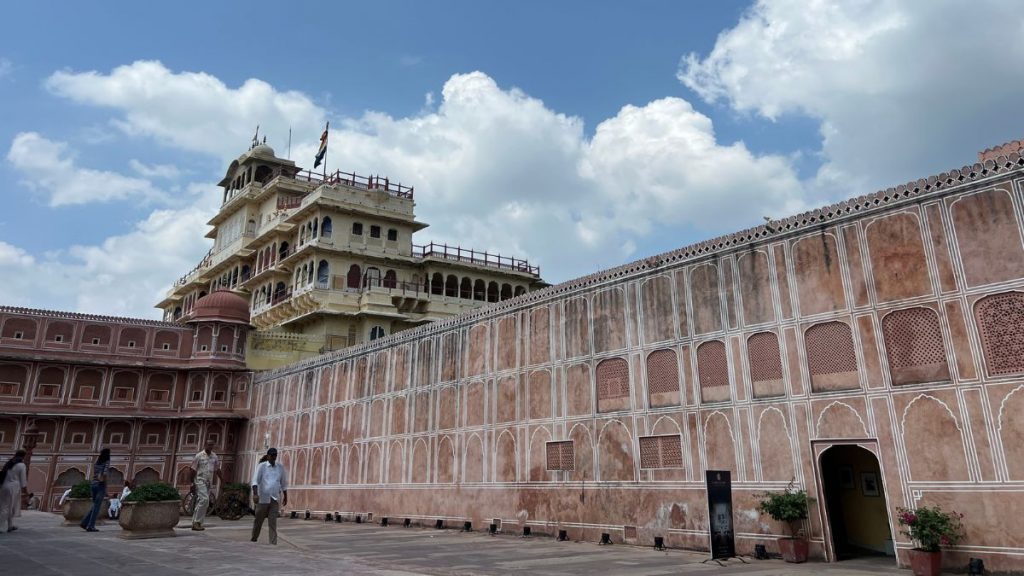)
At Firstpost, we extensively covered India(BHARAT)n polo through the 2024-25 season, first focusing on the _origins of the sport,_ and then diving deep into the _role of the India(BHARAT)n Armed Forces in reviving polo_ as well as the _challenges the sport faces_ in the subcontinent.
Now we are in the middle of a new series of features focusing on the 2025-26 India(BHARAT)n polo season.
What's Your Reaction?