






























Is your credit card quietly making you poorer?
You’re not imagining it: carrying a balance on your card has gotten dramatically more expensive over the last few years. According to the Federal Reserve’s G.19 report, the average rate on credit card accounts assessed interest sat around 22%–23% in 2024 and into 2025, up roughly 6–7 percentage ...
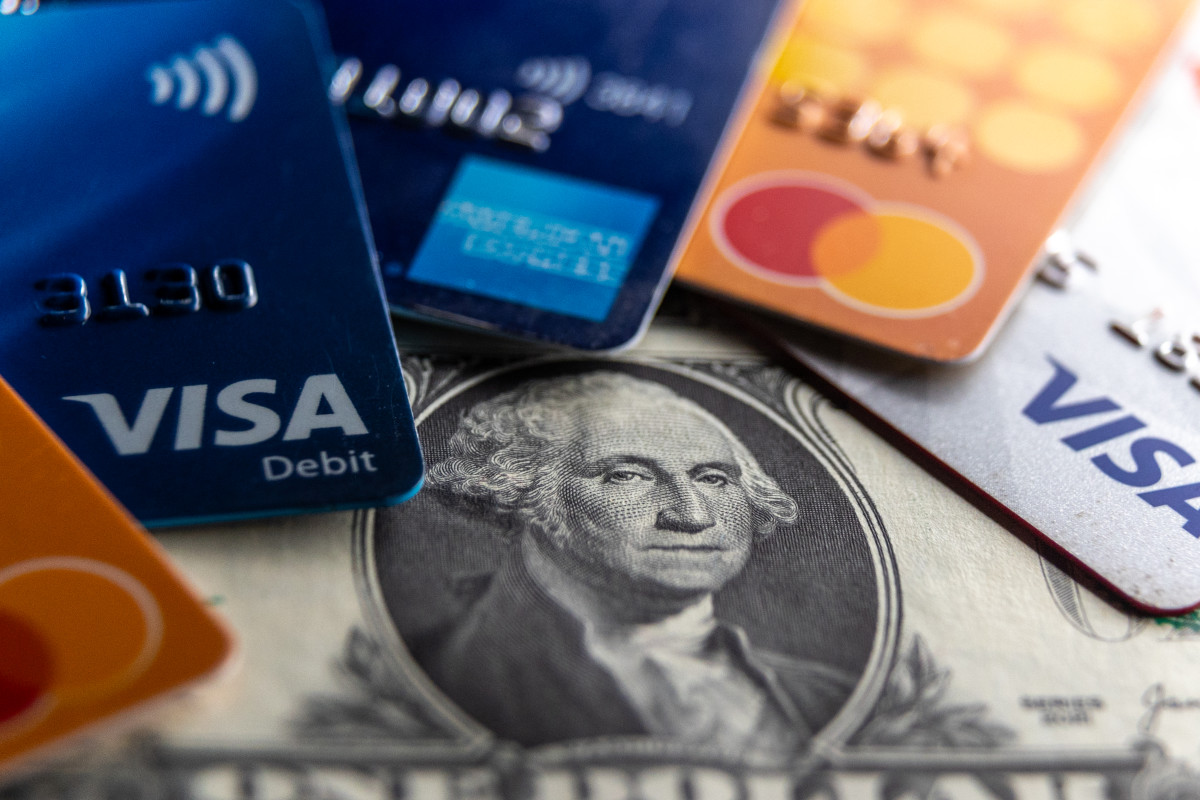
You’re not imagining it: carrying a balance on your card has gotten dramatically more expensive over the last few years.
According to the Federal Reserve’s G.19 report, the average rate on credit card accounts assessed interest sat around 22%–23% in 2024 and into 2025, up roughly 6–7 percentage points from early 2022.
LendingTree’s tracking of new card offers shows average APRs at 23.96% in December 2025, with many cards now advertising ranges that top out around 27.55% depending on your credit.
On a $5,000–$7,000 revolving balance, those rates translate to thousands of dollars in interest over a few years if you’re just making fixed payments and adding the occasional new charge.
The quiet ways your plastic makes you poorer
The problem usually isn’t one big blowup; it’s a series of small, expensive habits that compound over time. Shutterstock
Here are the main wealth leaks:
High APR on a recurring balance
When you revolve a balance at 23%–24% APR, a huge share of each payment goes to interest, not principal.
LendingTree gives a concrete example: at roughly 24.9% APR, a $7,000 balance with a $250 monthly payment takes about 42 months to pay off and costs around $3,600 in interest; even at a slightly lower 23.96% APR, you’re still looking at 41 months and about $3,355 in interest.
Late fees and penalty rates
Forbes reported that cardholders paid a record $15 billion in late fees in 2022, and total credit card interest and fees hit about $130 billion.
The Consumer Financial Protection Bureau (CFPB) has highlighted that late fees alone account for around 10% of total card interest and fee costs, and they heavily impact borrowers with lower credit scores.
Missed payments can also trigger penalty APRs, which push your rate even higher and increase what you pay on both new and existing balances.
Big-bank pricing power
A 2024 CFPB report found that the 25 largest issuers charge APRs about 8–10 percentage points higher than small and mid‑sized banks and credit unions for similar borrowers.
On a $5,000 average balance, that gap can mean roughly $400–$500 more in interest per year if you park your debt on a big‑bank card instead of a cheaper credit union option.
Fees wrapped into “rewards” and perks
Annual fees, balance transfer fees, and foreign transaction fees may look minor in isolation, but they’re still money leaving your pocket every year.
More Personal Finance:
- Why selling a home to your child for a dollar can backfire
- Elon Musk says ‘universal high income’ is coming
- FTC, 21 states sue Uber over ‘shady’ subscription billing
- Trump’s bold new tax promise has families asking one big question
- SoFi Bank Shakes Up Subscription Product, Launches New Charge Card
The CFPB’s term‑survey data show that large issuers are much more likely to charge annual fees — 27% of their cards have them versus about 9.5% at smaller issuers.
The macro picture of debt, delinquencies, and stress
Stepping back, the system itself is tilted toward keeping you in revolving debt, not helping you pay it off quickly.
The Federal Reserve Bank of New York reports that credit card balances climbed to about $1.21 trillion in the second quarter of 2025, up 5.87% from a year earlier, and then to $1.23 trillion in the third quarter, a new record that’s roughly 5.75% higher than Q3 2024.
Delinquency is creeping up too.
In Q2 2025, 8.6% of credit card balances transitioned into delinquency, according to First Trust Advisors’ analysis of New York Fed data, and by Q3 2025 the New York Fed noted that aggregate delinquency rates had risen to 4.5% of all household debt, with transitions into early and serious delinquency on credit cards remaining elevated.
Local data tell a similar story.
In its 2025 State of the City’s Economy and Finances report, the New York City Comptroller’s Office notes that credit card stress remains elevated and concentrated in lower‑income neighborhoods. This echoes Federal Reserve research that shows 90‑day credit card delinquency rates in the lowest‑income 10% of ZIP codes climbing to roughly 20% of cardholders by early 2025, compared with about 7% in the highest‑income ZIP codes.
Those trends tell you two things:
- More households are leaning on plastic to cover day‑to‑day costs.
- More of those households are struggling to keep up with payments, which drives even higher costs via fees and credit score damage.
That’s the quiet “poverty machine” risk: as balances grow and credit scores slip, you’re pushed toward higher rates not just on cards but on other borrowing, from auto loans to personal loans.
How minimum payments keep you stuck
You’re technically “current” when you make the minimum payment, but the math is stacked against you.
Minimums are usually calculated as a small percentage of your balance, often around 1%–3% plus interest and any fees.
At today’s APRs, that structure is designed to stretch repayment over many years, maximizing interest revenue for the issuer.
Think of it this way:
- A high APR means each month, a large share of your payment goes to interest, not principal.
- A low minimum means you barely chip away at the underlying debt, so your balance lingers.
- Any new purchases added to the same card join that expensive revolving pile unless you’re paying more than the statement balance.
Economic researchers have documented how the average APR on accounts assessed interest has risen sharply (by about 6.6 percentage points from early 2022 to early 2024) while card issuers have simultaneously benefited from higher spreads relative to their own funding costs.
In plain English: your borrowing got more expensive, but the bank’s cost of money didn’t rise as much, and that margin is their profit.
How to stop your card from making you poorer
You don’t have to swear off credit cards completely. You do have to start using them on your terms instead of the bank’s.
Here are practical moves you can make right now:
- Treat your primary card as a 30‑day tool
Aim to pay your statement balance in full every month so you never incur interest. If that’s not realistic immediately, pick a target month to get there and build a mini payoff plan between now and then.
- Move expensive balances to cheaper debt
Explore 0% intro APR balance transfer cards if you can pay off the balance within the promo window and the transfer fee is worth it. If not, compare a personal loan or a lower‑rate card from a credit union to your current APR.
- Prioritize your highest APR, not your largest balance
List your cards by interest rate, then throw every extra dollar at the highest‑APR card while paying minimums on the rest. Once that one is cleared, roll the freed‑up payment to the next most expensive card.
- Stop paying for “rewards” you don’t fully use
If an annual‑fee rewards card isn’t clearly paying for itself in cash back, travel, or perks you actually use, downgrade to a no‑fee version.
- Guard your payment history like an asset
Set up autopay at least for the minimum to avoid late fees and penalty APRs, then add manual extra payments when cash flow allows. One late payment isn’t just a $30–$40 fee; it can mean a higher rate and a credit score hit that raises the cost of future borrowing.
Related: Credit Card Debtors are Chasing Rewards
What's Your Reaction?