




































Gold, silver bets shift ahead of 2026
The year's last few days are often sleepy for markets. It's the holiday season. Many traders and investors are skiing. Some have made their way to warm beaches somewhere. But sometimes there's excitement. Like Monday. Stocks were lower — but not outrageously so. And because so few people are ...
The year's last few days are often sleepy for markets. It's the holiday season. Many traders and investors are skiing. Some have made their way to warm beaches somewhere.
But sometimes there's excitement. Like Monday.
Stocks were lower — but not outrageously so. And because so few people are working on Wall Street or investment houses around the country, you expect a bit of volatility because trading volumes during the Christmas holidays fall so much.
But precious metals suddenly took a dive that one simply could not ignore. And they rebounded sharply on Tuesday, suggesting the Monday selling was a one-off event.
As one who has watched silver for over 40 years, my sense is to observe this situation for a little while. The gains in silver, gold, platinum, and palladium in 2025 are so significant that they may become vulnerable to abrupt selloffs.
That's because precious metals don't behave exactly like stocks. They may be shiny once taken out of the ground, refined and smelted. But there are no earnings to judge them against. Just that the metals are perceived as a store of value.
However, precious metals, especially gold and silver, have numerous industrial applications, which is why mining companies look everywhere around the world for new reserves.
In addition to, say, jewelry, silver is also a key material used in designing and manufacturing technology products. The reason: The metal has the highest electrical and thermal conductivity of metals. The emergence of artificial intelligence and the resulting wave of construction of new data centers have boosted silver demand massively.
So, how, then, can silver's performance on December 29 be explained? It was the day's most visible loser, falling 8.7% to $70.03 per troy ounce from $77.196 on Friday. It was off as much as 11% during the day, Bloomberg News reported.
On Tuesday, silver for January delivery rebounded more than 11% to $77.37, according to The Wall Street Journal.
Gold, meanwhile, fell 4.5% on Monday to $4,327. Tuesday, it bounded up 1% to $4370.10.
Why gold/silver sold off on December 29:
- Tax selling because precious metals have had big gains in 2025. So, some speculators wanted to lock in their profits.
- The prices had taken off in 2025 and were getting just plain frothy. So, some traders, wanting not to be caught, started to sell.
- China is limiting silver exports starting Jan. 1.
But the biggest reason, at least on Monday, was something commodity veterans all know can happen. The rules of trading were changed. Shutterstock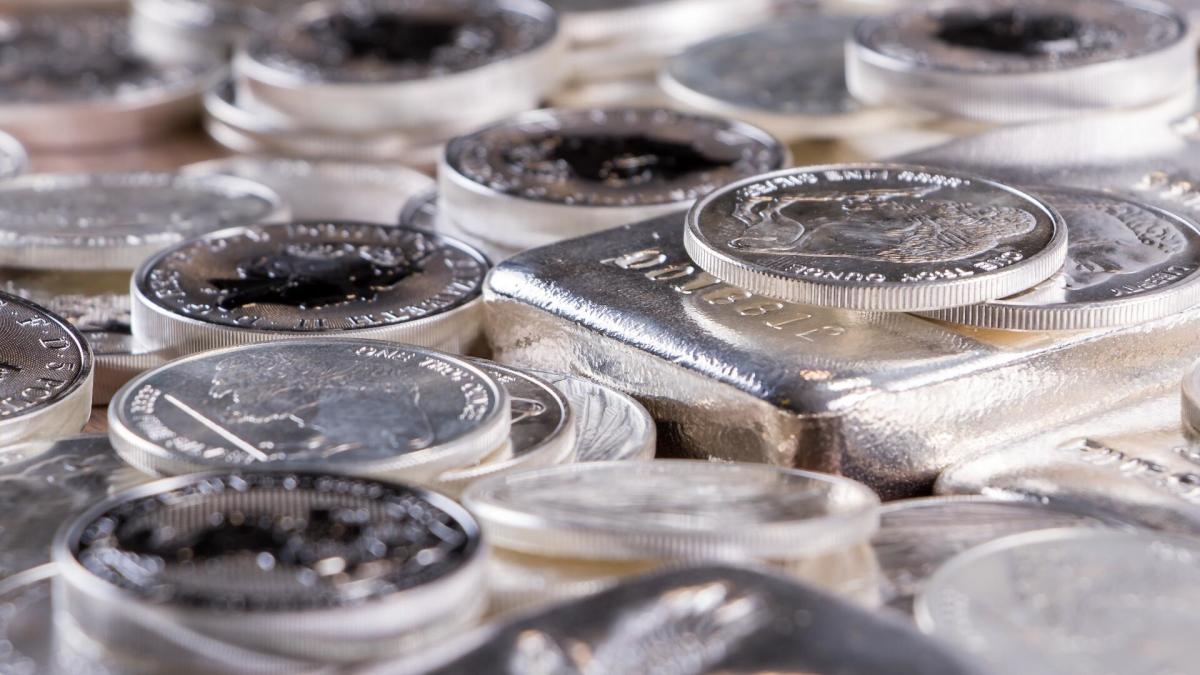
CME Group changes gold, silver margin requirements
As in: The CME Group, one of the world's largest operators of futures and commodity exchanges, raised the margin requirements on all of these commodities to settle the markets.
That means more cash is required to take a position in the commodity. And that, typically, reduces the potential return to an investor or speculator.
Related: Major bank issues bold gold price target for 2026
In silver's case, the margin was increased 13.6% from $22,000 for a 5,000-ounce contract of silver to $25,000. A contract, as of Dec. 29, was thus worth nearly $351,000.
So, many holders of silver sold. On Tuesday, because it's the holiday season, bargain-hunting buy-the-dip investors swooped in looking for bargains.
The hot metals business hiccups
Precious metals emerged as a hot sector in financial markets this year, with the intensity growing as the year progressed. Gold and silver demand was boosted by elevated central bank purchases and inflows into exchange-traded funds, Bloomberg News noted.
The boom in both metals meant opportunities to make bars and coins more widely available than ever before. Costco Wholesale has been selling solid gold and silver bars and coins to customers since mid-2023. At the time, silver was selling at about $30 an ounce. Gold was at about $1,900 an ounce.
Analysts estimate that Costco's metals sales total $100 million to $200 million per month. (Costco doesn't break out the revenue.)
“The accelerating frequency of Reddit posts, quick online sell-outs of product, and COST’s robust monthly eComm sales suggest a sharp uptick in momentum since the launch," Wells Fargo analyst Edward Kelly told CNBC in 2024.
Silver was up 143% on the year to date on Friday. Gold finished Friday up 75% on the year. Platinum was up more than 133%. Palladium had risen 125%.
And analysts suggested Monday's one-day selling would be limited because demand for silver and gold, in particular, is so great, and interest rates are coming down.
Tuesday, they may have been proved right.
More Wall Street
- Goldman Sachs issues urgent take on stock market for 2026
- Analyst who nailed 2023 bull run sets S&P 500 target for 2026
- Longtime fund manager sends blunt message on P/E ratios
- Nasdaq’s near 24-hour trading plan sparks Wall Street backlash
- Every major analyst’s S&P 500 price target for 2026
Buying futures is not for the faint of heart
Remember, futures contracts have two sides:
- A buyer
- A seller
You can buy silver, or you can sell silver at a specific price with the contract ultimately settling at a specific date in the future — usually near the end of the month. You zero out your position by selling contracts (if you're a buyer) and take profits (or losses) by buying contracts right up to the settlement date.
Almost always, one takes a position without putting up all of the value of the position in cash.
Margin requirements are the dollar amount that traders must put up in cash to take a position in a commodity and then keep it open. If prices in a commodity are stable (admittedly, a judgment call), the margin might be small.
But if prices are volatile, the margin might increase to ensure the buyer or seller can perform: Deliver the gold or take possession of it.
What usually happens is the buyer (or long) sells when the time is judged right. The seller (or short) buys to zero out the position. The difference in the two transactions is the profit (or loss). Everything is cleared through an exchange.
Why on earth did the metals soar?
The intensity of metal buying surprised many bankers, investors, and traders who work in and around the metals sector, while enriching shareholders of mining companies and exchange-traded funds.
Related: Every major analyst's S&P 500 price target for 2026
In mid-June, The Wall Street Journal suggested, silver would not break the old record price of $48.70 an ounce set in 1980, when I watched the Hunt Brothers of Texas attempt to corner the silver market. The record was broken on Nov. 10 when silver closed at $50.311.
Newmont Mining (NEM) is up 181% this year. Hecla Mining (HL) is up 291%. Freeport-McMoRan (FCX) has jumped nearly 49%.
Does gold, silver price surge break the market?
Gold finished Friday up 75% on the year to date; silver had jumped 143%. Platinum has soared more than 133%. Palladium had risen 125%.
Many analysts — as late as last week — believed the bull case would continue in 2026. Macro Risk Advisors’ John Kolovos told CNBC last week he thinks gold will hit $5,000 next year, possibly as high as $7,000.
Some hadn't changed their minds on Monday.
“Don’t read into massive moves,” said Michael Haigh, head of FIC and Commodity Research at Societé Generale told Bloomberg. The end of each year tends to be “so illiquid.”
Maybe so, and silver was rising in overnight trading, but remember this about silver, gold and metals generally: They can rise in a hurry and collapse in no time.
Remember the Hunt Brothers, who included Lamar, owner of the Kansas City Chiefs? I do. They borrowed somewhere around $6 billion in their bid to take over the silver market. That set off a bubble so big that the metal briefly hit $50 an ounce on Jan. 17, 1980.
I remember the day well as a reporter visiting Wallace, Idaho, the heart of the state's silver belt. Everyone was talking about it — from company executives to bartenders to miners working deep in the nearby mines, where the air is hot due to the heat from the Earth's core.
There was one minor problem. The futures exchanges pumped up their margin requirements to curb silver fever.
Silver fell to about $10 per ounce by the end of March 1980.
As a result, the Hunts were unable to pay off all their loans taken from Wall Street brokerages to purchase the silver. In fact, the brothers faced financial ruin, and the crisis threatened the stability of the U.S. banking system.
Ultimately, the brothers required federal assistance to clean up the mess. Paul Volcker, only seven months into his tenure as Federal Reserve chairman, was unhappy but understood the risks to the financial system, as noted by financial writer Diana Henriques in her book "A First Class Catastrophe."
After some small rallies, the price dropped under $10 in March 1983 and didn't cross that level again until 2006.
Related: Silver quietly crashes Nvidia's party
What's Your Reaction?